
Boilers
Why Does My Boiler Keep Turning On and Off?
You are searching Google at midnight because the boiler has suddenly developed a mind of its own. Fair enough. The useful question is whether it is actually failing, or whether it is doing its job in an annoying way.
Insight by Vector Heat
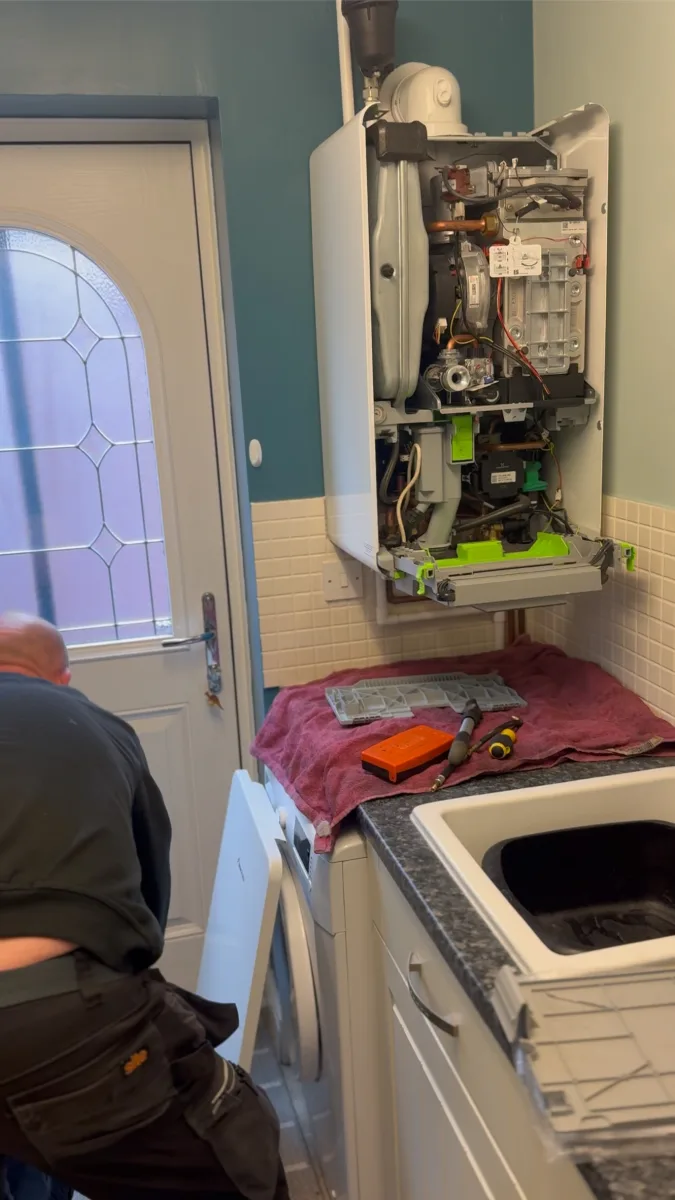
If your boiler keeps turning on and off, start with one simple question: is the house warm or cold?
If the house is warm and the radiators are heating properly, the boiler may be doing its job, just not very gracefully. If the house is still cold, radiators are not heating properly, or the boiler is showing fault codes, that points much more towards a fault.
The Quick Version
If the boiler keeps turning on and off but the house is warm and the radiators are hot, the boiler may be oversized for the heat demand, especially in a well-insulated new build with a powerful combi.
If the boiler keeps turning on and off and the house is still cold, look for fault clues: cold radiators, poor circulation, sludge, stuck valves, pump problems, pressure faults, control issues or sensor faults.
Warm House
If the house is warm, the boiler may be cycling because it has met demand quickly. Annoying, but not automatically broken.
Cold House
If the house is cold and radiators are not all hot, treat it as a fault pattern. The boiler is doing a little routine nobody booked.
No Demand
If the heating is off and there is no hot water demand, check for preheat, frost protection, controls or phantom firing.
Start With the House: Warm or Cold?
This is the best place to start because it changes the whole diagnosis.
If the boiler keeps turning on and off but the rooms are warm and all the radiators are getting properly hot, the boiler might be meeting the heating demand quickly. That is common in some newer homes because the heat loss is small but the combi boiler is powerful.
If the boiler keeps turning on and off and the house is still cold, that is different. Then you are looking more towards a fault: poor circulation, sludge, pump issues, stuck valves, blocked filters, pressure problems, control faults or internal boiler faults.
Same symptom, very different story. Heating likes doing that. Keeps us employed.
The Radiator Test
Check whether all radiators that should be on are getting hot. That tells you a lot.
Hot radiators and a warm house point more towards demand being met quickly or the boiler being too powerful for the current load. Cold or patchy radiators point more towards circulation, air, sludge, valves, balancing or pump problems.
Also check they are actually turned on. Yes, I have been called out for turned-off radiators before. It was not my most heroic moment, but it was warm by the end.
Is It Normal for a Boiler to Turn On and Off?
Yes, it is normal for a boiler to turn on and off during normal operation. A boiler is not supposed to run constantly all day unless the controls are asking for heat and the house has not reached temperature.
When the room thermostat reaches the set temperature, the boiler should stop. When the room cools down, the thermostat asks for heat again. That is normal cycling.
I would love to tell you boilers only turn on when you personally ask them to. They do not. Frost protection, controls and combi hot water functions can all make the burner fire when you were not expecting it.
What Is Boiler Short Cycling?
Boiler short cycling is when the boiler repeatedly starts and stops in short bursts. You may hear clicking, ignition, a short whoosh, then silence, then the same thing again a few minutes later.
This is known in technical circles as "the boiler doing your head in". In manufacturer manuals, it may be described less poetically.
Short cycling matters because a boiler is least happy when it is constantly starting and stopping. It can waste energy, leave radiators underheated, increase wear on ignition parts, and make fault finding harder because the boiler is technically doing something, just not doing it well.
| First question | What it points towards | What to check next |
|---|---|---|
| House warm, radiators hot? | Boiler may be meeting demand quickly, especially in a new build or well-insulated home with a powerful combi. | Check schedules, radiator valves and whether the boiler is cycling after the house reaches temperature. |
| House cold, radiators cold or patchy? | More likely a fault or circulation issue. | Check pressure, radiator heat, TRVs, fault codes and whether the pump or valves are behaving. |
| No heating demand? | Could be frost protection, combi preheat, a control signal or phantom firing. | Check programmer, thermostat, hot water settings and whether it happens when nobody has used a tap. |
| Fault code appears? | Safety shutdown or boiler/system fault | Write down the code before resetting |
| Pressure rises high then drops low? | Expansion vessel or pressure relief valve pattern | Book an engineer. Repeated topping up is not a fix |
New Builds and Powerful Combis
A frequent issue I see is a new build with a powerful combi boiler and a small heat loss. The house does not need much heat, but the boiler can still be a big combi because the hot water side needs enough output for showers and taps.
The result is simple: the boiler heats the house quickly, reaches temperature, then stops. It fires again later because the house has cooled slightly. The boiler is doing its job, but it is wearing boots in a library.
In that situation, you may not be able to make the boiler run like a perfectly sized heat-only appliance. You can sometimes reduce the problem with better controls, range rating where suitable, enough radiators open, or a different heating schedule.
For some homes, short timed heating periods can work better than leaving the boiler to nibble away constantly. For example, a schedule that heats for a short period every hour may reduce rapid firing and still keep the house comfortable. The exact setup depends on the property, controls and boiler.
Older Homes That Stay Cold
The other end of the scale is an older home that is still cold while the boiler keeps turning on and off. That is much more suspicious.
If the boiler is firing, stopping, firing again, and the radiators are not properly hot, think circulation first. The heat is being made, but it is not getting around the system properly.
Common causes include sludge, weak pumps, stuck TRV pins, stuck valves, blocked filters, blocked cold feeds on open-vented systems, air in the system, poor balancing or pipework issues. It is not vague. The radiator pattern gives you clues.
Combi Preheat, Phantom Firing and Frost Protection
Combi preheat can make a boiler fire when the heating is off. It keeps part of the boiler warm so hot water reaches the tap quicker. Different manufacturers do it differently, but on some boilers the heat exchanger will fire when it drops below a set temperature, such as around 25°C.
I normally turn preheat off because it uses gas to keep hot water ready when nobody is necessarily about to use it. In a commercial kitchen where hot water is used constantly, fair enough. In a house where everyone is asleep, less convincing.
Preheat is not the only reason a combi can fire with no obvious demand. Sometimes a boiler can phantom fire because a water-flow sensor or Hall sensor is seeing a signal when it should not. Better boilers can have a small signal delay to stop this happening every time a sensor gets twitchy.
Frost protection is another valid reason for a burner to fire when the property or pipework gets cold enough, especially in garages, lofts or external boiler locations.
Burner or Pump?
Most people searching this at midnight are talking about the burner firing, not pump overrun.
Pump overrun is usually just the pump staying on after the burner has stopped to move heat away from the boiler. You may hear noise, but the burner itself is not necessarily firing. The boiler has not developed a personality. It is just finishing its shift.
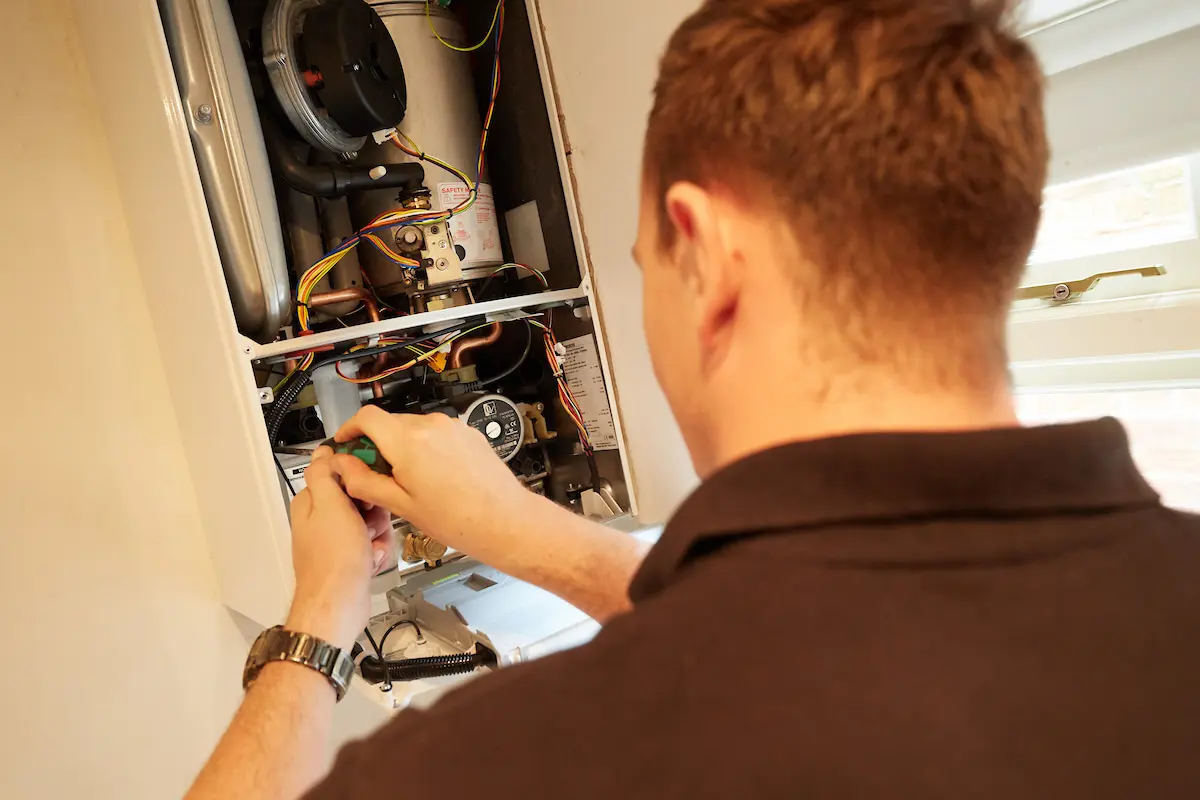
Thermostats and Smart Controls Can Make the Boiler Fire
Boilers are not famous for emotional intelligence. So when one keeps firing up, the useful question is what is asking it to run.
That could be the room thermostat, programmer, smart thermostat, receiver, wiring centre, cylinder thermostat, motorised valve or frost thermostat. A thermostat with weak batteries can cause more confusion than a TV remote in a holiday cottage.
Check the simple things first:
- Is the heating actually scheduled to be on?
- Has a smart thermostat been left in manual override?
- Is the room thermostat set higher than the room temperature?
- Are the thermostat batteries weak?
- Is the thermostat near a radiator, fire, sunny window or draught?
- Are multiple zones fighting each other?
If the thermostat is in a poor position, the boiler may stop before the rest of the house is warm. Then the room cools, the thermostat calls again, and the boiler starts another little performance.
Set Temperature, Scheduling and Oversized Boilers
The boiler's set temperature can matter, but not in the way some advice makes it sound. Running a boiler hot does not automatically make it turn on and off quickly.
If the set temperature is very low, the boiler may only fire for a few seconds before it reaches that low target and shuts down. That can look like short cycling, because it is basically asking the boiler to climb a kerb and then congratulating it for reaching the summit.
Oversized boilers can do the same thing. If the boiler's minimum output is still too powerful for what the heating system needs at that moment, it can heat the water too quickly and cycle off. This is especially noticeable in milder weather, smaller systems, new builds, heavily zoned systems or homes where most radiator valves are turned down.
After 5,000+ surveys, you start to see this pattern. A boiler is often chosen around hot water output, especially with combis, then the heating side is left trying to absorb far more power than the house needs. The boiler has brute force. Brute force is not the same as manners.
Important Set Temperature Caveat
Do not blindly turn boiler temperatures up or down. Stored hot water needs to be kept safe, and the correct boiler temperature depends on the boiler, cylinder, controls and system design.
Older non-condensing boilers generally need to run hot. Condensing boilers can often be set up differently for efficiency, but that is not the same as saying every boiler should run cool.
Poor Circulation Can Make a Boiler Start and Stop
A boiler needs water moving through it. If heat cannot get away from the boiler quickly enough, it reaches temperature too fast and shuts down to protect itself.
The boiler is not being dramatic. Well, it is, but sometimes it has a point.
Poor circulation can be caused by:
- sludge or magnetite in the system
- air in radiators or pipework
- a blocked strainer or system restriction
- a weak or failing pump
- closed radiator valves or TRVs
- a stuck TRV pin
- a stuck motorised valve or zone valve
- poor pipework design
- a blocked cold feed on older open-vented systems
A stuck TRV pin is especially common when one radiator stays cold. If most radiators are shut down, the boiler may not have enough open circuit to move heat properly. Heating systems do not enjoy being asked to circulate through a collection of closed doors.
| Radiator pattern | Likely direction | Why it matters |
|---|---|---|
| All radiators hot, house warm | Demand being met quickly, boiler possibly oversized for heating load | Settings, schedule, open radiator valves and boiler output may matter more than repair. |
| One radiator cold | Often stuck TRV pin, valve issue or air | Usually not enough evidence to blame the boiler. |
| Several radiators cold or lukewarm | Circulation, balancing, sludge, pump or pipework issue | The boiler may be firing but heat is not getting round properly. |
| Radiators heat briefly then cool while boiler cycles | Poor flow, overheating, control issue or restriction | This is much more fault-like and needs diagnosis. |
Pressure Problems Can Cause Cutting Out
Low pressure can make modern combi and system boilers stop working. Many sealed systems sit around 1 to 1.5 bar when cold, but the correct range depends on the boiler and system.
If the pressure is low, check for visible leaks around radiators, valves and pipework. If you top the pressure up and it drops again, that is not normal. It is the heating system leaving clues, just very damp ones.
High pressure can also cause trouble. If the pressure rises sharply when the heating comes on, then drops too low after cooling, that can point towards an expansion vessel or pressure relief valve issue.
Repeated topping up is not a long-term fix. It adds fresh water and oxygen into the heating system, which can contribute to corrosion over time. It also lets the original problem carry on wearing a hi-vis jacket and pretending not to be there.
Internal Boiler Faults That Can Cause Start-Stop Running
Sometimes the cause is inside the boiler or in the appliance controls. That is where the customer-safe checking stops.
Possible engineer-level causes include:
- flow or return temperature sensor faults
- water pressure sensor faults
- pump faults
- diverter valve issues on combis
- blocked heat exchanger
- fan, ignition or flame-sensing faults
- PCB or control faults
- incorrect burner setup or range rating
Your boiler is not haunted. Probably. But if the fault is internal, do not remove the boiler casing to investigate. Some boiler casings form part of the room-sealed appliance, and disturbing them can create safety risks if they are not refitted correctly.
Safety First
If you smell gas, suspect fumes, feel unwell, have a carbon monoxide alarm activation, or see signs of scorching or unsafe operation, stop using the appliance and follow emergency gas safety advice. The HSE advises calling the National Gas Emergency Service on 0800 111 999 if you suspect carbon monoxide spilling from a gas appliance.
No joke in this box. Some things do not need one.
What You Can Check Safely
You can gather very useful information without taking anything apart. Engineers love a good symptom pattern. It is the closest we get to detective work without a trench coat.
Before you call, check and note:
- Does it happen with heating, hot water, or both?
- How long does the boiler run before stopping?
- How often does it restart?
- Is there a fault code on the display?
- What is the pressure when the system is cold?
- What does the pressure rise to when heating is on?
- Are radiators heating properly?
- Are TRVs open on enough radiators?
- Is the house warm or still cold?
- Are all radiators that should be on getting properly hot?
- Are the radiators actually turned on?
- Has anyone changed thermostat settings, schedules or batteries?
- Is the external condensate pipe frozen in cold weather?
- Is water dripping from a copper discharge pipe outside?
A short video of the boiler starting and stopping can help too. Not every video needs to be cinematic. In this case, shaky footage of a fault code is genuinely useful. On older Worcester models, also record whether the blue boiler light is steady or flashing, because the flash pattern can be part of the diagnostic evidence.
Should You Keep Resetting the Boiler?
No, not repeatedly. One reset after a known issue can be fine if the boiler manual says so. Repeatedly resetting the same lockout is not a repair.
It is pressing snooze on a safety device. Nobody should build a heating strategy around snooze.
If the boiler locks out again, write down the code and book diagnosis. The fault code may tell the engineer whether the boiler is seeing pressure, ignition, circulation, overheating or sensor trouble.
Can a Boiler Service Fix It?
Sometimes a service can help, but it depends what is wrong. A proper boiler service should include checks that can pick up pressure problems, expansion vessel issues, combustion readings, leaks, condensate trap issues and visible deterioration.
But if the boiler is actively faulting, it may need diagnosis and repair first. Then the service can be completed properly afterwards. This is not awkwardness. It is sequence.
Tell our heating engineers the symptoms before the visit. If we know the boiler is cutting out, showing a specific fault code or losing pressure, we can often arrive better prepared. Engineers like being prepared. It reduces the amount of standing in front of a boiler making thoughtful noises.
My Take
Do not replace a boiler just because it keeps turning on and off until someone has diagnosed why.
A replacement boiler will not solve sludge, poor circulation, closed valves, a low-heat-loss home or a heating system that cannot absorb the boiler's output. The same thing can happen again, just with a shinier case.
If a faulty boiler part is causing the problem, look at fixing the part first. Replacement is only worth discussing if the boiler is old, unreliable, unsafe, parts are poor value, or there are wider reasons to change it.
When to Call Vector Heat
Call us if the boiler is short cycling, locking out, losing pressure, overheating, showing fault codes, making unusual noises, failing to heat radiators properly, or turning on and off so often that you have started negotiating with it.
We can check whether the problem is the boiler, controls, pressure, pump, valves, circulation, system water, oversized output or wider heating design.
That distinction matters. A boiler can only behave properly if the system around it lets it.
FAQ
Why does my boiler keep turning on and off?
Start by asking whether the boiler is doing its job. If the house is warm and radiators are hot, it may be cycling because demand has been met quickly. If the house is cold or radiators are patchy, it points more towards short cycling, circulation problems or a fault.
Is boiler short cycling dangerous?
Short cycling is not always an immediate danger, but it can point to faults and increase wear on the boiler. Treat gas smells, carbon monoxide alarms, scorching, repeated lockouts and unusual operation seriously.
Why does my combi boiler fire up when the heating is off?
Some combi boilers use a hot water preheat or comfort function. This keeps the boiler ready so hot water reaches the tap faster. A combi can also phantom fire because of a water-flow sensor or Hall sensor fault, so preheat is not the only possibility.
Can a thermostat make a boiler keep turning on?
Yes. Thermostat settings, weak batteries, poor thermostat position, smart schedules, receivers and wiring centres can all make a boiler fire when you did not expect it to.
Can low pressure make a boiler turn off?
Yes. Many modern boilers shut down if system pressure is too low. If pressure keeps dropping after topping up, the cause needs finding rather than topping up forever.
Can closed radiator valves cause short cycling?
Yes. If too many radiator valves or TRVs are closed, the boiler may not be able to move enough heat around the system. That can make it heat up too quickly and cycle off.
Should I keep resetting my boiler?
No. One reset may be fine if the boiler manual allows it, but repeated resets are a warning sign. Write down the fault code and book diagnosis.
Can a boiler service fix short cycling?
Sometimes, if the cause is related to maintenance, pressure, condensate, combustion checks or simple issues found during the service. If the boiler is actively faulting, diagnosis and repair may need to happen first.
Boiler still doing the start-stop routine?
Vector Heat can diagnose boiler cutting out, pressure faults, thermostat problems, circulation issues and short cycling across Lincoln and Lincolnshire.
Ask Vector Heat to check it