
Targeted repair
One cold radiator may need a stuck valve pin freeing, air removing, balancing or a local blockage repairing rather than a full clean.
Power flushing
A full-day deep clean for badly sludged heating systems, normally from around £800. We assess the symptoms first because one cold radiator does not automatically need a power flush.
Power flushing
Power Flushing
Power flushing is the most thorough cleaning option for a badly contaminated wet-heating system. It is not the right answer to every cold radiator or boiler fault.
One cold radiator may need a stuck valve pin freeing, air removing, balancing or a local blockage repairing rather than a full clean.
A chemical or mains-pressure clean can be enough where contamination is modest or the system needs preparation rather than intensive cleaning.
Best reserved for stronger evidence such as several cold-bottomed radiators, black water, poor circulation or a magnetic filter that repeatedly fills.
A full domestic power flush normally starts from around £800 and usually takes a full working day. Large or particularly difficult systems can cost more. Repairs, blocked pipework and replacement components are separate, so we confirm the scope before booking.
Liam has 23 years of plumbing and heating experience, including diagnosing circulation faults in older and altered systems. The evidence decides whether we bring the power-flushing machine or recommend a smaller repair.
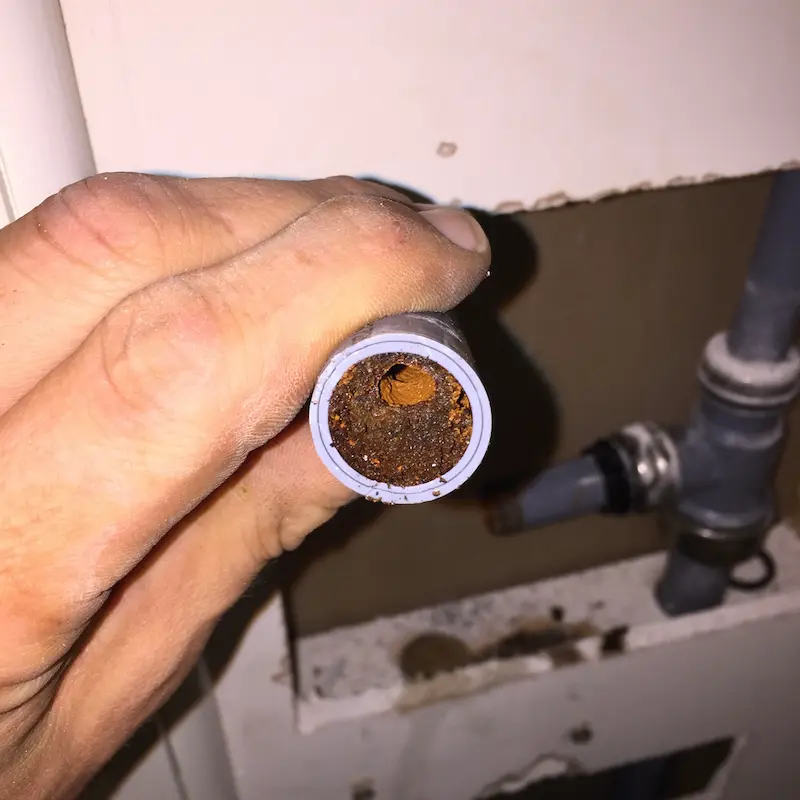
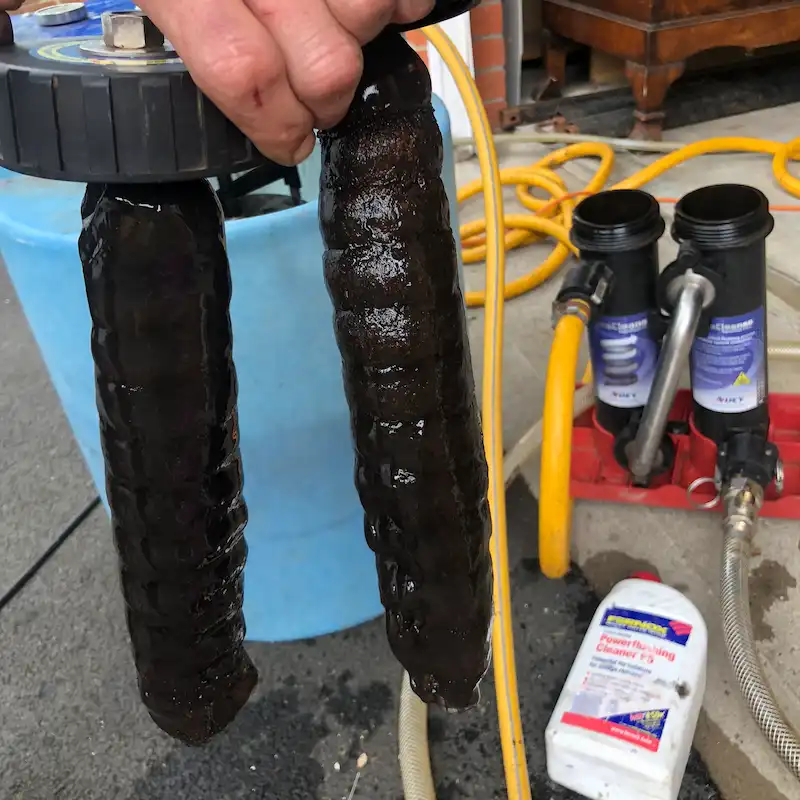
Power flushing uses specialist equipment and cleaning chemicals to remove magnetite sludge and debris from radiators and heating pipework. Done for the right reason, it can restore circulation and help protect pumps, valves and heat exchangers.
Diagnosis matters. A single cold radiator is often a local valve, air or balancing fault. Several cold radiator bottoms, black system water, poor circulation, repeated pump trouble or a magnetic filter that keeps filling are stronger evidence of widespread contamination.
Magnetite is a black magnetic product of corrosion inside wet central-heating systems. It can settle in radiators, narrow pipework, pumps and heat exchangers.
As sludge builds up it can settle in radiators, pipework, pumps and heat exchangers, restricting water flow around the system.
Common signs of sludge include:
Left untreated, sludge can reduce efficiency and contribute to costly component failures.
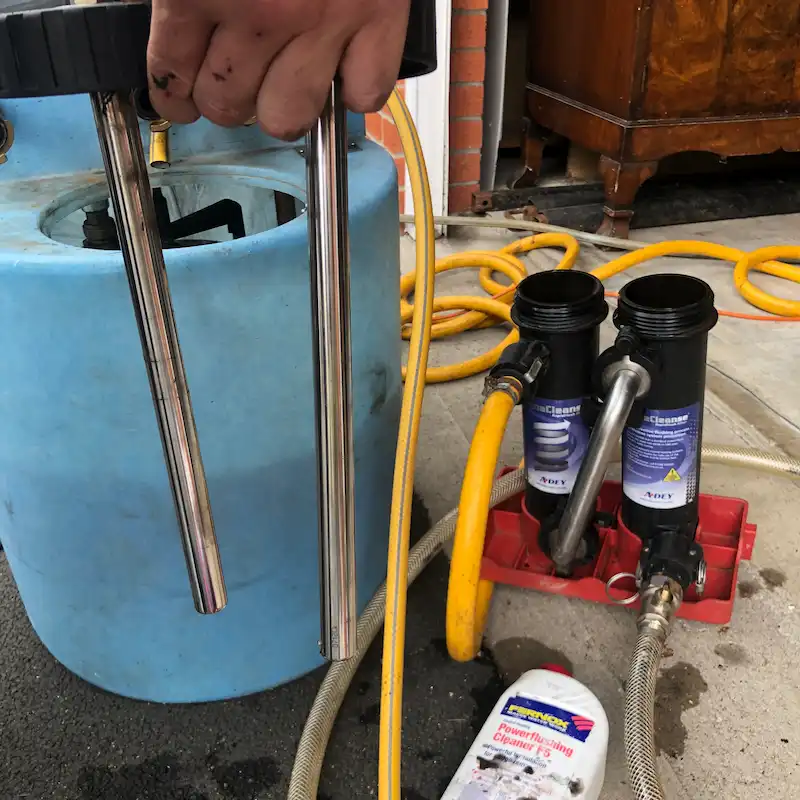
We connect specialist flushing and magnetic filtration equipment to the heating system and circulate cleaning chemicals through the pipework.
Cleaning chemicals are added to break down sludge and corrosion deposits while the machine removes the debris from the system.
Each radiator is cleaned individually. Where appropriate, careful agitation with a rubber mallet helps loosen compacted deposits without treating every part of the system as if it has the same restriction.
Once the system is clean, we thoroughly flush it with fresh water before adding a corrosion inhibitor to help protect the system in the future.
Where appropriate, we may recommend a magnetic system filter. It is useful protection, but it is not a substitute for correcting the cause of corrosion and it needs routine cleaning. Once full, a filter stops collecting effectively.
Not every heating system needs a power flush.
In some cases, a chemical flush or targeted repair may be more appropriate. Our heating engineers assess the condition of the complete system and advise on the best solution.
A power flush can often:
A power flush may be worth considering if:
A new boiler or heat pump needs clean, correctly treated system water, but that does not mean every installation needs a power flush. The cleaning method should match the system’s history, water condition and amount of contamination.
We look at the symptoms before recommending the machine. Cold radiator bottoms and black system water can point towards sludge. A single cold radiator, failed pump or blocked valve can point somewhere else.
If the water and circulation evidence support a power flush, we explain what will be cleaned and what the price includes. If the fault needs a targeted repair, lighter clean or component replacement, we say that instead. A blocked cold feed or pipe section can still need separate repair work.
The aim is to fix the circulation problem, not sell the largest cleaning machine available. Heating systems are quite capable of being awkward without us adding the wrong treatment.
If the symptom points to the appliance rather than system water, start with our boiler repair service. If cleaning forms part of a replacement project, our boiler installation team will specify the water treatment that the existing system actually needs.
Tell us which radiators are affected, what the system water looks like and whether the boiler or pump is noisy. That gives us a useful starting point before arranging the next check.
Power flushing information
Clear answers on diagnosis, price, time and system condition.
Not from one cold radiator alone. A stuck thermostatic radiator valve pin, trapped air or balancing fault is often the cause. Several radiators with cold bottoms, black system water, poor circulation or a filter that repeatedly fills are stronger signs that a power flush may be appropriate.
A full domestic power flush normally starts from around £800. Large or particularly difficult systems can cost more, and repairs or replacement components are separate. We confirm the scope before the work is booked.
A proper power flush normally takes a full working day. The time depends on the number of radiators, the amount of contamination and whether blocked pipework or failed components are found.
A lighter chemical or mains-pressure clean can be enough for modest contamination or preparation work. A power flush uses specialist equipment to move cleaning chemicals through a badly contaminated system and clean radiators individually. Diagnosis decides which level of cleaning is justified.
Power flushing does not create corrosion, but a badly corroded radiator or component may start leaking when deposits that were masking an existing weakness are loosened. We discuss the condition and repair limits before work starts.
No. A new boiler needs clean, correctly treated system water, but the cleaning method should match the water condition, system history and contamination. Some systems need a lighter clean; badly sludged systems may justify a full power flush.
A magnetic filter is useful system protection, but it is not a substitute for correcting the cause of corrosion or cleaning a badly contaminated system. Once a filter is full it stops collecting effectively, so it also needs routine maintenance.
Enquiry form