
Heat Geek Partner · MCS design · Proper commissioning
Expert Heat Pump Installation in Lincolnshire
Vector Heat designs and installs heat pumps properly: room-by-room heat loss, the right emitters, tidy pipework, careful commissioning and aftercare from engineers who understand how to make low-temperature heating perform.
Your design is led by Liam and backed by practical experience across boilers, heat pumps and whole-system heating design.

- 23 yearsin plumbing & heating
- 5,000+boiler & heat-pump surveys
- 6 yearsdesigning & installing heat pumps
- 150+boilers completed in a year
Learn before you buy
A heat pump is only as good as the design behind it
Planning a new home? Our new-build heating service brings the heat pump, hot water and floor-heating design together while the plans can still be changed.
Read more Show less
The calculations include heat loss, radiator sizing, pipework resistance, flow temperature optimisation, hot water planning, controls, warranty considerations, manufacturer support, proper commissioning and handover.
Our aim is to explain the design clearly, so you know why each upgrade is recommended and what performance to expect before the job starts.
What we check first
- Room-by-room heat loss, not guesswork.
- Property usage and occupancy patterns.
- Radiator output at lower flow temperatures.
- Pipework size, flow rates and restrictions.
- Hot water cylinder suitability and recovery.
- Controls, weather compensation and user setup.
- Grant eligibility and MCS requirements.
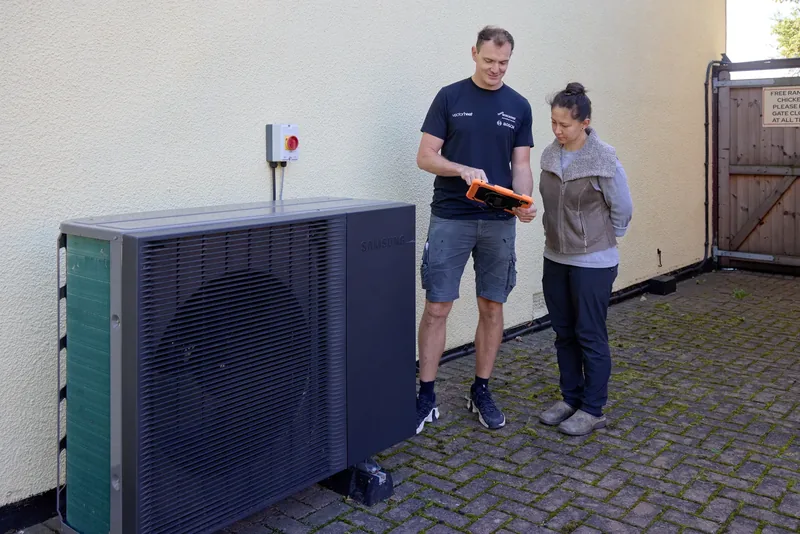
Design-led installation
Our heat pump process
1. Initial enquiry and rapid response
Send your postcode, current heating type, a few photos and what you want to achieve. We will quickly tell you whether a heat pump looks suitable, what information we need next and whether the BUS grant is likely to apply.
2. Home survey and heat-loss calculation
We calculate how much heat each room needs on a cold day. This is the foundation of the whole design. Without it, the heat pump can be oversized, undersized, noisy, inefficient or expensive to run.
3. Radiator, UFH and pipework assessment
Heat pumps are happiest at lower flow temperatures, so we check whether your existing radiators and underfloor heating can deliver enough heat. Some homes need very few changes. Others need selected radiator upgrades or pipework improvements.
4. Hot water cylinder and plant layout
We check the cylinder coil, hot water demand, available space and plant layout. A badly matched cylinder can slow recovery times or force the heat pump to run hotter than needed.
5. Installation, commissioning and handover
The final setup matters. Flow rates, weather compensation, balancing, water quality and controls all affect comfort and running cost. We commission the system and explain how to use it without turning it into a science project.
Useful information
Heat pump questions homeowners should understand
Will a heat pump work in an older Lincolnshire house?
Often, yes, but it depends on heat loss, radiator sizes, pipework and insulation. An older property does not automatically rule out a heat pump. The question is what flow temperature the house needs on a cold day and whether upgrades are sensible. Our service for heat pumps in older homes brings fabric improvements and heating design together. Homeowners to the west can also use our dedicated heat pump installation service in Retford.
Do I need to replace every radiator?
Not always. Some radiators may already be large enough. Others may need upgrading so the heat pump can run at a lower temperature. We only recommend upgrades where they improve comfort, efficiency or system reliability.
Will my bills be lower?
A well-designed heat pump uses less energy than a boiler, but electricity costs more per unit than gas. Running cost depends on efficiency, tariff, flow temperature, controls and how the home is used. That is why design and commissioning matter.
Why do some heat pumps perform badly?
The common causes are poor heat-loss calculations, undersized radiators, restrictive pipework, unnecessary buffers, incorrect controls, poor commissioning, bad water quality and customers not being shown how the system should be used.
Can you fix an under-performing heat pump?
Yes. We help with high bills, cold rooms, electrical faults, circulation issues, balancing, flow faults, buffer removal, pipework upgrades, re-commissioning, VDI 2035 water treatment, radiator balancing, underfloor heating issues, powerflushing, servicing and maintenance.
Request heat pump servicing in Lincoln or ask for a fault visit.
Jargon buster
Heat pump terms explained
Flow temperature
The temperature of the water leaving the heat pump and going to your radiators or underfloor heating. Lower flow temperature means better heat pump efficiency, provided the home can still heat properly at that temperature.
Weather compensation
A control method where the heat pump automatically changes the water temperature depending on the outdoor temperature. It helps the system run steadily and efficiently.
Heat loss
The amount of heat each room loses on a cold day. It tells us how much heat the system needs to put back into each room.
Emitter
The thing that emits heat into the room, usually a radiator, fan convector or underfloor heating circuit.
SCOP
Seasonal Coefficient of Performance. It is a seasonal efficiency figure. A SCOP of 4 means roughly 4 units of heat for every 1 unit of electricity over the season.
Buffer
A water vessel sometimes added to heat pump systems. Buffers can be useful in the right design, but unnecessary or badly piped buffers can reduce efficiency.
MCS
The certification scheme required for most grant-funded heat pump installations. It sets standards for design, installation and customer paperwork.
BUS grant
The Boiler Upgrade Scheme grant. It is applied for by the installer and deducted from the customer’s quote if the installation is eligible.
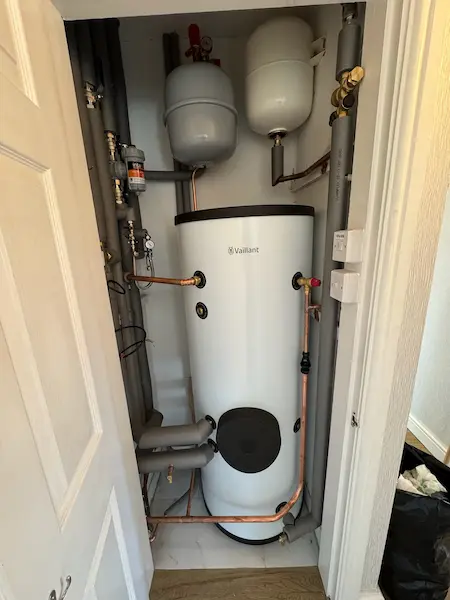
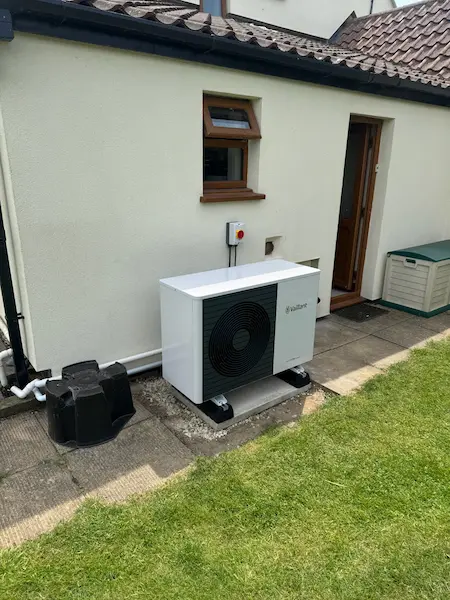
Recent installs
Recent heat pump projects
FAQs
Common heat pump questions
How long does a heat pump installation take?
Many installations take several days, but it depends on cylinder work, radiator upgrades, pipework routes and whether the existing system needs correcting first. We will explain disruption before the job starts.
Do I need planning permission?
Many domestic air source heat pumps are installed under permitted development, but there are limits and exceptions. We will check the basics during survey, especially if the property is listed, in a conservation area, or the unit location is tight. You can also check the official Planning Portal heat pump guidance.
Will the heat pump be noisy?
Modern units are generally quiet when located and commissioned properly. Noise depends on the unit, location, mounting, airflow and how hard the system has to work.
Do you install Vaillant, Worcester Bosch and other brands?
Yes. We install equipment from several manufacturers. The survey and design decide the required output, controls and hydraulic arrangement before a brand is selected.
Can you work with oil or LPG homes?
Yes. Oil and LPG homes are often strong candidates because running costs and grant support can make the switch more attractive, especially where the property is off the gas grid.
What should I send with an enquiry?
Send your postcode, current heating type, whether you own the property, photos of the boiler, cylinder and radiators, and any quote or survey you already have. This helps us respond quickly.
Enquiry form