
Record it
Capture the sound, display and pressure if it is safe.
Boiler Fault Guide
A boiler making a new noise has one special talent: it waits until everyone else is asleep before beginning its solo career.
Insights by Vector Heat
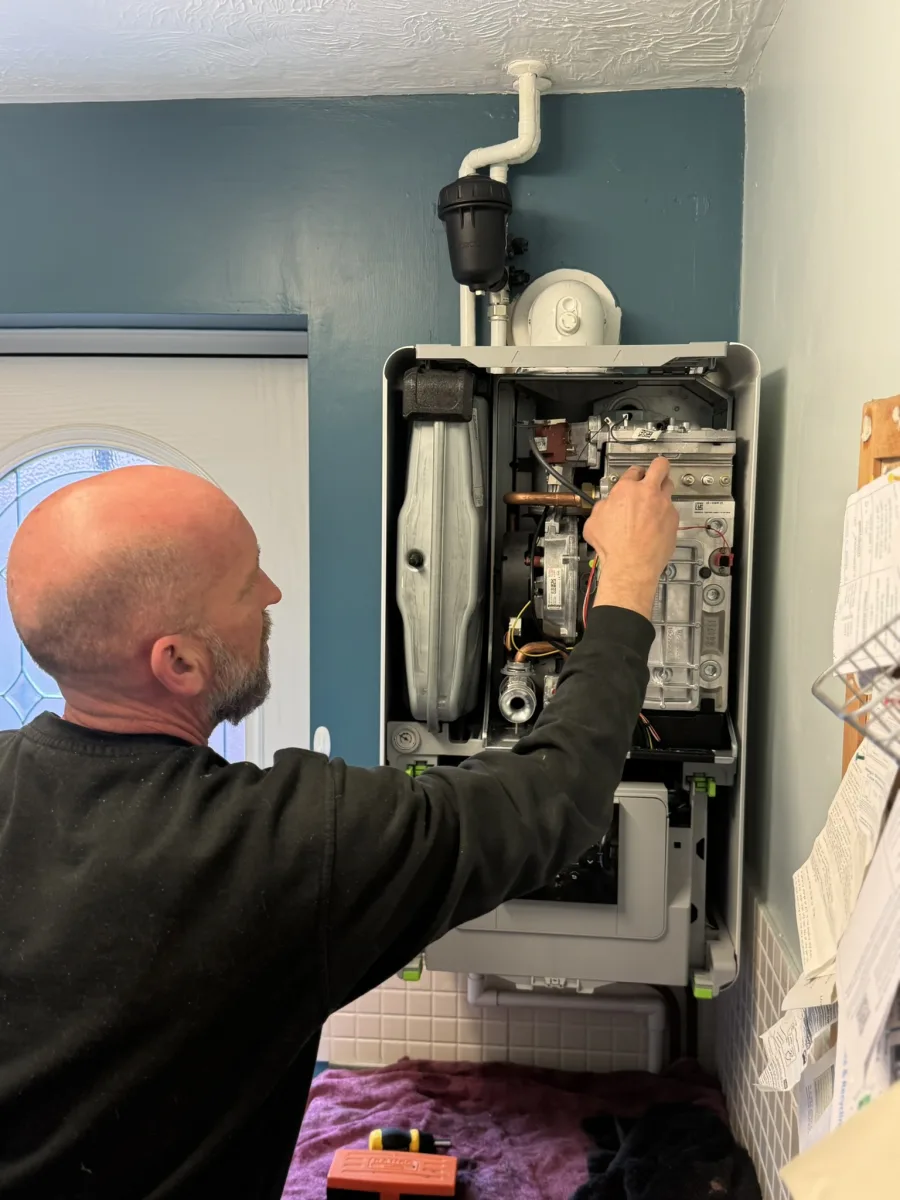
The useful answer is that banging, gurgling, vibrating, humming or whistling can come from several different causes. The sound by itself rarely proves which part has failed. Note where it comes from, when it happens, what the boiler display and pressure show, and whether the heating and hot water still work normally.
Record a short video with sound while the noise is happening, if it is safe. Do not keep an unsafe boiler running for a recording. Intermittent boiler noises have a remarkable ability to behave perfectly when an engineer arrives.
Capture the sound, display and pressure if it is safe.
Heating, hot water, ignition and shutdown give different clues.
Check whether it is really the boiler, not a pipe or radiator.
Do not remove the boiler case or adjust internal parts.
New, loud, persistent or worsening noises need diagnosis.
| Sound | What it may suggest | What to do |
|---|---|---|
| A really big bang as the burner lights | Likely explosive or delayed ignition, which can be very dangerous | Turn the boiler off immediately if safe. Do not reset or restart it. Arrange urgent professional help |
| Other banging or knocking | Expanding pipework, poor circulation, local overheating or a component fault | Note the timing and arrange diagnosis if loud or repeated |
| Loud vibration or humming | A pump, fan, valve, loose external panel or pipe vibration | Record it and book an engineer if new or strong |
| Gurgling | Air in the filter, radiators or pipework; low pressure or condensate trouble | Check pressure and carefully bleed accessible manual vents on a cool system, following the guidance below |
| Whistling or kettle sound | Restricted heat transfer or circulation, sometimes called kettling | Arrange diagnosis promptly. Turn the boiler off if severe |
| Clicking or ticking | Normal metal expansion, ignition or a control operating | Check whether it is brief and limited to start-up or cool-down |
| Buzzing or whining | An electrical or moving component under strain | Arrange prompt professional investigation |
This is a clue table, not a replacement for fault finding. Two boilers can make similar noises for completely different reasons.
Only record if the boiler is safe to leave running. Do not restart it after a violent bang, gas smell, smoke or other danger sign. For an ordinary intermittent noise, film 20 to 30 seconds without touching or opening anything. Try to capture:
Tell the engineer whether the radiators are evenly hot, patchy or cold. If the problem only happens on hot water, say so. Our guide to cold taps and combi faults explains what the boiler's response can tell us. If it began during freezing weather, mention that too.
A recording does not diagnose the boiler, but it preserves the evidence. That is far more useful than saying it sounded “sort of like a tractor, but moodier”.
No boiler is silent. A modern boiler can make a brief fan sound, click during ignition, hum while the pump is running and continue circulating water after the burner stops. Pipes and radiators also expand and contract as they warm and cool.
Normal sounds are usually familiar, brief and consistent. Pay more attention when a noise is new, much louder than before, lasts longer, comes with a fault code, affects heating or hot water, or is accompanied by pressure changes, leaks or repeated lockouts.
The timing matters. A really big bang at the moment the burner lights points to explosive ignition, not ordinary pipe expansion. Fuel has not lit cleanly and can ignite suddenly. Turn the boiler off immediately if safe, do not reset it, and arrange urgent professional help.
Banging can come from the boiler, pipework or radiators. Pipes can move against clips, timber or floorboards as they heat up. A radiator or heating circuit can also make noise when air or poor circulation affects water movement.
Inside a boiler, banging or rumbling may point towards restricted circulation, local overheating, a pump problem or another component fault. Do not assume it automatically means sludge and do not book a power flush based on noise alone. A proper diagnosis should also look at radiator heat patterns, system-water condition, filters, pipe temperatures and circulation.
If other banging is violent, repeated or getting worse, turn the boiler off and arrange an engineer.
A loud vibration or humming sound can be produced by moving components such as a pump or fan, by valves and water flow, or by an external pipe or panel transferring vibration through the building.
Timing helps. Does it begin at ignition, after the burner has been running, only with a hot tap, or during pump overrun after the flame stops? That information is much more useful than the word “vibration” on its own.
Do not press on the boiler case or remove panels to silence it. Record the noise and let a Gas Safe registered engineer inspect the appliance.
A quiet, brief gurgle is not automatically dangerous. Trapped air in the heating filter can make a lot of gurgling noise, as can air in radiators and pipework. That is why many filters have a bleed nipple: it lets the trapped air out.
Bleeding trapped air is a homeowner job where there is a safely accessible manual bleed point and the manufacturer's instructions allow it. You do not need a call-out just to release air from a sound, accessible vent. Include the filter and other manual heating-system air vents, not just the radiators.
Be particularly cautious if an air vent shows signs of leaking. I have known bleed nipples to break off when disturbed. If it is leaking, corroded, damaged or will not turn easily, leave it alone and ask us before trying. A towel will not control an open leak if the nipple breaks.
Persistent gurgling can also accompany low system pressure, poor circulation or a condensate problem. In freezing weather, a blocked external condensate pipe may cause gurgling and a boiler lockout. Check the display and pressure gauge, but use the manufacturer's instructions before attempting any homeowner reset or condensate action.
If the gurgling clears after bleeding and the heating works normally, there may be nothing else to do. If air keeps returning, pressure keeps dropping, or there are leaks, repeated lockouts or no heating, arrange an engineer rather than repeatedly bleeding and refilling the system.
Kettling is the name given to a rumbling, popping or whistling sound caused by water locally overheating inside the boiler. It can sound like a kettle beginning to boil.
When circulation is restricted, the water spends too long in the boiler instead of carrying the heat away. It can become hot enough to boil locally. Scale or baked-on debris can also prevent heat transferring properly, creating hot spots even when water is circulating.
Kettling is not good for the heating system. Local overheating can form steam bubbles and release dissolved gases, adding to air and circulation problems. If water is being lost and repeatedly topped up, the fresh oxygen brought in can increase corrosion. Do not leave kettling for months just because the heating still works.
The repair depends on the cause: scale, debris, a pump fault or another restriction. A system flush will not repair every kettling boiler, and a new boiler will not cure poor circulation elsewhere in the system. Arrange a diagnosis promptly, and turn the boiler off if the sound is severe.
Yes. Heating pipes can click, creak or knock as metal expands and moves against clips, joists or floorboards. Radiators can gurgle when air is present and tick as they warm or cool. Sound can travel through water and pipework, making a radiator problem sound as though it comes from the boiler.
Stand in different rooms and listen without touching the appliance. Note which radiator or section of pipe becomes noisy first. This simple location check can save time during the visit.
These checks are for a boiler without the danger signs described above. Do not run or reset a boiler that has made a violent bang at ignition.
Do not remove the boiler case, adjust internal components, work on the flue or keep resetting a boiler that repeatedly locks out.
A really big bang as the burner lights needs immediate action: turn the boiler off if safe and leave it off until it has been checked. Do not restart it to test it or get a video. Also stop using it and arrange urgent advice for violent noise, burning smells, smoke, water reaching electrics or repeated lockouts.
If you smell gas, open doors and windows, avoid flames and electrical switches, leave the property and call the National Gas Emergency Service on 0800 111 999 from a safe place. If a carbon-monoxide alarm sounds or anyone has possible symptoms, get into fresh air and seek medical help.
An engineer will combine the recording and timing with live tests. Depending on the symptom, that can include combustion, fan and pump operation, water pressure, flow and return temperatures, condensate, valves, sensors, system circulation and the condition of system water.
After 23 years in plumbing and heating, my view is simple: do not diagnose a boiler from the soundtrack alone. The best repair starts by proving what happens immediately before, during and after the noise.
A combi may run briefly for hot-water preheat or frost protection, and a pump may continue after the burner stops. If the noise is new, frequent or loud, record it and check the boiler status rather than assuming the burner is firing.
Low pressure can contribute to poor circulation and gurgling, but it is not the only cause. Check the gauge and the manufacturer's normal range. If pressure keeps dropping, the system needs investigation.
Not necessarily. A flush should be recommended from evidence such as system-water condition, several radiators with cold bottoms, poor circulation or repeated debris in a filter. Noise alone is not enough.
Kettling means water is locally overheating, often because circulation or heat transfer is restricted. It can damage the system and should be investigated promptly, even if the boiler still works. Turn the boiler off if the noise is severe and arrange a qualified engineer.
A slight familiar hum can be normal. A new, strong or worsening vibration needs diagnosis, especially if it comes with poor performance, a fault code or lockout.
Do not reset a boiler that has made a violent bang at ignition or shows other danger signs. Turn it off and have it checked. For other faults, only reset if the exact model's instructions say to, and do not keep resetting a boiler that locks out.
Send Vector Heat any video you have already captured safely, plus a photo of the display and pressure. Do not restart an unsafe boiler to make a recording. We can use that evidence to plan the right boiler-repair visit.
Arrange boiler repair in Lincoln