
Single split
Usually the cleanest-value fixed system.
Air conditioning
For one bedroom, office or garden room, a fixed high-wall split is usually the strongest place to start. The indoor box is only one part of the decision.
Insight by Vector Heat
Most people searching for wall hanging AC units mean a fixed high-wall indoor unit connected to an outdoor condenser. For cooling or heating one room, this single-split arrangement is usually the simplest and best-value permanent system.
The choice still needs more than picking the least offensive white rectangle. Output, low-speed noise, airflow, outdoor-unit position, pipe route, condensate drainage, electrics and maintenance access decide whether it remains pleasant after the installer leaves.
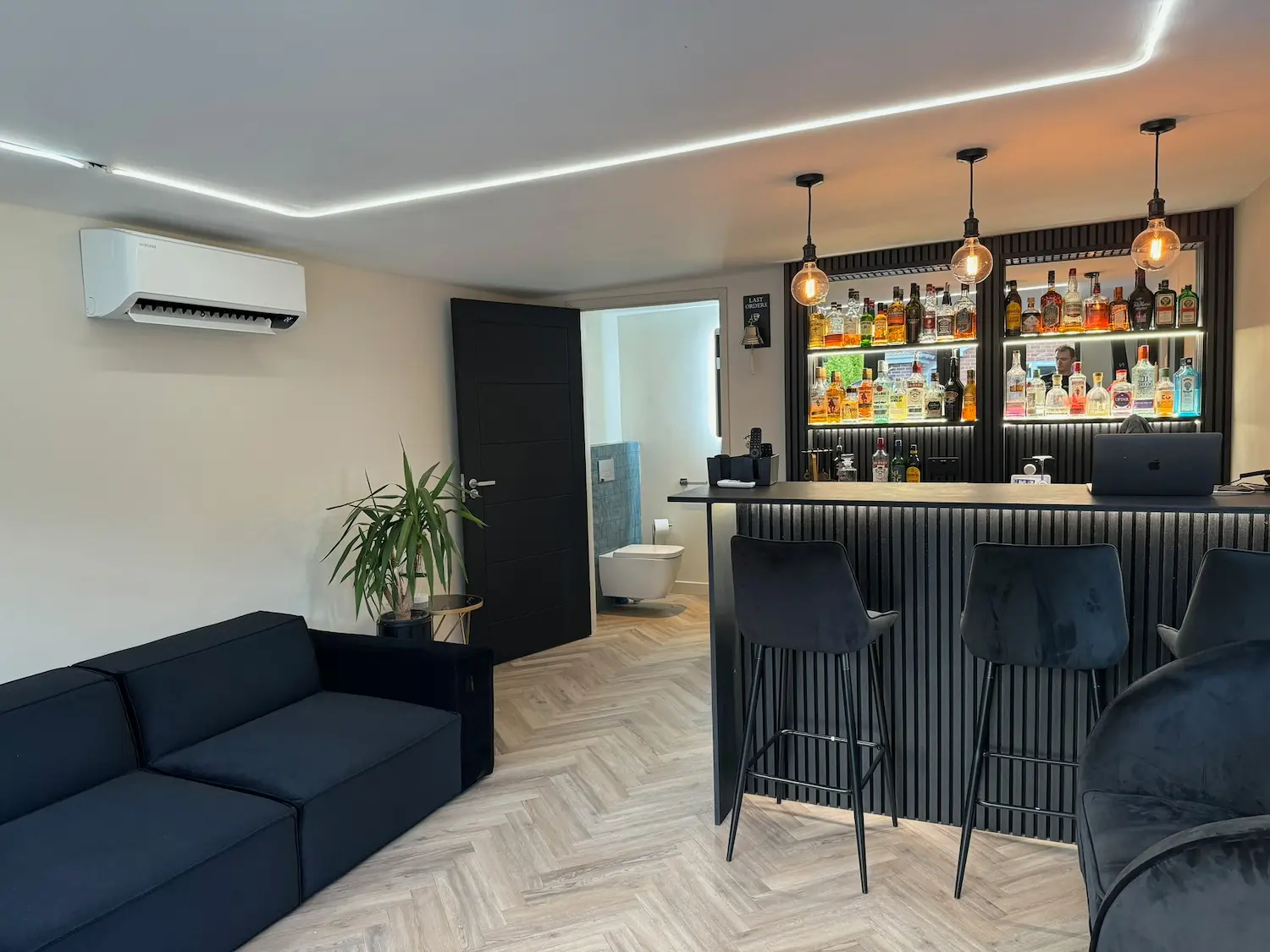
Usually the cleanest-value fixed system.
Separate singles can beat an expensive multi split.
One outdoor unit can start making more sense.
Reversible systems work in both directions.
Water needs a quiet, reliable route away.
“Wall hanging”, “wall hung”, “high wall” and “wall mounted” normally describe the indoor fan-coil unit. It draws room air through a filter, transfers heat at its coil and circulates the conditioned air back into the space.
A normal fixed split also needs:
The system is an air-to-air heat pump. In cooling mode it moves heat from the room to outside. In heating mode it reverses direction and moves heat from outside into the room.
| System type | Strongest use | Main compromise |
|---|---|---|
| High-wall split | Permanent cooling/heating for one room or open area | Visible indoor unit and an outdoor unit |
| Portable AC | Renters, occasional use and no permanent work | Indoor noise, floor space, window hose and lower real-world efficiency |
| Through-wall monoblock | Where a separate outdoor unit is prohibited | Large wall openings and more equipment/noise inside |
| Ceiling cassette | Larger open-plan or commercial rooms with ceiling void | More building work, drainage and ceiling depth |
| Ducted unit | Concealed multi-room design planned with the building | Duct space, access, cost and more involved retrofit |
| Floor console | Rooms lacking useful high-wall space | Uses low wall area and can be less economical to buy |
A portable unit can be the sensible low-commitment answer. For regular use, a split puts the compressor outside and avoids holding a window open around a hot exhaust hose, so it is normally quieter and more effective.
A single split connects one indoor unit to one outdoor unit. A multi split connects several indoor units to one larger outdoor unit.
For one room, I nearly always start with a single split. For two or three rooms, I price and compare both approaches rather than assuming fewer outdoor boxes must be cheaper. Multi-split equipment and pipe routing can make it poor value at the small end. At four or five indoor units, one shared outdoor unit often becomes more attractive, particularly where outside space or appearance limits the number of condensers.
There is another limitation people miss: most domestic multi splits share an operating mode. One bedroom cannot normally demand cooling while another indoor unit demands heating from the same outdoor system. Individual rooms can be off or have separate set points within the common mode, but the exact behaviour must be checked in the product data.
| Question | Separate single splits | Multi split |
|---|---|---|
| Outdoor units | One per indoor unit | Usually one shared unit |
| Small two-room project | Can be better value | Can carry a price premium |
| Resilience | One fault affects one room | Outdoor fault can affect all connected rooms |
| Simultaneous mode | Each system can heat or cool independently | Connected units normally share heating or cooling mode |
| External appearance | More outdoor boxes | Fewer outdoor boxes |
Floor area gives an initial direction, not a final answer. The survey should account for room volume, glazing area and direction, roof exposure, insulation, occupancy, computers/appliances, neighbouring spaces and the desired indoor condition.
An undersized unit may run flat out and fail to reach the target on the hottest afternoon. A badly oversized unit can cool the air quickly but cycle or control humidity less comfortably. Inverter-driven units can turn down, but each model still has a working range.
Compare more than headline cooling kW:
The indoor unit should be high enough for unobstructed airflow, but its service covers and filters still need access. It should throw air through the occupied zone without firing a cold draught directly at the bed, sofa or desk. Our guide to aircon in a bedroom explains the sleep, landing and overnight-noise trade-offs in more detail.
Its wall position must work with the rest of the installation:
The outdoor unit needs clear airflow, service access, safe support, drainage in heating/defrost operation and a position that manages sound for the owner and neighbours. Hiding it inside a tiny decorative box defeats the part where it needs to move a lot of air.
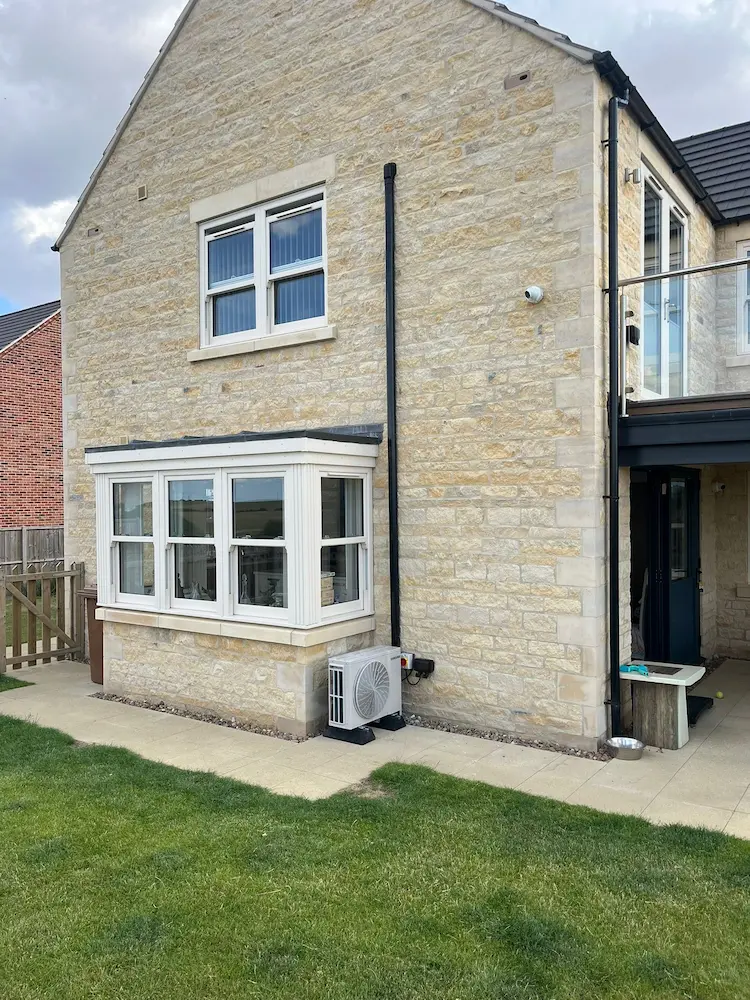
Cooling removes moisture from room air. That condensate collects in the indoor unit and must drain safely. A gravity drain is usually the quietest and simplest route. It can run outside or, where correctly designed, to a suitable internal waste connection.
If gravity is impossible, a condensate pump can lift the water. Pumps are useful, but they add a moving part, require maintenance and can make a short buzzing sound. That may be unimportant in a salon and remarkably interesting at 2am in a bedroom.
Yes, provided it is designed for the job. Every air-conditioning system Vector Heat installs can heat and cool. Compared with panel heaters, an air-to-air heat pump can deliver several units of heat for each unit of electricity under suitable conditions.
Main-heating design needs a room-by-room heat loss and the manufacturer's heating output at the winter design temperature. Outdoor coils periodically defrost in cold, damp weather, temporarily reducing delivered heat. Capacity and efficiency also change with outdoor temperature. The nominal cooling badge is not a winter heat-loss calculation.
GOV.UK states that people working on equipment containing F gas need the correct qualification. A professional installation also covers electrical work, penetrations, condensate, pressure testing, evacuation, refrigerant commissioning, controls and documentation.
Planning permission is not needed for every domestic system, but permitted-development limits and conditions apply. Flats, listed buildings, conservation constraints, leases and a difficult neighbour-facing position deserve an early check. Our guide to air-conditioning planning permission covers the decision in more detail.
The Boiler Upgrade Scheme now lists £2,500 for eligible residential air-to-air heat pumps in England and Wales. It is not an automatic discount on any cooling-only unit. The property, system and MCS installation must meet the scheme rules, so eligibility needs confirming before the quotation relies on it.
The best wall-mounted unit is the one whose complete installation suits the room. A product leaderboard cannot see your outside wall, which is inconvenient but not yet something manufacturers have solved.
It normally means a high-wall indoor unit connected to an outdoor unit as part of a split air-conditioning system. Refrigerant pipes, power/communication cable and a condensate drain connect the complete installation.
For a permanent installation, a properly sized fixed split is normally quieter, more efficient and more effective. A portable unit is cheaper to start with and can move rooms, but it takes floor space, needs an exhaust hose and usually makes more indoor noise.
A normal split system does. Through-wall monoblock products keep the refrigerant circuit indoors and use large wall openings instead, but they are a different compromise and can be noisier inside.
A single split is normally best value for one room. For two or three rooms, compare separate singles with a multi split carefully. Multi splits often become more compelling around four or five indoor units or where outdoor-unit space is restricted.
Yes. The systems Vector Heat installs provide heating and cooling. If the unit will be the main heating, size it from room heat loss and manufacturer output at the winter design condition, including defrost allowance.
High on a structurally suitable wall where air can spread through the occupied space, with service access, a sensible outdoor route and reliable condensate drainage. Avoid placing the airflow directly onto a bed or desk where a better position exists.
Work on equipment containing F gas requires the correct qualification, and the complete installation also includes electrical, drainage, structural and commissioning work. Use a suitably qualified air-conditioning installer.
The Boiler Upgrade Scheme currently lists £2,500 for eligible residential air-to-air heat pumps in England and Wales. The system must meet the scheme rules, so confirm property and installation eligibility with an MCS installer before relying on the grant.
Vector Heat can survey the room, compare single and multi-split arrangements and plan the indoor unit, outdoor unit, condensate and pipe route together.
Explore air conditioning installation