
Strong fit
Roughly half the homes I survey look ready for a heat pump.
Heat pumps and boilers
A heat pump wins on some homes and a gas boiler remains the practical choice on others. The useful comparison starts with the property, not the team scarf.
Insight by Vector Heat
For a suitable home, a properly designed heat pump offers low-carbon heating, steady comfort and running costs that can compete with gas. A gas boiler usually costs less to replace like for like and can be the more practical short-term choice where the property, budget or homeowner does not suit a heat-pump project.
My answer after years of surveying both systems is not “heat pumps everywhere” or “boilers forever”. It is: measure the house, understand the household and show the numbers.
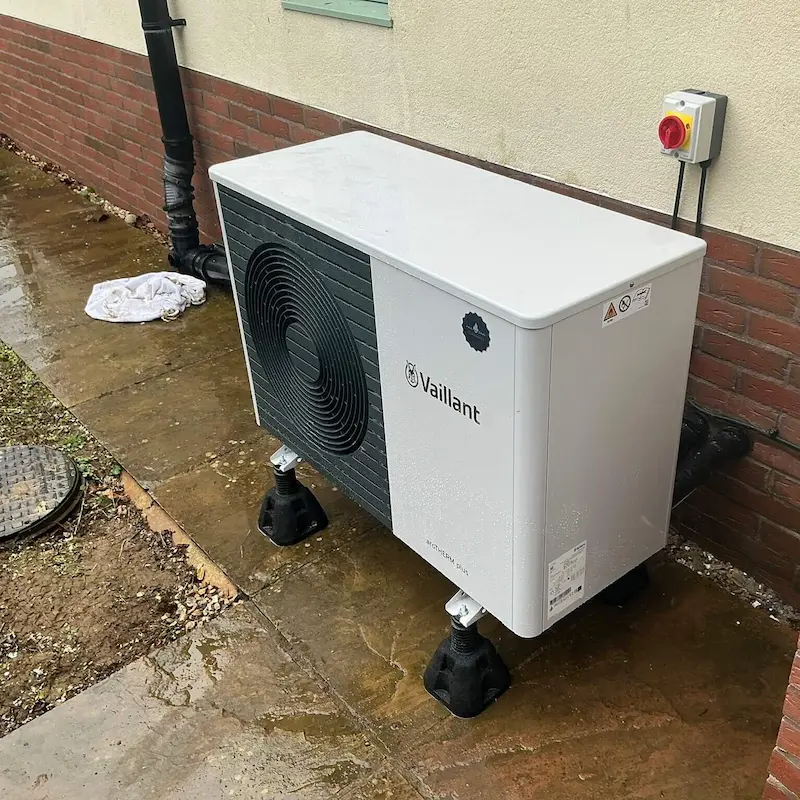
Roughly half the homes I survey look ready for a heat pump.
About three in ten need a modest amount of system work.
Some need significant emitter, pipework or fabric upgrades.
A small group genuinely may not make practical sense.
Those percentages are my experience-based survey pattern, not a national statistic. They describe the homes I see and are included to show that suitability is a spectrum.
| Question | Air-to-water heat pump | Gas boiler |
|---|---|---|
| How does it make heat? | Moves heat from outdoor air into heating water using electricity. | Burns mains gas and transfers combustion heat into heating water. |
| Typical system style | Longer, lower-temperature operation with weather compensation. | Can run at higher water temperatures and often in shorter periods. |
| Domestic hot water | Normally stored in a cylinder. | Can be instant from a combi or stored with a system/heat-only boiler. |
| Outdoor requirement | Needs a suitable outdoor unit position and route indoors. | Needs a legal flue terminal and gas supply. |
| Upfront project | More design-led; may include emitters, cylinder and electrical work. | Often simpler and cheaper for a like-for-like replacement. |
| Running cost | Depends strongly on seasonal efficiency and electricity tariff. | Depends on gas price, boiler efficiency, controls and flow temperature. |
| Carbon at the home | No on-site combustion; electricity's carbon intensity continues to change. | Produces carbon dioxide by burning fossil gas. |
| Comfort | Steady, even heat when designed and controlled well. | Familiar response and hot radiators, though it can also be optimised to run cooler. |
Sometimes. At current standard-tariff prices, good heat-pump performance can put it around the cost of a new gas boiler, while a suitable heat-pump tariff can make it cheaper. Poor seasonal performance or an expensive tariff can move it the other way.
Ofgem's average direct-debit cap for 1 July to 30 September 2026 is 26.11p/kWh for electricity and 7.33p/kWh for gas. If a gas boiler converts 90% of its bought gas into useful heat, each useful kWh costs about 8.1p before standing charges. A heat pump at a seasonal performance factor of 3.2 costs about the same:
26.11p electricity ÷ 3.2 seasonal performance = about 8.2p per useful kWh.
That is a break-even illustration, not an annual bill forecast. It leaves out standing charges, circulation pumps, hot-water differences and tariff variation. If removing gas lets you cancel the gas account, avoiding its standing charge helps the heat-pump side. If the home needs high flow temperatures and the heat pump only achieves a low seasonal performance, it hurts it.
Energy Saving Trust's current guidance reaches the sensible middle ground: on standard tariffs, heat-pump running costs can be similar to or slightly above a new gas boiler, while time-of-use heat-pump tariffs can reduce them significantly. Anyone promising one fixed saving without your heat demand, design SCOP and tariff is presenting arithmetic in fancy dress.
A straightforward gas-boiler swap is usually the lower-cost installation. The flue, gas supply, condensate and system still need checking, but much of the existing arrangement may be reusable.
A proper heat-pump quote can include:
The Boiler Upgrade Scheme currently offers £7,500 towards an eligible air-to-water heat pump in England and Wales. Eligible off-gas homes replacing oil or LPG can receive £9,000 until March 2027, but a mains-gas replacement remains at £7,500. The MCS installer applies the grant to the project, so eligibility should be confirmed in the quotation.
A heat pump needs to deliver the home's heat loss at the outdoor design temperature while keeping water temperature as low as practical. It is a strong candidate where the property has:
A new build is the obvious place to design around low-temperature heating from day one. Existing and older homes can also work well. Insulation is useful because it reduces demand for any heating system, but a home does not need to resemble a vacuum flask before a heat pump is allowed through the gate.
A solid-wall, single-glazed or listed property may need a more careful project. The answer could involve selective fabric work, larger emitters or a higher-temperature design. Our older-home heat pump service brings those decisions together for Lincolnshire properties. In a few homes the disruption and cost do not make sense. Saying that openly makes the recommendation more credible, not less.
A gas boiler can remain a practical choice when the customer wants a low-disruption replacement, there is no acceptable outdoor-unit location, cylinder space is genuinely unavailable, or the heat-pump-enabling work is disproportionate to the wider plan for the property.
It may also be a timing decision. A failed boiler in winter creates a different decision window from a homeowner planning two years ahead. If a working boiler is retained, it is still worth improving controls, lowering the flow temperature where the system allows and avoiding unnecessary oversizing.
Most importantly, I will not force a heat pump onto someone who does not want one. The customer lives with the heating. My job is to explain the consequences of each option and design the chosen system properly.
Not automatically. A radiator gives less heat as the average water temperature gets closer to the room temperature. The survey therefore compares each room's heat loss with what its existing radiator can emit at the proposed heat-pump flow temperature.
Some radiators are already oversized. Some rooms need a larger double-panel radiator. Others may benefit from a fan-assisted emitter or targeted fabric improvement. The correct answer is a room-by-room schedule, not replacing every radiator because somebody on the internet enjoyed ordering rectangles.
Lower flow temperature improves heat-pump efficiency. It can also help a condensing gas boiler recover more latent heat from the flue gases, so emitter and control improvements are not wasted if you choose gas now and revisit a heat pump later.
A combi boiler heats domestic hot water as you use it, so there may be no cylinder. An air-to-water heat pump normally heats stored water. Replacing a combi therefore needs a conversation about where the cylinder will go, how large it should be, its reheat strategy and how the household uses showers and baths.
Stored water can provide excellent multi-outlet performance when the incoming main, cylinder and pipework are designed for it. The cylinder is not just an unfortunate cupboard guest. It can allow hot-water production to be scheduled around tariffs and separate the rate of heat generation from a busy ten-minute shower period.
A good heat pump usually runs for longer at lower water temperatures, following outdoor conditions through weather compensation. Radiators may feel warm rather than fiercely hot, while room temperature stays steadier. Turning it off for most of the day and demanding a fast evening recovery can undermine that design.
A gas boiler can also provide even comfort with good modulation and controls, but its higher available output makes fast recovery easier. Oversized boilers with high minimum outputs can short cycle in mild weather, so “more kW” is not automatically an upgrade.
Heat pumps make outdoor fan and compressor noise; boilers make combustion, pump and flue noise. Correct siting, anti-vibration details, hydraulics and commissioning matter more than brochure adjectives for both.
Both systems need sensible maintenance. A gas boiler needs a Gas Safe registered engineer and combustion/flue checks. A heat pump needs its outdoor coil, fan, refrigerant circuit, system water, controls, filters/strainers and operating data checked by someone competent for the system.
Ask who will support the installation after year one. A wonderful seasonal-performance calculation is less comforting if nobody answers when the system displays a fault in January.
That process can recommend either system. What it should not recommend is choosing from a national average while ignoring the house standing in front of us.
A well-designed heat pump is a strong long-term choice for many homes, but there is no universal winner. Property heat loss, emitters, hot-water demand, space, tariff, budget and the homeowner's priorities decide which system fits.
It can be. At current capped unit rates, a heat pump needs seasonal performance of roughly 3.2 to match a 90% efficient gas boiler before standing charges. Good design and a suitable time-of-use tariff can improve the heat-pump result; poor performance can worsen it.
A straightforward gas-boiler replacement is usually cheaper before grants. Heat-pump projects can include heat-loss calculations, emitter changes, a cylinder, electrical work and outdoor-unit preparation. The £7,500 Boiler Upgrade Scheme grant can materially reduce an eligible heat-pump quote.
Yes. Age alone does not rule a property out. The survey must establish heat loss, available emitter output, pipework, flow temperature and any worthwhile fabric improvements. Some old homes work with modest changes; others need a larger project.
Not always. Existing radiators may already be large enough, particularly after insulation improvements or at a suitable design flow temperature. A room-by-room heat-loss and emitter check should identify only the radiators that genuinely need changing.
Yes, but an air-to-water heat pump normally stores domestic hot water in a cylinder rather than producing it instantly like a combi. The project therefore needs cylinder space and a hot-water design as well as space heating.
There is no need to manufacture an emergency. Use the time to obtain a proper survey, understand grants and plan any emitter or cylinder work. Replacement can make sense for carbon, comfort or long-term plans, but it should be an informed decision.
A correctly sized system should meet the home's design heat loss at the chosen outdoor design temperature. Output and efficiency change as outdoor temperature falls, so the installer must use manufacturer performance data and allow for defrost rather than sizing from the badge alone.
Vector Heat installs boilers and survey-led heat pumps, so the first conversation does not need a predetermined winner. We can explain the design, grant and running-cost assumptions behind each route.