
One operating point
Heat output divided by electrical input at stated conditions.
Heat pumps
The outdoor unit has an efficiency figure. The home, radiators, water temperatures and controls decide how much of it you keep.
Insight by Vector Heat
Heat pumps are efficient because they move heat rather than converting every unit of electricity directly into one unit of heat. A system with a COP of 3 is delivering 3kW of heat for each 1kW of electricity used at that operating point.
That does not mean every heat pump runs at 300% all year. The temperature outside, flow temperature, emitters, controls, hot water, defrost, sizing and measurement boundary all change the result. The number on the brochure is a test result. The number on the bill belongs to the whole system.
Heat output divided by electrical input at stated conditions.
A calculated result across a reference heating season.
Actual heat delivered divided by electricity used over time.
Lower flow temperature improves heat-pump efficiency.
| Figure | What it tells you | What it does not tell you |
|---|---|---|
| COP | Efficiency at a stated outdoor and water temperature | How the system will perform across a full winter |
| SCOP | Standardised seasonal product performance for a reference climate and temperature | The exact result in your home with your controls and hot-water use |
| SPF | Measured seasonal heat divided by measured electricity over a defined boundary | A fair comparison unless both systems include the same pumps, controls and backup heat |
If a heat pump uses 1,000kWh of electricity and supplies 3,500kWh of measured heat over the same period, its seasonal performance factor is 3.5. Simple division, provided the meters cover the same period and the boundary is clear.
A controller estimate is useful for trends, but it is not automatically a calibrated heat meter. If accurate performance matters, ask what is being measured rather than accepting a cheerful number from an app.
Lower flow temperature means better heat-pump efficiency. The caveat is not about the efficiency direction. It is whether the home can stay warm at that lower temperature.
The compressor raises heat from a cold source to a useful temperature. The greater the difference between outdoor temperature and heating-water temperature, the harder it works. Asking for 55°C water on a cold day is a bigger lift than asking for 35°C.
That does not make 55°C systems useless or 35°C compulsory. It means the design should find the lowest temperature that still meets every room's heat loss on the design day. A colder house with radiators that cannot deliver enough heat at that temperature is not an efficiency success. It is just cold with excellent paperwork.
A room-by-room heat-loss calculation identifies how much heat the property and each room need at the chosen outdoor design temperature. It sets the foundation for:
Undersizing can leave too much work for direct-electric backup heat. Oversizing can create low-load cycling in mild weather if the unit cannot modulate far enough down. The badge output is not enough: an installer should use manufacturer data at the design outdoor temperature and proposed water temperature, then account for defrost.
They can, because more emitter surface can heat the room with cooler water. The same principle makes underfloor heating a natural partner for heat pumps: a large floor area can deliver useful heat at low temperature.
Existing radiators are not automatically wrong. Many were oversized, and fabric improvements may have reduced the room heat loss since they were fitted. The correct approach is to compare each radiator's output at the proposed flow and return temperatures with that room's calculated demand.
Pipework and water flow matter too. A low-temperature system often moves more water than a boiler system delivering the same heat at a larger temperature difference. Restricted pipework, dirty strainers, closed zones or poor balancing can undermine an otherwise sensible design.
Weather compensation changes the target flow temperature as the weather changes. On a mild day the building loses less heat, so the heat pump can use cooler water. On a cold day it raises the target enough to meet demand.
A well-set heating curve helps the system run steadily at the lowest useful temperature. A curve set too high protects the installer from a cold-home call but can quietly punish the customer's electricity bill. A curve set too low may not maintain comfort. Commissioning is the starting point; careful adjustment against real room temperatures finishes the job.
Heat pumps normally suit longer, steadier operating periods. Deep daily setbacks can force a high-temperature recovery, while many tightly closed zones can reduce water volume and create cycling. Controls should match the actual hydraulic design, not be copied from a boiler because the thermostat was already on the wall.
Domestic hot water normally needs a higher temperature than space heating, so hot-water COP is usually lower. The cylinder coil, target temperature, schedule, reheat strategy and household demand all matter.
Short, repeated cylinder reheats can be less efficient than a sensible scheduled recovery. An immersion heater produces about one unit of heat per unit of electricity, so unnecessary boost use can drag down whole-system performance quickly. Legionella protection still needs to follow the manufacturer's and system designer's instructions. Efficiency is not an excuse to improvise with stored-water hygiene.
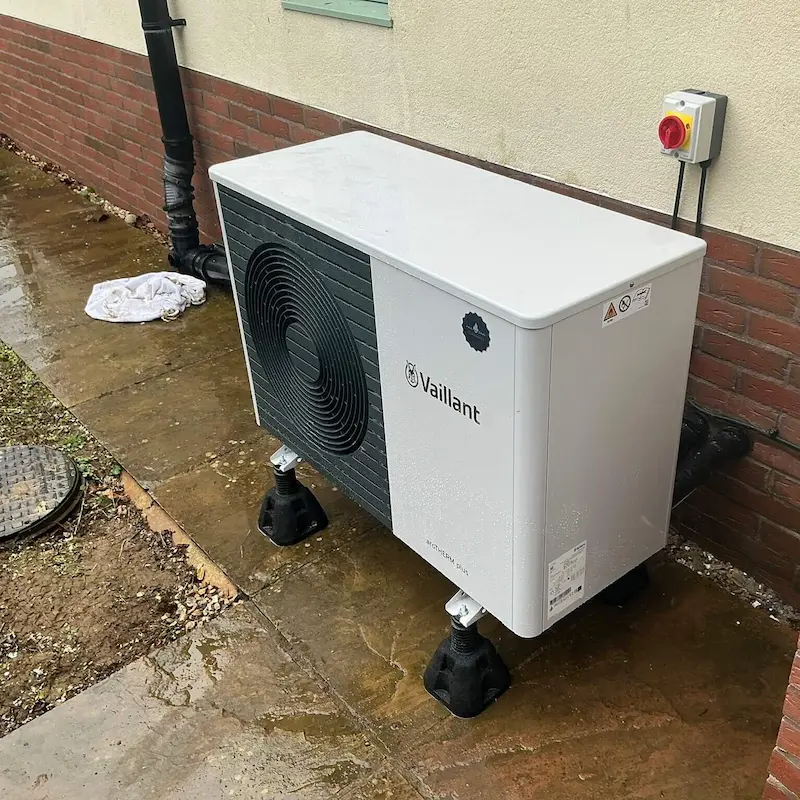
Air source heat pumps also defrost in cold, damp conditions. During defrost the unit uses energy to clear ice from the outdoor coil rather than heating the home. Steam and water can be normal. Correct sizing, drainage and commissioning should allow for it; the brochure's mild-weather COP should not be mistaken for a February guarantee.
Insulation and draught reduction lower the heat demand. That can allow a smaller heat pump, lower flow temperature or fewer emitter changes, and it reduces the amount of heat the home must buy regardless of the heating technology.
Fabric improvements do not change the compressor's test COP by magic. They improve the system opportunity. A lower load is easier to meet at lower temperatures, and the household needs fewer kilowatt-hours of heat.
An older or draughty house is not automatically unsuitable. Design around the real heat loss, consider practical fabric work and be honest about comfort, disruption and running cost.
Two homes can have the same outdoor unit and very different bills. Common reasons include:
This is why efficiency cannot be bought by choosing the model with the largest number in a comparison table. Product data matters. System design decides whether the product gets a fair chance.
Running cost then depends on both efficiency and tariff. Divide the electricity unit price by seasonal performance to estimate the electricity cost per useful kWh of heat. Our heat pump versus gas boiler guide uses this method with current tariffs and explains the limits.
I want the design heat loss, a room-by-room emitter schedule, realistic manufacturer output at design conditions, sensible pipework flow, a hot-water plan and controls that can hold comfort without chasing high temperatures.
After installation, I want commissioning data and a customer who knows what normal operation looks like. Efficiency is not one heroic setting. It is a chain of ordinary decisions done properly.
A heat pump can deliver several units of heat for each unit of electricity because it moves environmental heat instead of creating all the heat from electricity. The real seasonal figure varies with the property, weather, flow temperature, hot water, controls and system design.
COP is efficiency at a stated operating point, while SCOP is a standardised seasonal calculation across a reference climate. SPF is normally used for measured seasonal performance and depends on which pumps, controls or backup heaters are included in the measurement boundary.
A higher COP is better, but the test conditions matter. A COP of 4 at mild outdoor conditions and low water temperature does not predict the whole winter. Compare performance at the proposed design conditions and use SCOP or a seasonal estimate for running-cost planning.
The compressor has to work harder as the temperature lift between the outdoor source and heating water increases. Lower flow temperature therefore improves efficiency, provided the radiators or underfloor heating can still meet each room's heat loss.
They can. More emitter surface can deliver the room's required heat at a lower water temperature. Existing radiators may already be large enough, so a room-by-room calculation should decide which ones actually need changing.
Yes. Output and COP fall as outdoor temperature drops and defrost becomes necessary, but a correctly selected heat pump should still meet the design heat loss. Winter performance depends on sizing, manufacturer data, emitters, controls and commissioning.
Hot water normally needs a higher temperature than space heating, so its COP is usually lower. A suitable cylinder, sensible schedule and avoiding unnecessary immersion-heater use help limit the penalty.
Possible causes include high heat demand, high flow temperature, an unsuitable tariff, frequent immersion or backup-heater use, poor weather compensation, short cycling, weak commissioning, a system fault or a misleading comparison with the old fuel bill.
Vector Heat designs air-to-water heat pumps around the room heat loss, emitters, pipework, hot water and controls. That gives the efficiency figure on the quote a realistic route into the home.
Explore heat pump installation