
New-build heating
How to Pick a Heating Engineer for a New Build
Seven checks before you appoint someone to design and install your heating.
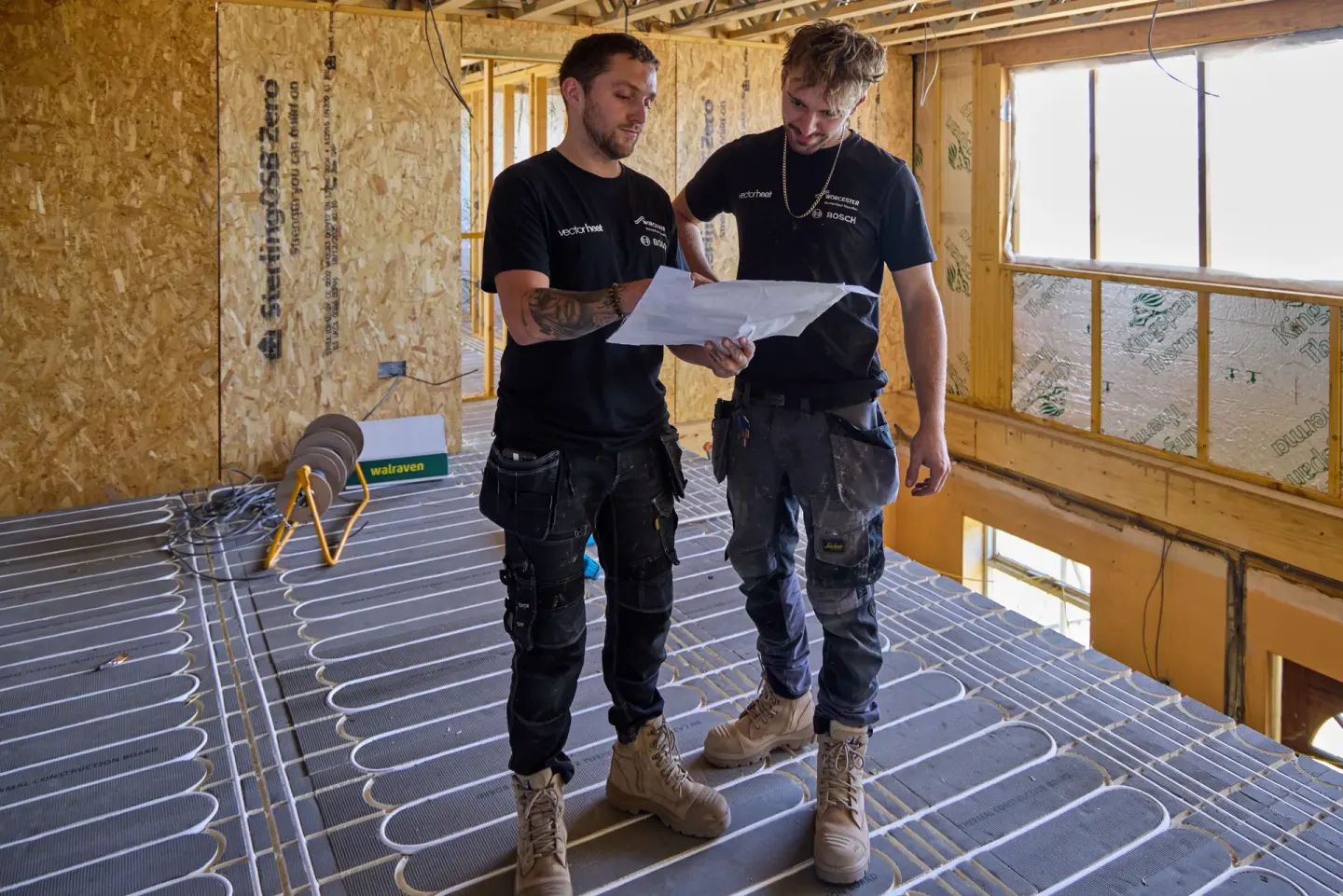
Pick a heating engineer who can explain how the whole system will work in your house. That means a room-by-room design, relevant installation experience, a clear quotation and someone taking responsibility for commissioning and handover. The heat-pump brand is only one part of that decision.
I have spent 23 years in plumbing and heating, including six years designing and installing heat pumps. On a new build, I want to see the plans while there is still time to change them. I am quite happy spending an afternoon discussing floor construction. I appreciate that not everybody considers that an afternoon well spent.
1. Have they done this kind of project before?
A good boiler service engineer is not automatically an experienced new-build heating designer. Ask to see similar work: the heat pump, cylinder, manifolds, pipework and finished installation, not just a photograph of the outdoor unit.
Ask what they designed themselves, what another company supplied and what they would do differently next time. A conversation with a previous customer can also tell you whether they communicated properly, returned when agreed and helped after handover.
Check credentials for the work being offered. Gas Safe registration matters for gas work; it is not a heat-pump design qualification. Our guide to MCS certification explains what to check for a heat-pump installation. Relevant training helps, but you should still ask the engineer to explain your design.
2. Will they calculate the heat loss of each room?
The starting point is how much heat the building loses on a cold day. The calculation should use the proposed wall, floor and roof construction, glazing, ventilation and room temperatures. New-build drawings and specifications make much of that information available before the house exists.
Ask for the room-by-room results and the assumptions behind them. A whole-house figure alone does not tell you whether the corner bedroom or heavily glazed living room will be warm enough.
A budget estimate early in the project is fine. Choosing the final heat pump by bedroom count, floor area alone or whatever model the engineer normally fits is not a substitute for the design. Energy Saving Trust's heat-loss guidance explains the inputs used in a detailed calculation.
3. Do the heat pump, floors and radiators work together?
Ask: “What flow temperature are you designing for, and can every room get enough heat at that temperature?” Flow temperature is the temperature of the water going to the heating. Lower temperatures help a heat pump run efficiently, provided the emitters can still heat the rooms.
With underfloor heating, the answer depends on pipe spacing, usable floor area, insulation, floor construction and the final covering. Thick carpet changes the output. Tell the designer about it before the pipe layout is agreed.
The upstairs decision belongs in the same calculation. You do not have to install UFH everywhere: my guide to underfloor heating upstairs explains when the extra work is worthwhile. Radiators need sizing for the proposed water temperature, not selected from their high-temperature catalogue output.
Also discuss baths, showers, cylinder space and controls. A heating quotation should reflect how you will use the house, including whether you are at home during the day.
4. Who is responsible for the complete design?
This is one of the most useful questions you can ask. Your builder may appoint the plumber, the UFH supplier may draw the floor circuits and another company may select the heat pump. That can work, but somebody needs to check that all three designs agree.
Get a named person responsible for coordinating the heating design. Agree who checks the structural loading, floor build-up, electrical supply, outdoor position, drainage and pipe routes. The heating engineer may need information or work from other trades; it should be clear who provides it.
If you change the glazing, insulation or floor covering, tell that person. Ask who approves substitutions and updates the drawings. Otherwise the finished system may no longer match the calculation you paid for.
5. Are you comparing the same work?
Energy Saving Trust recommends comparing detailed quotes, rather than choosing on price alone. Give each engineer the same plans and specification, including anything that is still undecided.
Ask whether the price is a provisional budget or a quotation for an agreed design. Then check these items side by side:
| Item | What needs to be clear |
|---|---|
| Design | Calculations, drawings, design fees and who owns the final design. |
| Equipment | Heat pump, cylinder, heating circuits, controls and exact models or specification. |
| Installation | Pipework, insulation, electrical work, groundwork, floor preparation and screed. What is excluded? |
| Completion | Testing, commissioning, certification, controls setup and customer handover. |
| Terms | VAT treatment, deposits, stage payments, variations, warranty and aftercare. |
A cheaper quotation is not necessarily a worse one. It may be a simpler design, better value, or missing work that another contractor has included. You need to know which.
6. How will the work fit around the build?
Ask the engineer to explain the installation stages to you and the builder. Pipe routes and manifold positions need agreeing before walls close up. The floor needs to be ready before UFH is laid, and the pipes need testing before they are covered.
Nu-Heat's installation guidance includes pressure testing before the screed goes down. Ask who performs and records the test, and who checks the pipework after other trades have been working around it.
Keep photographs and circuit drawings. Agree the screed drying and first-heating procedure with the relevant suppliers. The heating cannot simply be turned up to hurry every floor along.
7. What happens after the installation?
Commissioning is more than proving the heat pump turns on. The engineer should check the system against the design, set the water flow rates, balance the heating, test hot-water operation and set up the controls.
Ask what you will receive: final settings and records, manuals, warranty information, relevant certificates and a proper explanation of the controller and app. You should know how to change a schedule, what setback means and who to contact if a room is too warm or too cold.
If handover is in summer, ask what support is available when the first cold weather arrives. A new home may also be drying out, so be wary of anyone promising an exact annual electricity bill before you have lived in it.
My advice
Choose the person who can explain the design clearly, show you relevant work and tell you exactly what is included. You do not need to become a heating designer yourself. You do need an engineer who is willing to answer sensible questions before you appoint them.
For a project in Lincolnshire, see our new-build heating design and installation service. We can look at your plans and discuss the heat pump, hot water and emitters together. For a floor-heating project, our wet underfloor heating service covers design and installation.
Common questions
When should I appoint a heating engineer for a new build?
During the design stage, before floor heights, plant space and pipe routes are fixed. You do not need every detail finalised before making contact, but tell the engineer which parts of the specification are still provisional.
Can my builder's plumber install the heating?
They may be the right person if they have relevant design and installation experience. Ask the same questions you would ask an independent contractor, and make clear who takes responsibility for the complete heating design.
Does a new-build heat pump installer need MCS certification?
Check the certification required by your funding, warranty and project arrangements before appointing anyone. MCS certification is required for Boiler Upgrade Scheme installations, but most new builds are not eligible; qualifying self-builds are an exception. Certification does not replace checking the proposed design.
Should I get three heating quotes?
Three comparable, detailed quotes are a useful starting point. Give each engineer the same drawings and specification, then compare the design, equipment, included work and exclusions. A lower total may simply cover less work.
Can one company design the heating and another install it?
Yes, provided both agree the design, responsibilities and checks in writing. Decide who approves substitutions, checks the finished installation against the design and commissions the whole system.
Do I need underfloor heating upstairs in a new build?
No. Properly sized radiators can work at the same low flow temperature as downstairs underfloor heating. Upstairs UFH can be a worthwhile luxury, especially for living spaces, but it is not a requirement for a heat pump.