Heat pumps in older homes
Heat Pumps for Old Houses: When They Work, When I Say No
A proper survey, the right radiators and an honest answer.
Published
Yes, heat pumps work in old houses. But they need a proper survey, and sometimes the answer is still no. I do turn heat pump jobs down. If we cannot match the heat loss with radiators that will fit, fitting a heat pump is not automatically the right thing to do.
The age of the house does not determine the flow temperature. It's the size of the radiators compared with the heat loss. An older house does not necessarily need very hot radiators. We need to do the calculations before deciding.
Older properties with limited insulation and original features need someone who knows what they are looking at. My surveys take considerably longer than they do in a well-insulated house with few draughts. There is more to investigate, and the answers affect what I recommend.
- Do the calculations first. Age alone is not a reason to rule a heat pump out.
- Look closely at draughts. Reducing unwanted air leakage can make a big difference.
- Ask how the rooms are used. The design needs to suit the people living there.
- Be prepared to say no. I will recommend another heating system when it is the better answer.
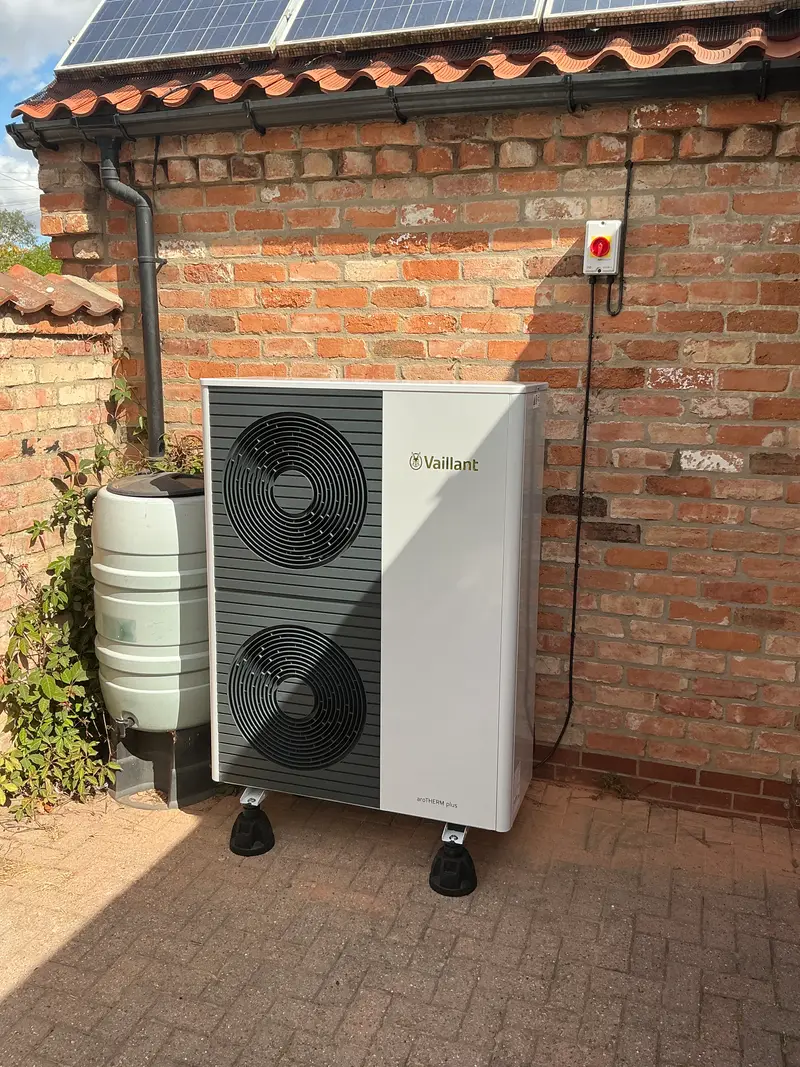
What I look at during an older-house heat pump survey
I am looking at everything all the time. While we are talking, I am checking windows, radiators, pipes and how the house has been altered.
Are the windows timber or PVC? Are there gaps around them? Has an extension been insulated while the original house still has solid walls? Which rooms have always been difficult to heat?
A summer survey needs the same attention. The house might feel lovely that afternoon. I still need to know what it is like in January.
- The building: walls, floors, roof, windows, doors and insulation.
- The air moving through it: draughts, ventilation and open fireplaces.
- The heating: radiator sizes, pipework, existing faults and available wall space.
- Your plans: new windows, loft insulation, extensions or a change in how rooms are used.
- Your comfort: which rooms you want warm, when you use them and what currently disappoints you.
My heat pump survey guide explains the access and information I need. The measurements matter, but so does the conversation.
The Newark music room: asking the customer changed the design
I recently surveyed an early-1900s property near Newark. The original walls were solid, with insulation only in the extensions added later.
The music room had three outside walls and a roof directly above it. Unlike a ground-floor room with a heated bedroom above, it was losing heat through the roof as well as the outside walls. I was looking at some very large radiators and pipework changes.
Then I asked how they used the room.
They barely used it. They wanted background heat and wanted to keep the existing radiators. They did not want it heated to the same temperature as the rooms they spent their time in.
Putting in those extra radiators would have been a waste of their money. They would have turned them down anyway.
We agreed what the room actually needed. That removed unnecessary radiator and pipework changes from the proposal. A cooler room still affects heat moving from the surrounding rooms, so that goes into the calculation too. It is not a reason to quietly design an occupied room colder than the customer wants.
That conversation was part of the design, not a distraction from it.
Draughts deserve much more attention
Draughts are a huge part of heat loss in older properties. I want to know where you feel them, not just what the windows look like from outside.
Old PVC windows with gaps can be draughty too. An open fireplace or an air brick that was missed during the survey can change the calculation. These details can affect the heat pump size, radiator sizes and pipework.
I also ask what you are already planning. If new windows or loft insulation are booked, tell me before I choose the equipment. We need to design around the improvements that will actually be made.
I think a fabric-first approach is sensible. Insulation is a long-term improvement, and sealing unwanted draughts reduces the heat you have to buy. I will help you look at practical improvements alongside the heat pump design. I am not asking every old house to reach new-build insulation levels first.
There is an important distinction between draughts and necessary ventilation. Do not block air bricks, combustion-air vents or ventilation needed to keep the building dry. Get suitable advice before altering a fireplace or insulating traditional walls. Historic England's draught-proofing guidance explains that balance.
Once you have reduced as many unwanted draughts as you practically can, you are onto a winner. It gives us more options for the heating as well as making the house more comfortable.
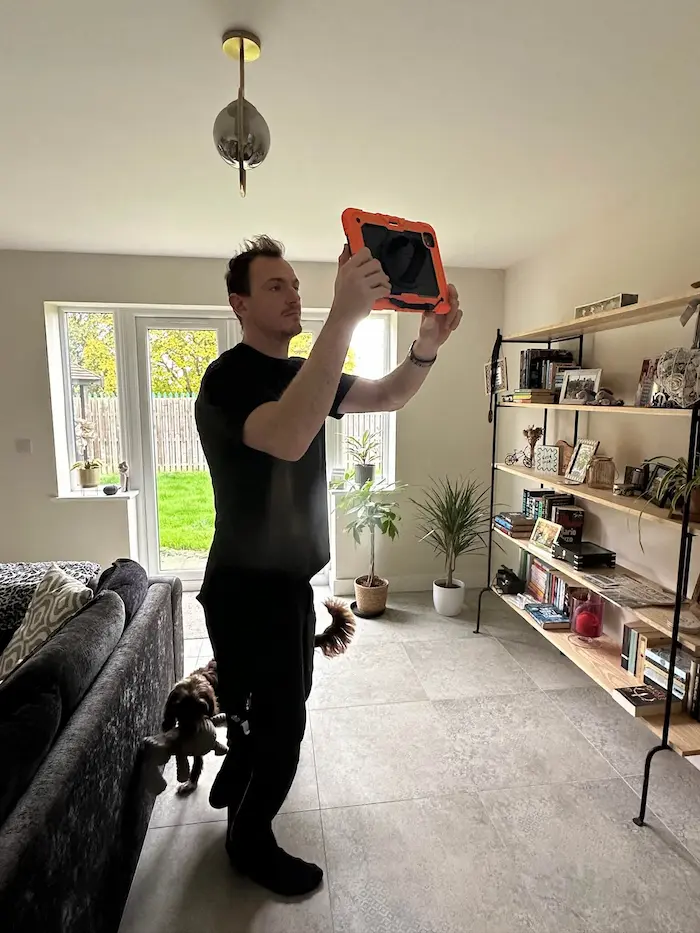
Radiator size matters more than the age of the house
If we can fit enough radiator capacity, an older house can work well with a heat pump. The difficulty comes when the heat loss is high and there is not enough space for the radiators needed at a sensible water temperature.
Choosing which radiator to change involves its size, the room's heat loss and where it sits in the house. A large double radiator in a central downstairs room can help the rooms around it. A radiator in a corner upstairs bedroom has more heat escaping through outside walls and the roof, and is not going to help downstairs in the same way.
That does not mean a bigger radiator in the hall fixes every cold bedroom. Heat needs a way to reach the rooms, and the design has to reflect whether doors are open or closed.
I explain those decisions in more detail in my heat pump radiator guide. I am looking for useful changes, not a reason to replace every radiator.
Existing small pipes are not an automatic no
I calculate what the pipework can carry. That means checking the diameter, material and lengths of both flow and return against the heat needed. Finding 15mm, 10mm or 8mm pipe does not by itself tell me to rip it all out.
On a recent job, some large double radiators were supplied by 8mm copper. I chose the Heat Geek survey and installation route so the customer would have the Heat Geek guarantee alongside our own workmanship cover. The calculations still have to work; the guarantee does not make an undersized pipe bigger.
The Heat Geek guarantee covers the performance stated in an eligible proposal, subject to its terms. It is not a promise that everybody will have the same electricity bill.
I turn heat pump jobs down: the Spalding example
A large listed property near Spalding stands out. The customer asked about a heat pump or a heat pump working alongside an oil boiler.
It had single glazing and initially no insulation. I recommended loft insulation, and the customer had that done. But there were restrictions on the size of radiators we could fit.
With the radiator space available, the design needed 78°C flow at −3°C outside.
That was not a sensible heat pump installation. A hybrid would still have needed the oil boiler for so much of the heating season that the customer would not have got the benefit they wanted from adding a heat pump.
We fitted a good condensing oil boiler and the largest suitable radiators we could accommodate. It was a fantastic installation, with quality equipment in a beautiful property. I am proud of it, even though it was not a heat pump.
This was not a decision based on the date the house was built. It was based on the heat loss, radiator restrictions and the temperatures needed. A heat pump's headline maximum temperature is not enough to make that combination a good idea.
I will say no when a heat pump is not the right answer. That is part of doing the survey properly.
Listed houses need care with positioning too
I want to stay true to the building and avoid disturbing its original features. The heating still has to go somewhere, so we look at the existing boiler position, pipe routes and options outside.
I am currently looking at a listed property where the plan is to put the heat pump further down the garden and run underground pipework back to the house. That keeps the unit away from the building itself.
It is not a universal solution. Longer pipe runs need proper sizing and insulation, and the location still needs suitable access and clearances.
For listed buildings, check the permissions needed with the local authority before work starts. We help with the process, but obtaining the necessary permissions remains the customer's responsibility. Historic England's installation guidance covers the particular considerations for historic buildings.
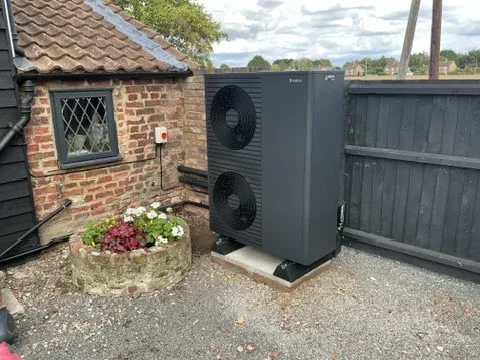
Compare running costs using the proposed design
Once we have a design flow temperature, we can use the manufacturer's seasonal performance data to estimate efficiency and compare running costs with your current heating. On eligible Heat Geek installations, the proposal includes their guaranteed efficiency.
The comparison needs your heating demand, fuel prices and the proposed system's performance. It cannot just borrow the best figure from a brochure and apply it to every old house.
My running-costs guide explains the calculation. The useful question is what this installation will cost you to run, with the improvements and temperatures we have actually agreed.
Be clear about the disruption before starting
I go through the work during the survey. If new pipes need to go through an area, I explain what needs clearing. If we are changing radiators, the engineers need access to them. My survey information is passed on to the installation team.
On a bigger job involving floorboards and several rooms, we may have follow-up calls to agree access and preparation. The customer needs to know what is happening before the engineers arrive.
Do you leave the heating on all day in an old house?
It depends on how you use it. If you are home during the day, I recommend leaving it on low and slow for comfort.
If nobody is home, I recommend an off period or a setback. As the outdoor temperature gets to roughly 5°C and below, I recommend a setback of 2–3°C below your normal room temperature instead of letting the house cool right down.
In milder weather, switching it off for that period can work. In colder weather, the building takes longer to warm back up. Every property is different, so the schedule needs to suit the house and the customer.
Heat pumps for old houses: common questions
Can a heat pump work in a solid-wall house?
Yes. Solid walls increase the heat loss compared with an otherwise similar insulated wall, but they do not rule out a heat pump. Calculate the demand and check whether suitable radiators or underfloor heating can provide it at the proposed water temperature.
Do I have to insulate the whole house first?
No. I recommend looking at practical insulation and draught improvements alongside the heating design. You do not have to make an old house perform like a new build, but ignoring improvements that are straightforward and worthwhile makes no sense either.
Will all my radiators and pipes need replacing?
Not automatically. I check the radiator outputs and calculate what the existing pipes can carry. Some can stay, some may need changing, and occasionally the changes needed make a heat pump the wrong choice for that property.
Does an old house need a high-temperature heat pump?
The age alone does not decide that. It is the size of the radiators compared with the heat loss. Work out the required flow temperature first, then choose equipment that meets the design.
Would a hybrid heat pump solve a difficult installation?
Not necessarily. If the boiler would have to take over through much of the heating season, adding the heat pump may bring too little benefit. That was one of the reasons I recommended oil rather than a hybrid for the Spalding property.
What should I do before ruling out a heat pump?
Get a proper survey from someone experienced with older properties. Have the heat loss, radiator capacity and pipework checked, discuss how you use the rooms, and look at practical draught and insulation improvements. Then decide from the design, not the house's age.
Let's assess your older home properly
At Vector Heat, we help homeowners across Lincolnshire plan the heating and practical fabric improvements together. I will explain what works, what needs changing and when I recommend another option.
Our installation service for older homes