
Heat Pumps
Heat Pump Underfloor Heating vs Radiators
Which works best for your home, and when is changing the floors actually worth it?
Published
No, having a heat pump fitted does not mean we have to dig up your lounge.
Heat pump underfloor heating is a strong choice when you are building or replacing floors anyway. If you are happy with your existing home, properly sized radiators can give excellent results with much less disruption. You can also have UFH downstairs and radiators upstairs.
I like the steady warmth and clear walls that underfloor heating gives you. But it is your house, your budget and your building project. My job is to explain the options before anyone starts lifting floors.
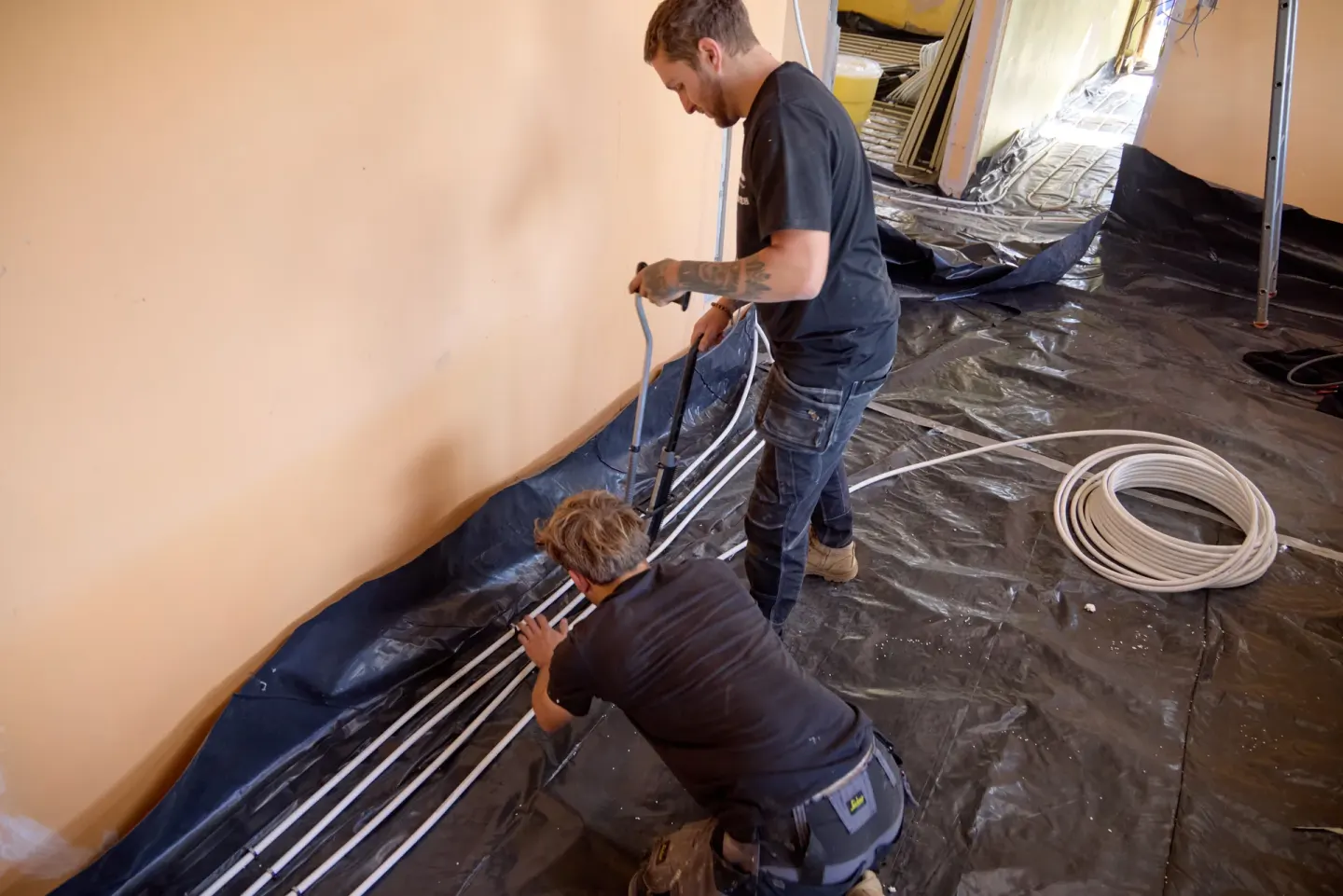
Underfloor heating vs radiators: the practical choice
This comparison is about wet underfloor heating: pipes carrying warm heating water beneath the floor. Electric mats are a separate form of heating; they do not receive heat from an air-to-water heat pump.
| Your project | Underfloor heating | Radiators |
|---|---|---|
| New build or extension | A strong option when insulation and screed are already planned. | Still possible, but low-temperature output may need significant wall space. |
| Finished existing home | Floor levels, doors and finishes can make it a substantial refurbishment. | Often the simpler choice. Keep suitable ones and upgrade where useful. |
| Appearance and comfort | Clear walls and warmth spread across the usable heated floor. | Visible emitters, with size and position agreed around the room. |
| Response time | Screeded systems store heat and respond slowly; lighter systems behave differently. | Usually respond faster than a thick screeded floor. |
| Efficiency | Large heated area can allow low water temperatures. | Can also operate at low temperatures when enough output is available. |
Neither label tells us whether the room will be warm enough. We need its heat loss, the available emitter output and the temperatures the system will use.
Why does underfloor heating suit a heat pump?
A large heated floor can release the room's required heat without very hot water. Lower flow temperatures generally help a heat pump work more efficiently. That is the appeal of the pairing, not simply the fact that the pipes are hidden.
Radiators can do the same job if they have enough output at those temperatures. Some existing radiators are already suitable; others need changing. Vaillant's heat-pump guidance also makes clear that underfloor heating is not essential.
For a fair comparison, ask what flow temperature each proposed system needs on a cold design day. Our guide to heat-pump efficiency explains why that matters. There is no honest fixed percentage saving just from swapping the word "radiator" for "underfloor".
For a new build or extension, plan UFH early
If you are already installing insulation and screed, I would normally choose wet UFH downstairs. We can fix the heating pipes before the screed goes down, rather than rebuild a perfectly good floor later.
There is no radiator to look at or arrange the sofa around. To achieve similarly low water temperatures with radiators, we can need some very large emitters. Where the floor construction is happening anyway, I often find UFH better value for that performance. I still calculate the actual price difference for each job.
- Agree the manifold position and the routes for its supply pipes.
- Confirm the insulation, complete floor build-up and finished floor heights.
- Choose floor coverings before finalising the output calculations.
- Allow for fixed units and other areas that will not provide useful heated floor.
- Coordinate testing, screeding, drying and commissioning with the other trades.
Pipe spacing comes from the design. A room with more heat loss may need closer spacing than a sheltered internal hall. Filling every room with the closest possible pipe spacing is not a substitute for doing the calculation.
In an existing house, look at the whole refurbishment
First, I listen to what the homeowner wants to change. Is this a kitchen extension, a whole downstairs refurbishment, or simply replacing the boiler with a heat pump?
If the floors, doors and decoration are staying, suitable radiators may be the better answer. My radiator replacement guide explains how I decide which changes are worthwhile rather than replacing everything.
Where UFH is wanted, I inspect the floor construction, insulation and available height. We have installed all four of these approaches:
- Rebuild the floor: excavate where appropriate, insulate, fix the pipes and lay new screed.
- Route an existing screed: cut channels into a suitable, already insulated screed.
- Use overlay panels: install an appropriate system above the existing floor.
- Add an insulated screeded build-up: insulation, pipe-retaining "egg crate" panels and a compatible screed, where the available height allows.
Each needs its own specification. Floor condition, loading, moisture, insulation and the finish all matter; a thin panel does not automatically solve every floor problem.
On a recent job, the insulated build-up meant raising the back door. The internal doors were already being replaced. Those details need sorting way before we start the work. The door still has to open when we've finished.
I only recommend routing where the existing screed is insulated. Suitable insulated overlay systems may provide another route, but downward heat loss still needs assessing. If a floor is being rebuilt, it is a good opportunity to improve the insulation too.
Compare the complete cost, not just pipes against radiators. Include floor preparation, doors, skirting, new finishes and making good. The homeowner can then decide whether the comfort and clear walls justify the work.
Can I have UFH downstairs and radiators upstairs?
Yes. I aim to design both to run at the same flow temperature wherever practical. That keeps the system simpler and avoids adding mixing equipment merely because there are two types of emitter.
I start with the room that is hardest to heat at the proposed temperature, then work through the other rooms. The UFH layout, radiator sizes, water flow and controls all need to support that design. Necessary floor-temperature protection still stays in place.
A radiator's headline catalogue output may assume much hotter water than we intend to use. Stelrad's output correction factors show how output changes with the temperature difference between the radiator water and the room.
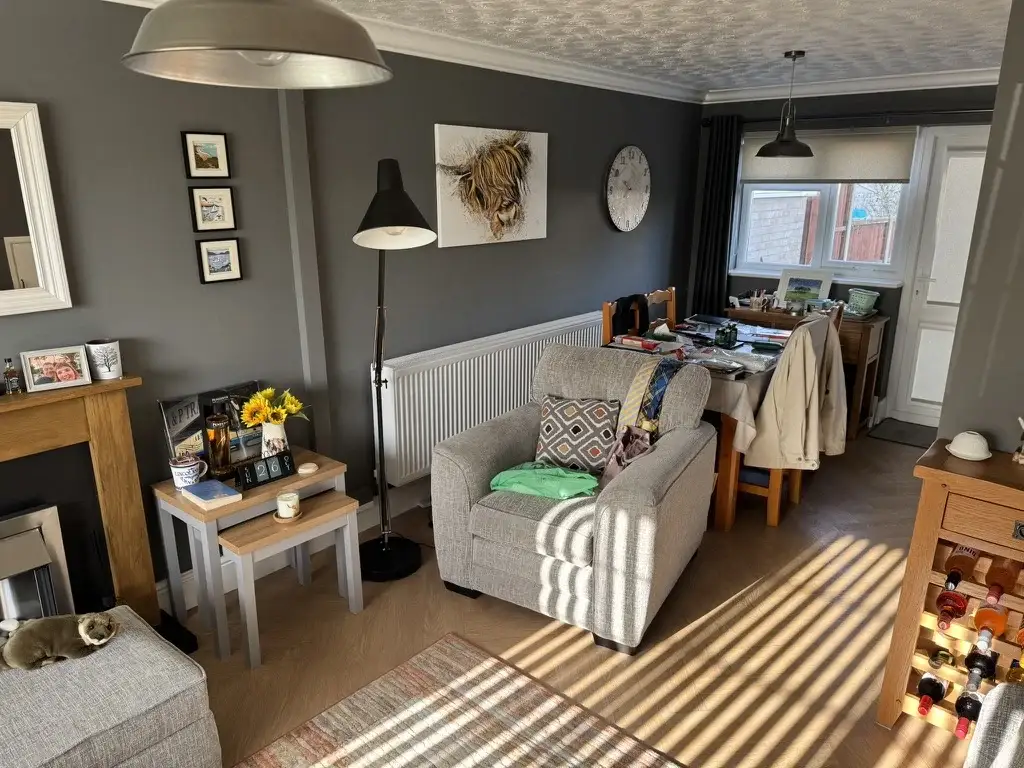
Radiators are often the practical choice for bedrooms. Upstairs living rooms, studies or rooms short of wall space can make UFH worth the extra work. Our separate upstairs underfloor heating guide looks at those choices in more detail.
Heat can move upstairs from warmer rooms below, but that is not a reason to assume every bedroom needs little or no heating. Room use, temperatures, doors and the building design still matter.
Choose the floor covering before the heating is designed
Tiles transfer heat well. Suitable luxury vinyl tile (LVT) can work too. Carpet is possible, but the carpet and underlay need to be suitable together, not just have a reassuring label on one of them.
A more insulating finish makes it harder for heat to leave the floor. It can reduce available output or increase the water temperature needed, within the floor manufacturer's limits. It does not change the building's heat loss; it changes how readily the floor can meet it.
That is why I want to know the intended finish early. Uponor's floor-covering guidance explains the different materials and the importance of checking compatibility. Include the underlay, adhesive and temperature limits in the specification.
How will it feel, and should it stay on all day?
Screeded UFH warms slowly and holds heat after the heating demand stops. I like that steady comfort, but it needs a schedule that suits the home. A lighter dry-panel system has less stored heat and will not behave exactly like the thick screed downstairs.
Whether to use steady heating or timed setbacks depends on insulation, occupancy and tariffs. Someone at home all day has different needs from someone returning in the evening. Allow for the floor's response rather than expecting a cold slab to recover instantly.
Radiators usually respond more quickly, although a low-temperature heat-pump system is still best planned around the home's heating needs rather than short bursts of very hot water. Both radiators and floors transfer heat by radiation and convection; this is not simply "warm air versus warm objects".
My recommendation
- Building or replacing floors? Seriously consider downstairs UFH while the opportunity is there.
- Keeping the house largely as it is? Start by checking the existing radiators and identify useful upgrades.
- Want clear walls and the feel of UFH? Those are valid reasons. Price the whole refurbishment before deciding.
- Using both? Design the emitters together, aiming for a suitably low common flow temperature.
I can help you compare the heating and building work together through our underfloor heating design and installation service in Lincolnshire. Tell me what you are already changing, what you want to keep and how you use the rooms. That is a much better starting point than choosing a system from a photograph.
Underfloor heating and heat pump questions
Do I need underfloor heating for a heat pump?
No. Radiators can work very well if they provide enough heat at the proposed water temperatures. Underfloor heating is an option, not a requirement, and replacing suitable radiators is not automatically worthwhile.
Can a heat pump run underfloor heating and radiators together?
Yes. I aim to design both for the same flow temperature wherever practical. Each room still needs enough output, and the pipework, controls and floor-temperature limits must suit the combined system.
Is underfloor heating cheaper to run than radiators with a heat pump?
It can be if it allows the heat pump to use cooler water. There is no fixed saving just from choosing UFH. Compare the actual designs, including flow temperatures, insulation, controls and the cost of installing them.
Can I keep carpet over underfloor heating?
Yes, where the carpet and underlay are compatible with the system. Their combined thermal resistance and temperature limits must be included in the design, so choose the floor finish before the heating layout is finalised.
Can I install underfloor heating without digging up the floor?
Sometimes. Suitable overlay systems or routing an existing insulated screed may avoid excavation. Floor condition, insulation, available height, door clearances and the proposed finish still need checking.
Does underfloor heating need to stay on all day?
Not in every home. Screeded floors respond slowly and retain heat, so steady heating or modest setbacks can suit them. The schedule should reflect occupancy, insulation, floor construction and tariffs, rather than a universal always-on rule.