Heat Pumps
Do Heat Pumps Work in Cold Weather?
Yes. Those are the conditions I design for.
Published
Heat pumps can keep your home warm when it's freezing outside. The system needs to be designed for the building's heat loss, with suitable radiators or underfloor heating and enough time to do its job.
Cold air still contains heat. Your freezer takes heat out of a compartment below freezing and releases it into the kitchen. A heat pump uses the same principle to collect heat from outside.
Here I'm talking about air-to-water heat pumps, which heat your radiators or underfloor heating and a hot-water cylinder. This is what I want customers to understand before their first winter.
The quick answer
- Below freezing is normal operating weather. I check the heat pump's output at the cold conditions the home is designed for.
- Frost and automatic defrost are expected. Persistent ice that doesn't clear needs investigating.
- Winter needs enough heating time. Deep overnight setbacks can leave the system struggling to catch up.
- A cold spell costs more to heat through. The house needs more heat, while the heat pump is working less efficiently.
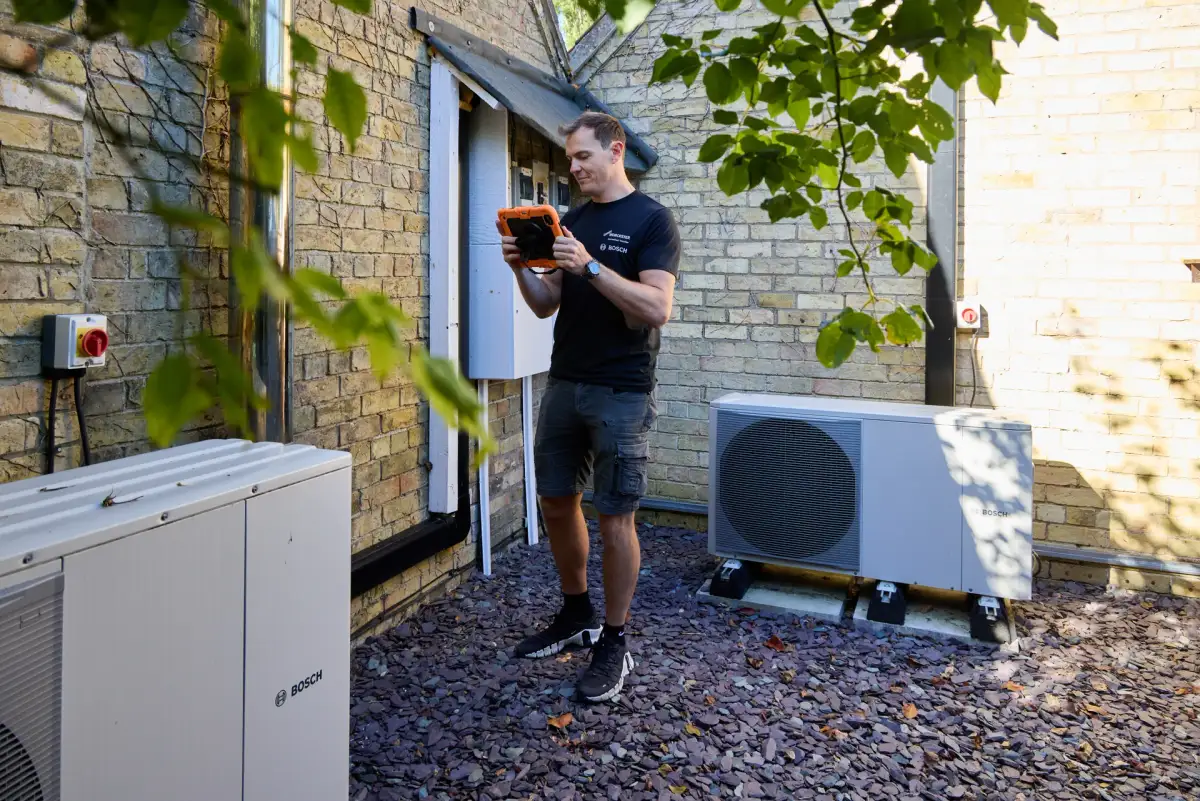
How does a heat pump get heat from cold air?
The refrigerant inside the outdoor unit is colder than the air passing over it, so heat moves from the air into the refrigerant. A compressor then raises its pressure and temperature. That heat transfers into the water circulating around your heating system.
The air doesn't need to feel warm to you. It needs to be warmer than the refrigerant collecting heat from it. The International Energy Agency explains this heat-transfer process.
As outdoor temperatures fall, the heat pump generally has to work harder to deliver the same amount of useful heat. Working less efficiently is not the same as being unable to heat the house.
How cold is too cold for a heat pump?
I commonly design around an outdoor temperature of -3°C in Lincolnshire, checking the location and property rather than applying that figure to every job.
That means calculating how much heat the house loses in those conditions, checking the heat pump can supply it at the planned water temperature, and checking the emitters can deliver it into the rooms.
| Term | What it means |
|---|---|
| Design temperature | The outdoor temperature used to calculate the home's heating requirement. It isn't a switch-off setting. |
| Operating limit | The manufacturer's limit for a particular unit. It doesn't promise full output or a particular room temperature. |
| Efficiency, or COP | The useful heat delivered for each unit of electricity used. This changes with air and water temperatures. |
If it drops below the design temperature, the house needs more heat. Whether the system maintains the target room temperature depends on its available output and the building's heat loss. It doesn't suddenly stop at -3°C.
I also check how low the heat pump can turn its output down in milder weather. Fitting a much larger unit just for a rare extreme can cause repeated stopping and starting for the rest of the year. My heat-pump sizing guide explains that balance.
Why does the outdoor unit frost up?
The outdoor coil can be below freezing even when the air is above 0°C. Moisture from the air freezes on it. Damp, chilly weather can therefore bring regular defrost cycles without an exceptionally cold night.
- Frost collects on the coil. Too much would restrict heat transfer and airflow.
- The heat pump temporarily reverses the refrigeration cycle. It uses heat from the heating-system water to melt the frost.
- Normal heating resumes. Water drains away, and you may see a cloud of vapour.
Heating pauses during defrost. That is part of normal operation, not proof the heat pump is failing. How often it happens depends on conditions and the unit, so I wouldn't judge it against a universal timer.
The design must leave enough heating-system water available for defrost. Energy Saving Trust's system-volume guidance explains why.
Ice that keeps building up and doesn't clear is different. Contact your installer. Don't chip it off, pour hot water into the unit or remove covers.
Should I leave the heating on in cold weather?
Below roughly 5°C outdoors, I normally recommend keeping heating enabled and using a small setback, often around 2°C below your comfort temperature. That's a starting point for the home, not a rule that every house must follow.
Keeping heating enabled doesn't mean the compressor runs constantly. The controls still manage demand. It means the system can maintain the lower temperature instead of letting the house cool right down.
A deep setback leaves more work for the morning. The heat pump has to catch up while meeting the house's continuing heat loss, with pauses for defrost as well. Insulation, occupancy and how quickly the house cools all matter.
In milder weather, longer off periods can work well. Energy Saving Trust's operating guide also explains heating time, setbacks and weather compensation.
A customer whose house wasn't reaching temperature
At around 2°C outside, one customer was heating from 06:00 to 08:00 and 16:00 to 22:00. The house wasn't reaching its target temperature.
I advised leaving the heating enabled to let the house warm through, then using smaller setbacks. That resolved the problem. The schedule was limiting the heating time.
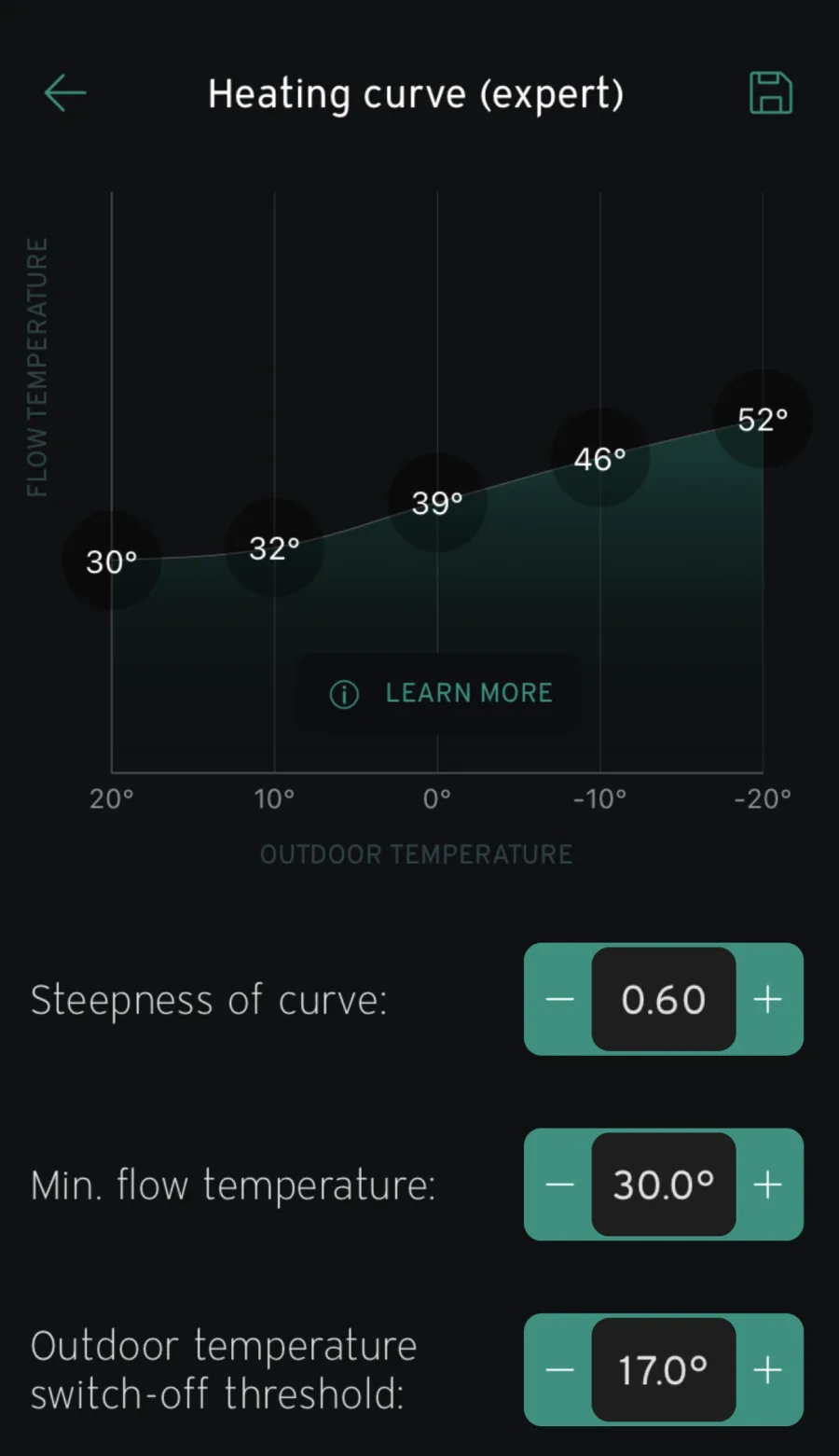
Let the weather curve do its job
Weather compensation adjusts the heating-water temperature as the weather changes. A correctly set curve should respond to colder weather without you repeatedly turning everything up.
In milder weather, the outdoor switch-off threshold decides whether space heating is allowed. That is a separate setting from the heating curve and the winter design temperature.
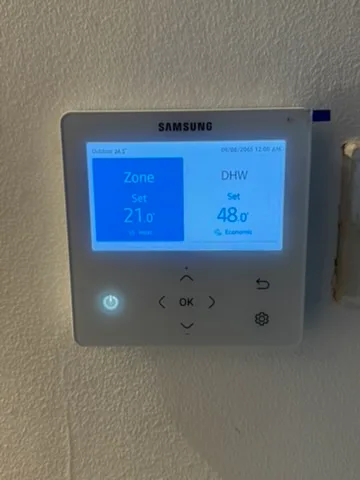
If you're tuning it, screenshot, photograph or write down the original setting. Change one thing at a time and allow at least a day to assess the result. For our Vaillant customers, the controller and app guide explains how to tune the curve, including using inactive room-temperature mode during the test.
Will a cold spell make it expensive to run?
It will use more electricity. The house is losing more heat, and the heat pump's efficiency generally falls as the outdoor temperature drops. Defrost adds to the work too.
A few very cold days can look expensive on the app. Judge the overall cost across the heating season, alongside the comfort you're getting, rather than multiplying the coldest day's bill by 365. My heat-pump running-costs guide explains what to compare.
Allow time for hot water as well
On most domestic systems, cylinder reheating temporarily takes priority over space heating. If you're using a cheap overnight tariff, plan the hot water early enough to leave heating time before everyone gets up.
That means using cheap-rate electricity directly for the hot-water cycle. The right timing depends on the tariff, cylinder recovery and household routine. Don't assume all the heating can be squeezed into one cheap window during a cold spell, and leave the agreed hot-water hygiene settings in place.
What if my home isn't warm enough?
Don't assume feeling cold is just part of owning a heat pump. First establish whether it has always struggled in these conditions or whether something has changed.
| Often normal | Worth investigating |
|---|---|
| Longer heating runs in cold weather. | Rooms staying below target despite enough heating time. |
| Frost followed by automatic clearing. | Heavy ice that remains or builds up around the unit. |
| A brief heating pause and vapour during defrost. | Repeated faults or heating that doesn't resume. |
| Higher electricity use in a cold spell. | A sudden unexplained change from similar weather previously. |
- Read the controller. Record any fault code, target temperature and actual room temperature.
- Check the schedule. Is it allowed to heat, or in an off or setback period?
- Check whether every room is affected. One cold room points towards a local radiator, balancing or heat-loss issue, rather than automatically needing a hotter whole system.
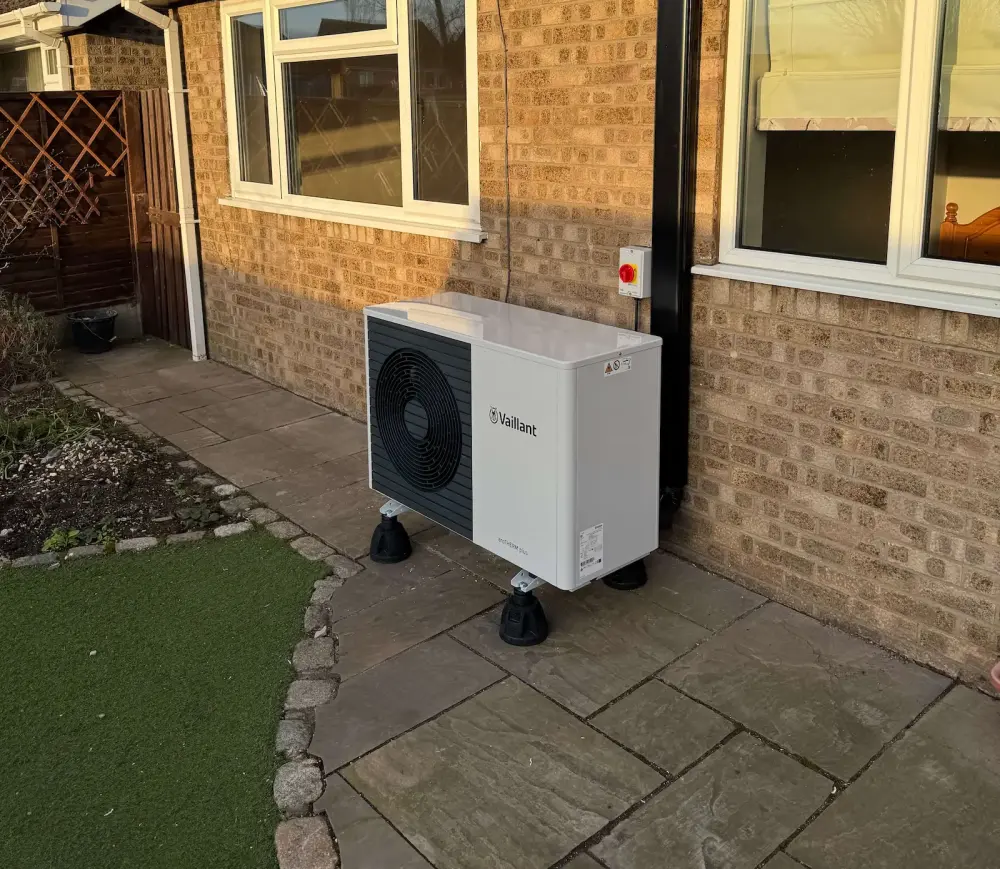
- Look outside without opening anything. Check for leaves or snow obstructing airflow and report persistent ice.
- Tell the installer what has changed. Include the weather, settings and whether it worked properly last winter.
We can review many of our installations remotely. Sometimes it is a schedule or curve adjustment; sometimes the system needs a visit. I want evidence before deciding it's undersized.
A simple check before winter
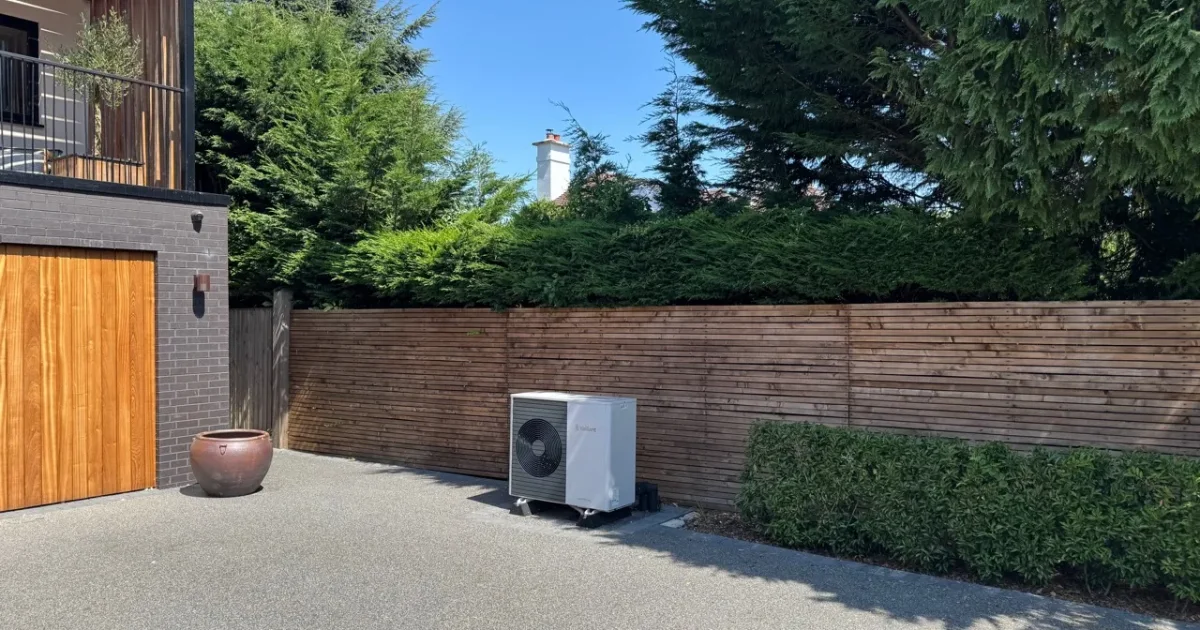
Keep the annual service up to date, check the system pressure against your handover instructions and report radiators that aren't heating properly. Keep the specified airflow spaces clear of leaves and stored items.
Use the controller for normal heating adjustments, not the electrical isolator. The system needs power for its automatic protection functions. You shouldn't need a major seasonal overhaul of a properly commissioned installation.
Cold-weather questions
Do heat pumps work below freezing?
Yes. An air-source heat pump can extract heat from below-freezing air. The installer must check its output at the local design conditions and the planned heating-water temperature, not just its headline size.
Does a heat pump stop at the design temperature?
No. The design temperature is used to calculate the home's heating requirement. Below it, the house needs more heat. Whether it maintains the target room temperature depends on available output and heat loss, not an automatic cut-off at that design figure.
Why is my heat pump defrosting when it isn't freezing outside?
The outdoor coil can be colder than the air around it. Moisture can freeze on that coil even above 0°C outdoors. Automatic defrost clears it; persistent ice that doesn't clear should be checked.
Should I turn my heat pump off overnight in winter?
In cold weather I generally start with heating enabled and a small setback, often around 2°C. The right approach depends on the house and your routine. Avoid a deep setback that leaves too much reheating for the morning.
Do I need a backup boiler for winter?
Not automatically. A properly designed heat-pump-only system can heat a home through winter. Any backup provision should be explained in the design, including when it operates and what it costs, rather than added simply because winter is cold.
Why isn't my heat pump reaching the set temperature?
Check faults, the heating schedule and whether every room is affected. It may need more heating time, a curve adjustment or investigation of a circulation or emitter problem. A cold house isn't something you should simply accept.