
Properties surveyed
For boiler, heating and heat pump decisions.
Heat Pumps
Running costs, grants, radiators, hot water and the bit nobody wants to admit: sometimes the answer depends on the house.
Insight by Vector Heat
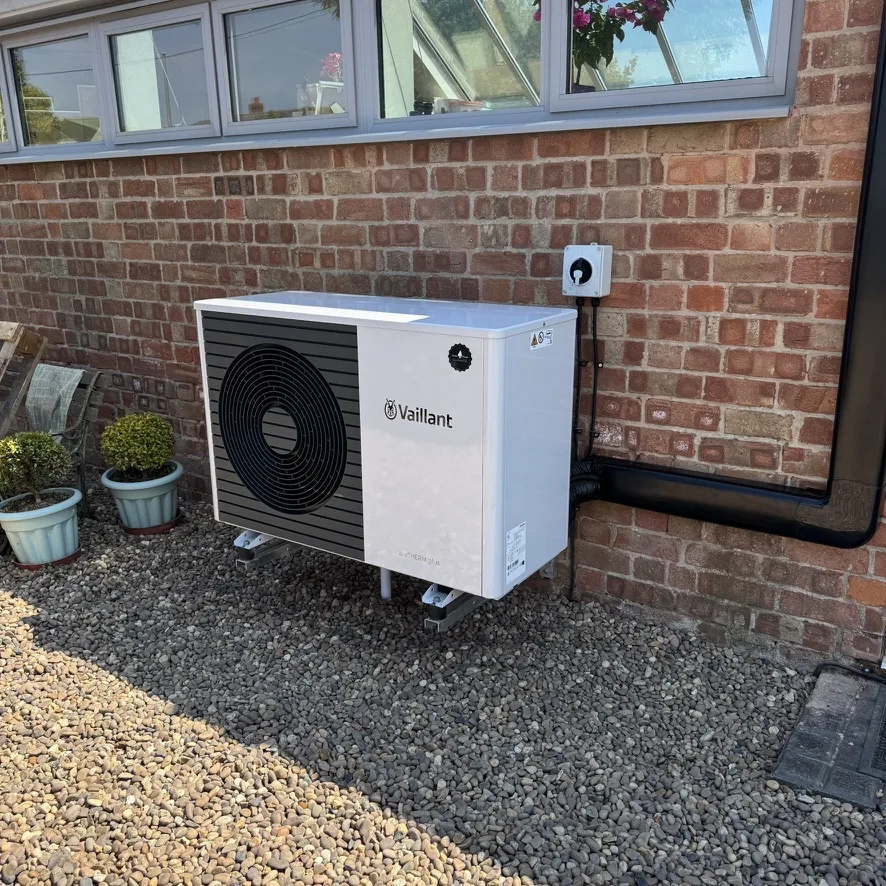
Heat pumps are worth it in the same way a tractor is worth it: brilliant in the right field, slightly odd in the wrong one.
For a lot of UK homes, an air source heat pump can be a very good idea. For some homes, it is the best heating decision available. For a smaller number, I would slow down, check the design properly, and maybe not do it yet.
That is the honest answer.
I have surveyed more than 5,000 properties over 14 years, spent 23 years in plumbing and heating, and spent the last 6 years designing and installing heat pumps. My view is simple: heat pumps work brilliantly when the system is designed around the house. They disappoint when they are sold like a magic outdoor fridge with a grant attached.
For boiler, heating and heat pump decisions.
Comparing systems against the property and household.
Designing and installing heat pump systems.
Yes, heat pumps are worth it for many homes, especially if you currently use oil, LPG, or you are planning a proper heating upgrade anyway. If you currently use direct electric heating, a heat pump is always a better heating technology for running costs. The only question is whether the property can have the right heating system fitted to use one properly.
They can also be worth it in gas-heated homes, but the running-cost case depends on design, flow temperature, electricity tariff, gas price and whether you can remove the gas standing charge. Solar and batteries can help, but they are a bonus, not a requirement.
If you have a nearly new gas boiler, the financial case may be weaker. The bigger issue is a house with very high heat loss where there is no practical space for radiators or underfloor heating that can match it, such as some solid-brick, single-glazed, listed homes. That is not betrayal. That is surveying.
A heat pump is worth it when the home can run comfortably at sensible flow temperatures, the hot water plan is right, the grant works, and the installer can explain the design without looking like they have opened a game of Cluedo and lost the envelope.
If those things are missing, the question is not "are heat pumps worth it?" It is "is this heat pump design worth it?"
Oil, LPG and direct electric homes are often strong candidates, especially when the grant works and the heating system can be designed properly.
Modern efficient gas boiler homes still need checking. Running costs may be close, but carbon emissions, tariffs and future plans can change the answer.
Solid-brick, single-glazed, listed or very high heat-loss homes may still work, but only if there is a practical way to fit emitters that can match the heat loss.
Heat pumps are usually worth serious consideration when the existing heating system is expensive, old, inefficient or due for replacement.
That includes many oil, LPG and direct electric homes. These properties often have higher running costs and do not have the same easy cheap-gas comparison that mains-gas homes have.
Heat pumps can also make a lot of sense where the property already has underfloor heating, larger radiators, decent insulation, a suitable hot water cylinder location, and enough outdoor space for a well-positioned unit.
They also suit a homeowner who is happy with steady heating rather than "blast it like a chip shop door heater". That last one matters. Heat pumps are not normally at their best when treated like an old boiler that gets ignored all day and shouted at in the evening.
If you are on oil or LPG, a heat pump often has a stronger case. If you are on direct electric heating, the heat pump itself is the better technology every time because it moves heat instead of just turning electricity directly into heat. It still needs the right heating system around it.
The Boiler Upgrade Scheme can cut the installation cost heavily. The standard heat pump grant is £7,500. Until March 2027, eligible off-gas-grid homes replacing oil or LPG can receive an additional £1,500, taking the grant to £9,000.
Oil and LPG homes also tend to be rural, which means they often have more outdoor space for the heat pump. Not always, obviously.
Heat pumps are most efficient when they heat water to lower temperatures.
A gas boiler might run radiators at 60, 70 or even 80 degrees. A heat pump is happier when the heating system can work at lower flow temperatures, often around 35 to 50 degrees depending on the home and design.
Lower flow temperature means better heat pump efficiency. The home still needs enough emitter output to stay warm at that temperature.
This is why radiator sizing matters. The question is not just "do I need new radiators?" The better question is: "can each room stay warm at the flow temperature we want this heat pump to run at?"
That is a proper design question, not a vibes question. Heating systems designed on vibes are why engineers end up muttering into their tea.
Heat pumps can look even better when paired with a good electricity tariff, solar panels or battery storage.
If you can buy electricity at cheaper times, store it, or offset some of it with solar, the running-cost picture changes. Our heat pump, solar and battery case study shows how those parts can work together. It still needs designing properly, but the maths can become much friendlier.
But you do not need solar panels or batteries to make a heat pump work well. I would treat them as a bonus. Nice to have, useful if they are there, but not the main suitability test.
Removing the gas meter can also matter. If you stop using gas altogether, you may remove the gas standing charge. That saving belongs in the comparison.
In a new build, I think a heat pump should normally be the obvious direction. A new home should be designed around lower heat loss and lower flow temperatures from day one.
Fitting a gas boiler into a modern new build can feel a bit like buying a brand-new phone and asking if it comes with a fax machine.
Older homes can also work very well, but they need checking. Insulation, radiators, pipework, draughts, hot water and customer expectations all matter.
There are situations where I would slow the job down.
Not because heat pumps cannot work. Because the wrong heat pump job can become expensive, annoying and talked about at family gatherings for years.
If you have a modern efficient gas boiler that is working well, a heat pump is still worth checking, but the heat pump and gas boiler comparison needs doing properly. The running-cost case may be close, and if carbon emissions matter to you, that can change the decision.
Under Ofgem's July to September 2026 price cap, typical direct-debit rates are around 26.11p/kWh for electricity and 7.33p/kWh for gas. A heat pump is much more efficient than a gas boiler, but electricity is much more expensive per unit.
| System | Example efficiency | Rough heat cost using July 2026 rates |
|---|---|---|
| Gas boiler | 90% efficient | about 8.1p per kWh of heat |
| Heat pump | SCOP 3.0 | about 8.7p per kWh of heat |
| Heat pump | SCOP 3.5 | about 7.5p per kWh of heat |
| Heat pump | SCOP 4.0 | about 6.5p per kWh of heat |
That table is not a quote. It is a way to understand the relationship.
If the heat pump is designed well and runs at a good seasonal efficiency, it can compete with gas. If it is designed badly, it can lose. If electricity prices fall compared with gas, the heat pump case improves.
This is why design matters more than slogans. Slogans are cheap. Radiators are heavier.
This is where heat pumps have a much clearer advantage.
A heat pump uses electricity, but it normally turns 1kWh of electricity into around 3 to 4kWh of heat. A gas boiler burns gas directly in the house. Once you compare useful heat instead of just fuel input, a well-designed air source heat pump can cut heating carbon emissions by roughly half to two-thirds compared with a gas boiler.
One UK lifecycle study found air source heat pumps at about 0.111kg CO2e per kWh of heat, compared with about 0.241kg CO2e for a gas boiler. That is around 54% lower. Using current UK electricity and gas emissions factors with a decent seasonal performance can show an even bigger saving.
So if carbon emissions matter to you, a heat pump is usually a strong option. The important bit is still design. A badly designed system will waste electricity, and wasting electricity is still wasting electricity, even if it arrives looking cleaner than gas.
A poorly insulated home can still sometimes use a heat pump, but it needs proper design.
If the building loses lots of heat, the heat pump, radiators and pipework have more work to do. You might need insulation, draught-proofing, larger emitters or a different design approach.
If a house is listed, single glazed, draughty and uninsulated, I would not casually promise a cheap, easy heat pump swap. Not because heat pumps are scared of old houses. Because the radiators, pipework and fabric have to be able to do the job.
Heat pumps can heat hot water, but most air-to-water systems need a cylinder.
If you currently have a combi boiler and no cylinder, the hot water plan is a big part of the decision. You need space, pipework, controls and a sensible cylinder choice.
Ignoring hot water on a heat pump design is like planning Christmas dinner and forgetting the oven. Everyone will notice, usually at the worst possible moment.
This is the big one.
Before agreeing to a heat pump, the installer should be able to explain the room-by-room heat loss, proposed flow temperature, radiator changes, outdoor unit position, cylinder choice, electrical requirements, controls, running behaviour, servicing and warranty requirements.
If the design sounds vague, the quote might be vague too. Vague quotes are like country-road potholes. You only find out how deep they are when you are already in them.
Heat pump installation cost depends on the property.
A simple installation with a suitable cylinder location and minimal radiator upgrades is a different job from a full heating system redesign with cylinders, pipework, electrical work and multiple emitter changes.
The grant is normally handled through the installer. You do not usually receive the money yourself. The installer applies, and the grant is taken off the price.
That is useful, because nobody wants another government form in their life. We already have bins with different coloured lids. The admin quota is full.
This is where I think many online articles are too thin.
They say "check your insulation" or "you may need bigger radiators", which is true, but not enough. A proper heat pump decision needs a proper survey.
How much heat does each room lose on a cold day? This should be calculated before the system is specified.
The emitters need to give enough heat at the chosen flow temperature. The answer should come from calculation.
How much hot water do you use, how many bathrooms do you have, and where can the cylinder go?
The unit needs airflow, drainage, access for servicing and a sensible route for pipework and electrics.
The electrical supply should be checked. The tariff can change the running-cost picture.
The homeowner needs to know how it is supposed to run. Weather compensation, set temperatures and steady heating should be explained clearly.
The fuel you have now matters.
| Existing system | Heat pump verdict |
|---|---|
| Direct electric | The heat pump is better every time, provided the right heating system can be fitted around it. |
| Oil boiler | Often worth serious consideration, especially with grant support. |
| LPG boiler | Often worth serious consideration, especially off the gas grid. |
| Old gas boiler | Worth checking, especially if a wider upgrade is planned. |
| New efficient gas boiler | Worth checking to compare running costs, and definitely worth checking if carbon emissions matter. |
This is why I do not like one-size-fits-all answers.
A heat pump can be the best answer in one house and the wrong answer next door. Same postcode, different building, different hot water use, different expectations. Heating is annoying like that.
Most bad heat pump stories are not really about heat pumps.
They are about poor heat loss calculations, undersized radiators, high flow temperatures, weak pipework, bad controls, poor commissioning, rushed handover and unrealistic promises.
A heat pump does not forgive bad design as easily as a boiler. A boiler can often get away with brute force. A heat pump prefers maths. Less "whack it up", more "let us not make the compressor do a sponsored walk".
That is not a weakness. It is just how the technology works.
Are heat pumps worth it?
Yes, often.
In my experience, about half the homes I look at are good heat pump candidates with little work needed on the heating system. Another chunk are good candidates with some changes. Some need more serious work first. A small number are not right for it, or not right for it yet.
That is not a national statistic. That is my working view from surveying homes and actually dealing with heating systems, not just drawing arrows on a stock photo.
If the design is good, the grant works, the property suits lower-temperature heating, and the homeowner understands how the system will behave, a heat pump can be a brilliant upgrade.
If the design is weak, the house is unsuitable, or the customer simply does not want one, forcing it is a bad idea. I like heat pumps. I also like honest jobs.
The best next step is not to ask whether heat pumps are worth it in general. It is to check whether a properly designed system is right for your house.
See our heat pump installation processYes, heat pumps are worth it for many UK homes, especially oil, LPG, direct electric, new build and well-designed lower-temperature heating systems. Direct electric is the clearest technical case because a heat pump is far more efficient, but the property still needs a suitable heating system. Heat pumps are not automatically the cheapest or easiest option for every gas-heated home.
Sometimes. A heat pump uses less energy, but electricity is more expensive than gas per unit. Running costs depend on the heat pump's seasonal efficiency, the electricity tariff, gas price, flow temperature and whether the homeowner can remove the gas standing charge.
Often, yes. Oil and LPG homes can have a stronger case because the existing fuel can be expensive. Until March 2027, eligible off-gas-grid homes replacing oil or LPG can receive an additional £1,500 through the Boiler Upgrade Scheme.
Maybe. Some homes already have enough radiator output. Others need a few radiators upgrading so the system can heat the rooms properly at lower flow temperatures.
Yes, they can, but old houses need proper checking. Insulation, draughts, radiator sizes, pipework, hot water and flow temperature all matter.
It can make a big difference to the upfront cost. Eligible air-to-water, ground source and water source heat pumps can receive £7,500. Until March 2027, eligible off-gas-grid homes replacing oil or LPG can receive an additional £1,500, taking the grant to £9,000.
Yes. Most air-to-water heat pump systems heat hot water using a cylinder. If you currently have a combi boiler, cylinder space and hot water design are major parts of the decision.
It depends. If the boiler is modern, efficient and working well, compare the running costs properly. If carbon emissions matter, or you are planning a major upgrade, can use a good tariff, or can use the grant well, it is definitely worth checking.