
Manuals first
- Pro: 8000026885_02, dated 1 July 2026, technical tables pp. 49–51. Plus: 8000050729_00, pp. 46–48; 8000050730_00, pp. 47–49.
- UK Pro range · UK new Plus range
The Pro is smaller and lighter. The new Plus is quieter on its published ErP figures, offers a 3.5 kW model and reaches a higher maximum flow temperature. Output and modulation need a closer look: the winner changes with the model and operating condition.
This compares aroTHERM Pro /7.1 with the new 2026 Plus /8.1. Older Plus /6 models have different specifications.
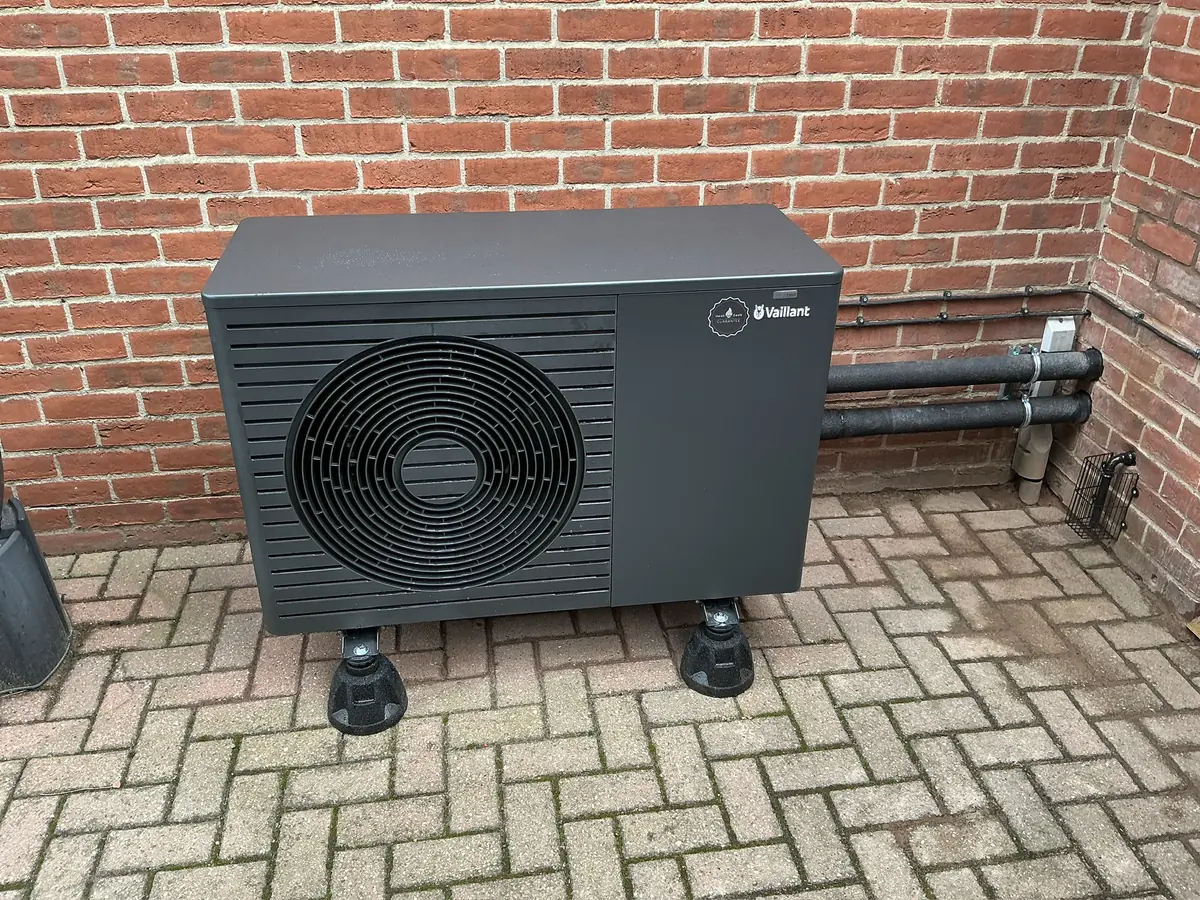
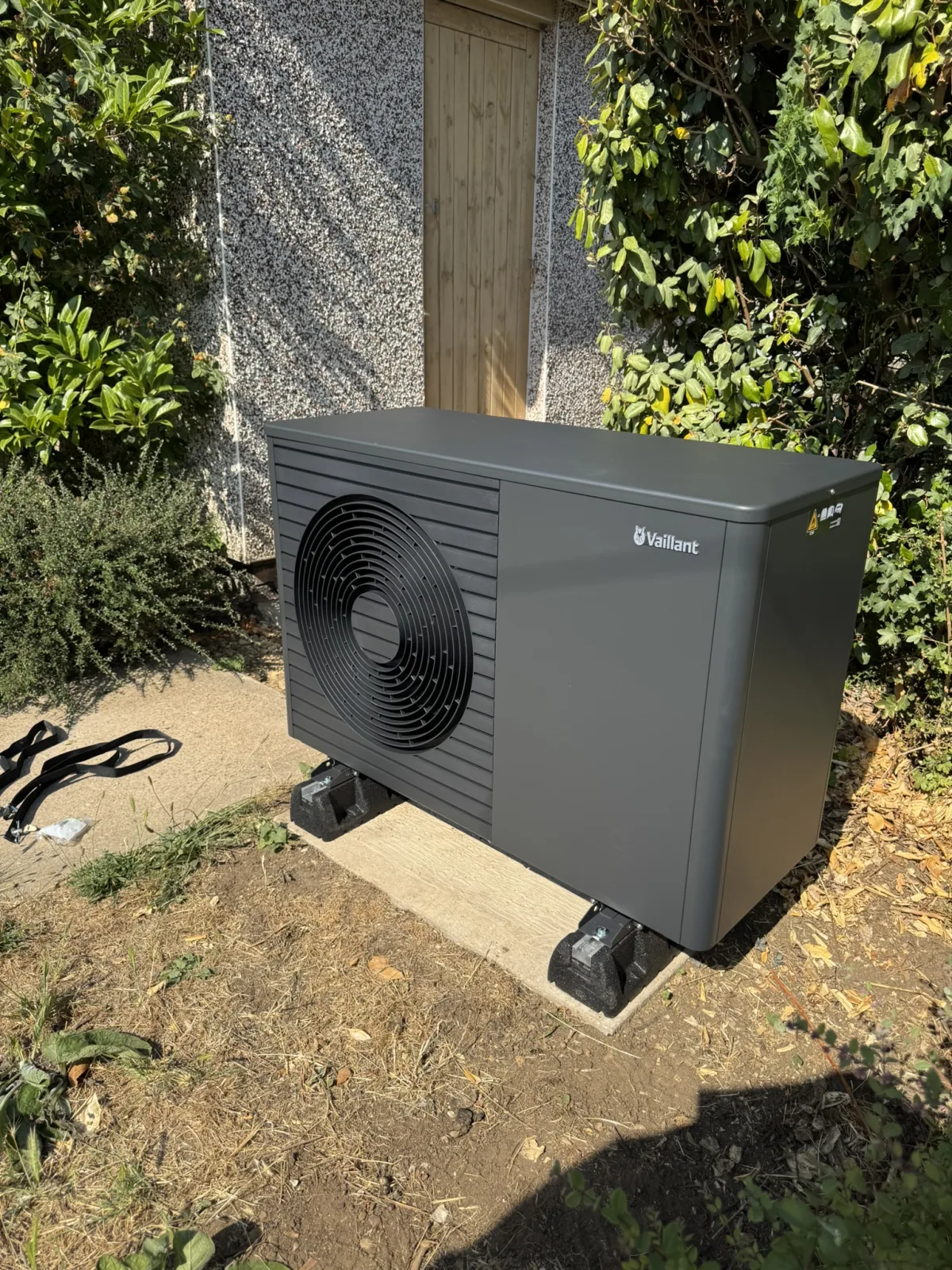
Pro vs Plus: the actual differences
| Feature | aroTHERM Pro /7.1 | New aroTHERM Plus /8.1 |
|---|---|---|
| Capacity classes | 5, 7 and 11 kW | 3.5, 5, 7, 10 and 12 kW |
| Maximum heating-water temperature | 70°C | 75°C |
| Cooling | Active cooling supported; confirm UK S2 activation requirements when ordering | Factory-fitted cooling; no separate cooling activation accessory |
| Cabinet / fans | Single fan throughout; smaller and lighter | Single fan at 3.5–7 kW; two fans at 10–12 kW |
| Compressor type | Rotary across the UK range | Rotary at 3.5–7 kW; scroll at 10–12 kW |
| Noise | Higher published ErP sound power | Lower published ErP sound power |
| Refrigerant | R290 | R290 |
| Flexible Space Function | Available | Available |
| UK controls supplied with outdoor unit | Interface, sensoCOMFORT and internet gateway supplied separately | Interface, sensoCOMFORT and internet gateway supplied separately |
Both have an inverter-controlled compressor, circulation pump, electronic expansion valve, reversing valve, sensors and protective controls.
Both can use a Vaillant system controller and app gateway. Compare the complete quotation: an accessory included in a supplier bundle is different from equipment supplied inside the outdoor unit.
Maximum flow temperature is an operating limit, not a recommended everyday setting or a temperature available at every outdoor condition.
Can they cool as well as heat?
Both ranges can provide active cooling. The new Plus /8.1 has factory-fitted cooling, with no separate cooling activation accessory. The Pro supports cooling when activated; confirm the UK S2 activation requirements with Vaillant when ordering.
For either range, the heating system must also suit cooling. Underfloor cooling needs condensation protection and the controls set up for it.
FSF changes the R290 protection zone. Airflow and service space still matter. The 2026 Plus clearance guide has the original drawings and siting details.
Which model is which?
Start with the full code on the quotation or data plate. The number on the badge is a size class, not its output at every temperature.
| Model | Full outdoor-unit code | Supply |
|---|---|---|
| Pro 5 | VWL 55/7.1 A 230V S2 | 230 V · single phase |
| Plus 3.5 | VWL 35/8.1 A | 230 V · single phase |
| Plus 5 | VWL 55/8.1 A | 230 V · single phase |
| Pro 7 | VWL 75/7.1 A 230V S2 | 230 V · single phase |
| Plus 7 | VWL 75/8.1 A | 230 V · single phase |
| Pro 11 | VWL 115/7.1 A 230V S2 | 230 V · single phase |
| Plus 10 | VWL 105/8.1 A | 230 V · single phase |
| Plus 10 | VWL 105/8.1 A | 400 V · three phase |
| Plus 12 | VWL 125/8.1 A | 230 V · single phase |
| Plus 12 | VWL 125/8.1 A | 400 V · three phase |
- 35, 55, 75, 105, 115 and 125: the model identifiers used here for the 3.5, 5, 7, 10, 11 and 12 kW classes respectively.
- /7.1: the Pro generation covered by this guide.
- /8.1: the new Plus generation covered by this guide.
- A: the outdoor unit designation in these manuals.
- 230 V / 400 V: the supply variant. This can change electrical ratings and available high-temperature output.
All Pro figures here are for the UK 230 V S2 models, including the 11 kW. The Plus 10/12 tables identify the 230 V and 400 V variants separately wherever their figures differ.
Why does page 7 of the Pro manual say VWL 155?
The applicability list on p. 7 says VWL 155/7.1 A 230V S2 for the largest model. The cover and technical tables on pp. 49–51 use VWL 115/7.1 A 230V S2. This guide follows the cover and technical tables for the UK 11 kW model.
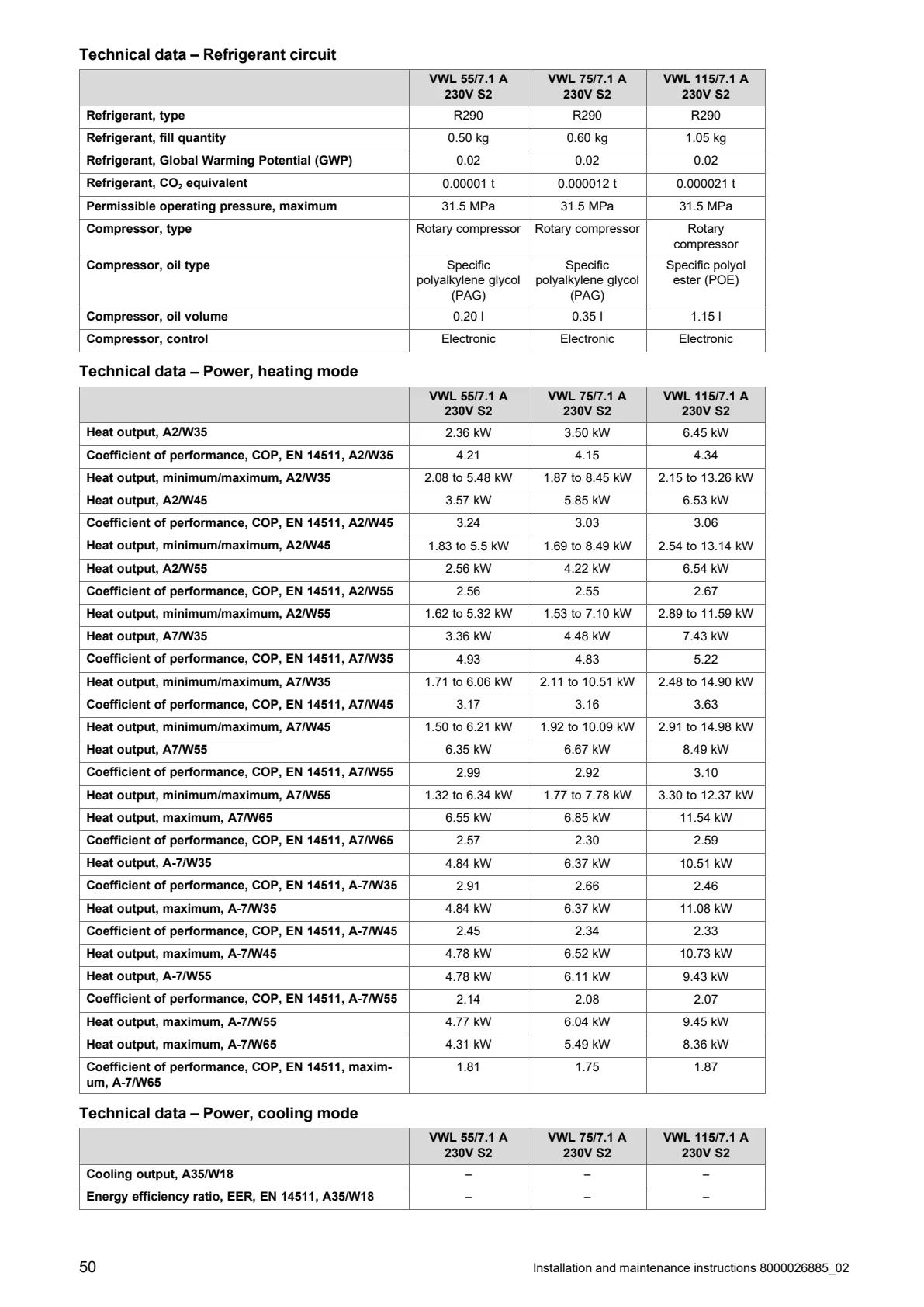
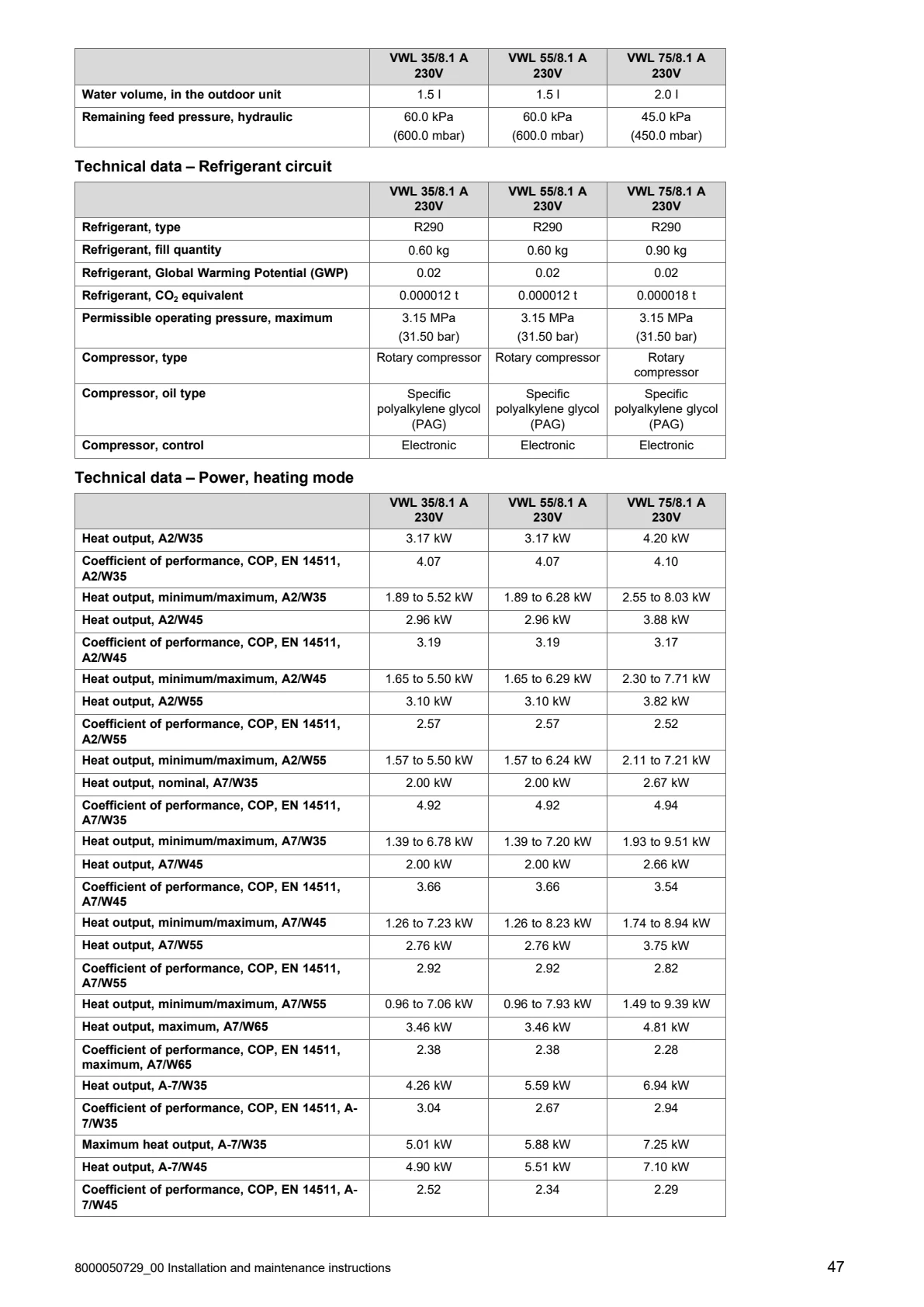
Minimum and maximum heat output
A7/W35 means 7°C outdoor air and 35°C leaving water. A2/W35 means 2°C air at the same flow temperature. Every range below is minimum–maximum heat output in kW, not electricity consumed.
Vaillant notes that its performance data also covers noise reduction mode. These are the published ranges; operating settings can affect the range available on a particular installation.
| Model / supply | A7/W35 | A2/W35 |
|---|---|---|
| Pro 5 230 V | 1.71–6.06 | 2.08–5.48 |
| Plus 3.5 230 V | 1.39–6.78 | 1.89–5.52 |
| Plus 5 230 V | 1.39–7.20 | 1.89–6.28 |
| Pro 7 230 V | 2.11–10.51 | 1.87–8.45 |
| Plus 7 230 V | 1.93–9.51 | 2.55–8.03 |
| Pro 11 230 V | 2.48–14.90 | 2.15–13.26 |
| Plus 10 230 / 400 V | 4.61–14.40 | 4.76–12.48 |
| Plus 12 230 / 400 V | 4.61–14.78 | 4.76–13.36 |
Useful sizing differences: at A7/W35 the Plus 5 goes down to 1.39 kW against the Pro 5’s 1.71 kW. For the 7 kW models, Plus is lower at A7/W35, but Pro is lower at A2/W35: 1.87 kW against 2.55 kW.
At A2/W35, the UK Pro 11 has a 2.15 kW minimum; Plus 10 and 12 have a 4.76 kW minimum. Check the model against the house’s mild-weather demand as well as its cold-day heat loss.
Output ranges at 45°C flow
| Model / supply | A7/W45 | A2/W45 |
|---|---|---|
| Pro 5 230 V | 1.50–6.21 | 1.83–5.50 |
| Plus 3.5 230 V | 1.26–7.23 | 1.65–5.50 |
| Plus 5 230 V | 1.26–8.23 | 1.65–6.29 |
| Pro 7 230 V | 1.92–10.09 | 1.69–8.49 |
| Plus 7 230 V | 1.74–8.94 | 2.30–7.71 |
| Pro 11 230 V | 2.91–14.98 | 2.54–13.14 |
| Plus 10 230 / 400 V | 4.21–14.09 | 4.42–12.55 |
| Plus 12 230 / 400 V | 4.21–14.57 | 4.42–13.45 |
Output ranges at 55°C flow
| Model / supply | A7/W55 | A2/W55 |
|---|---|---|
| Pro 5 230 V | 1.32–6.34 | 1.62–5.32 |
| Plus 3.5 230 V | 0.96–7.06 | 1.57–5.50 |
| Plus 5 230 V | 0.96–7.93 | 1.57–6.24 |
| Pro 7 230 V | 1.77–7.78 | 1.53–7.10 |
| Plus 7 230 V | 1.49–9.39 | 2.11–7.21 |
| Pro 11 230 V | 3.30–12.37 | 2.89–11.59 |
| Plus 10 230 / 400 V | 3.67–13.05 | 4.16–12.32 |
| Plus 12 230 / 400 V | 3.67–13.76 | 4.16–13.04 |
The 0.96 kW minimum for Plus 3.5/5 belongs to A7/W55. It is not their minimum at 35°C flow.
A lower minimum can help a low-load house run for longer without stopping. It does not guarantee no cycling: system water volume, open emitters and controls still matter. There is more on that in our heat-pump efficiency guide.
Original minimum and maximum output tables
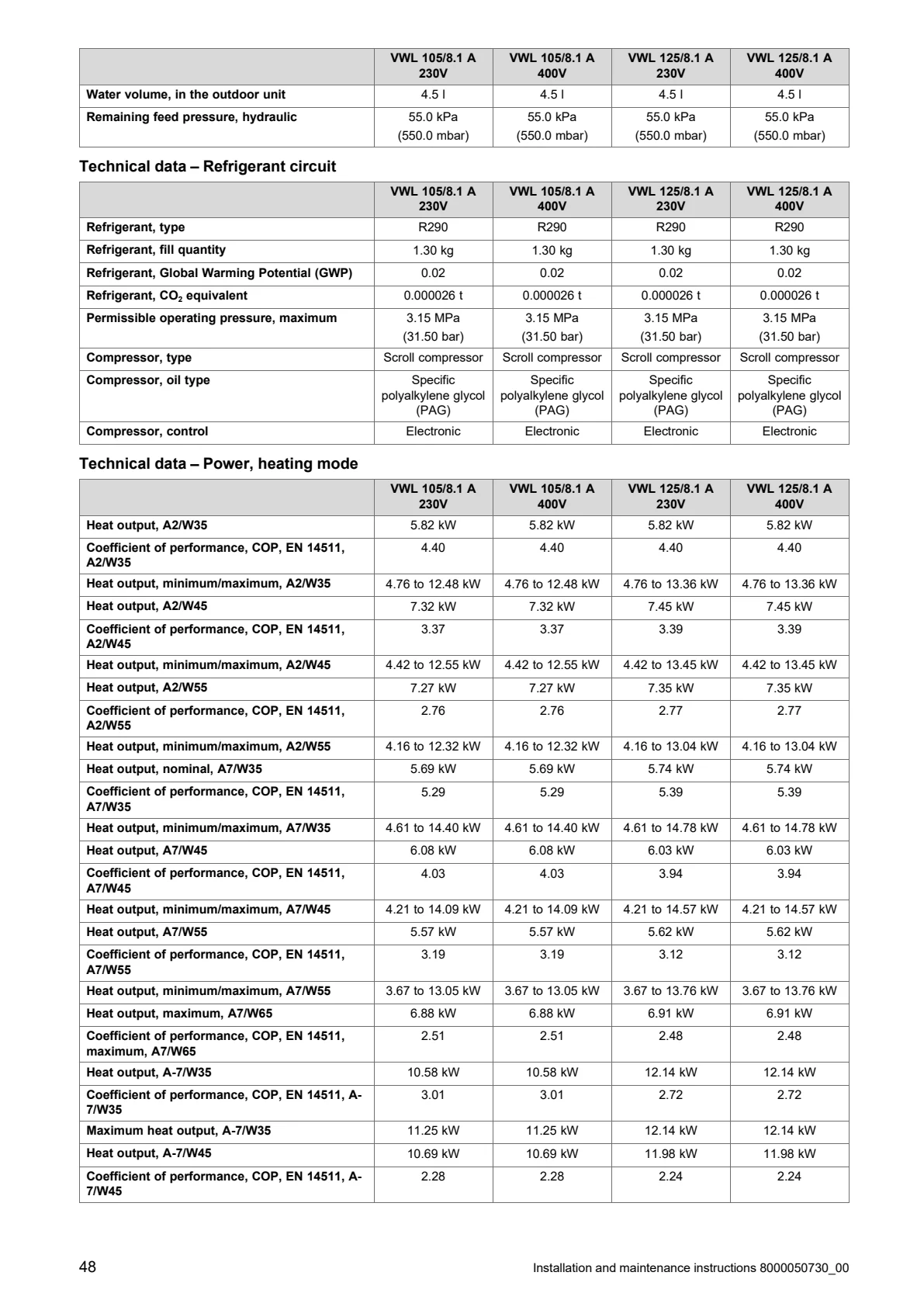
Maximum output in cold weather
These are the rows explicitly labelled maximum in the manuals, at −7°C outdoor air. They are different from the adjacent declared test-point rows. Use performance at the actual design temperature and flow temperature when sizing.
| Model / supply | W35 | W45 | W55 | W65 |
|---|---|---|---|---|
| Pro 5 230 V | 4.84 | 4.78 | 4.77 | 4.31 |
| Plus 3.5 230 V | 5.01 | 4.90 | 4.81 | 4.65 |
| Plus 5 230 V | 5.88 | 5.67 | 5.67 | 5.65 |
| Pro 7 230 V | 6.37 | 6.52 | 6.04 | 5.49 |
| Plus 7 230 V | 7.25 | 7.10 | 7.09 | 5.87 |
| Pro 11 230 V | 11.08 | 10.73 | 9.45 | 8.36 |
| Plus 10 230 V | 11.25 | 10.69 | 10.78 | 9.42 |
| Plus 10 400 V | 11.25 | 10.69 | 10.96 | 11.06 |
| Plus 12 230 V | 12.14 | 11.98 | 10.89 | 9.42 |
| Plus 12 400 V | 12.14 | 11.98 | 11.99 | 11.66 |
At A−7/W35, the Plus 5 and 7 have more maximum capacity than the Pro models with the same badge. At A−7/W65, the 400 V Plus 10/12 also retain more output than their 230 V equivalents.
Maximum output at A7/W65
| Model / supply | A7/W65 maximum |
|---|---|
| Pro 5 230 V | 6.55 |
| Plus 3.5 230 V | 3.46 |
| Plus 5 230 V | 3.46 |
| Pro 7 230 V | 6.85 |
| Plus 7 230 V | 4.81 |
| Pro 11 230 V | 11.54 |
| Plus 10 230 / 400 V | 6.88 |
| Plus 12 230 / 400 V | 6.91 |
These are the manual’s stated A7/W65 maxima. Do not interpolate between this table and the −7°C figures to invent a design curve.
Minimum and maximum electrical input
Maximum electrical ratings are published. The linked manuals do not specify minimum running input for the complete unit.
The table below gives the outdoor unit’s maximum rated electrical power. It is not its continuous consumption, and it excludes separately supplied immersion heaters or system backup heaters. The current is the manual’s maximum rated current, per phase for 400 V units.
| Model / supply | Maximum rated input (kW) | Maximum rated current (A) |
|---|---|---|
| Pro 5 230 V | 3.2 | 14 |
| Plus 3.5 230 V | 3.4 | 15.2 |
| Plus 5 230 V | 3.4 | 15.2 |
| Pro 7 230 V | 3.5 | 15 |
| Plus 7 230 V | 3.5 | 15.5 |
| Pro 11 230 V | 5.7 | 25 |
| Plus 10 230 V | 5.8 | 25 |
| Plus 10 400 V | 8.0 | 14 |
| Plus 12 230 V | 5.8 | 25 |
| Plus 12 400 V | 8.0 | 14 |
These ratings are reference figures, not a cable or circuit-protection design. Use the correct supply variant’s electrical instructions for the installation.
What does it draw at a stated operating point?
At a matching test point, electrical input can be estimated as heat output ÷ COP. These examples use each manual’s declared A7/W35 output and COP, rounded to two decimal places. They are calculated test-point inputs, not minimum inputs.
| Model / supply | Heat output (kW) | COP | Calculated input (kW) |
|---|---|---|---|
| Pro 5 230 V | 3.36 | 4.93 | 0.68 |
| Plus 3.5 230 V | 2.00 | 4.92 | 0.41 |
| Plus 5 230 V | 2.00 | 4.92 | 0.41 |
| Pro 7 230 V | 4.48 | 4.83 | 0.93 |
| Plus 7 230 V | 2.67 | 4.94 | 0.54 |
| Pro 11 230 V | 7.43 | 5.22 | 1.42 |
| Plus 10 230 / 400 V | 5.69 | 5.29 | 1.08 |
| Plus 12 230 / 400 V | 5.74 | 5.39 | 1.06 |
The Plus 5’s approximately 0.41 kW here accompanies 2.00 kW of heat. It does not establish what the unit draws at its 1.39 kW minimum heat output. The Pro and Plus declared points also have different heat loads, so this is not a like-for-like running-cost contest.
Calculated input at maximum A−7/W65 output
Here the manuals explicitly pair maximum heat output with a COP at the same condition. These calculated inputs apply only to −7°C air / 65°C flow, not the unit’s global maximum electrical rating.
| Model / supply | Maximum heat (kW) | COP at maximum | Calculated input (kW) |
|---|---|---|---|
| Pro 5 230 V | 4.31 | 1.81 | 2.38 |
| Plus 3.5 230 V | 4.65 | 1.80 | 2.58 |
| Plus 5 230 V | 5.65 | 1.84 | 3.07 |
| Pro 7 230 V | 5.49 | 1.75 | 3.14 |
| Plus 7 230 V | 5.87 | 1.78 | 3.30 |
| Pro 11 230 V | 8.36 | 1.87 | 4.47 |
| Plus 10 230 V | 9.42 | 1.83 | 5.15 |
| Plus 10 400 V | 11.06 | 1.74 | 6.36 |
| Plus 12 230 V | 9.42 | 1.83 | 5.15 |
| Plus 12 400 V | 11.66 | 1.66 | 7.02 |
Standby consumption and the minimum wattage of a fan or circulation pump do not answer the minimum-running-input question either. That needs a matching whole-unit performance map or measured data with the operating conditions recorded.
Are Pro 5 and 7 just software-limited versions?
The published specifications show physical differences despite the identical cabinet size. That is encouraging: I’m not a fan of buying a bigger machine just to have its output held back in software.
| Specification | Pro 5 · 230 V | Pro 7 · 230 V |
|---|---|---|
| Ready-for-operation weight | 84.5 kg | 90.9 kg |
| R290 charge | 0.50 kg | 0.60 kg |
| Compressor oil quantity | 0.20 litres | 0.35 litres |
| Heating-pump electrical range | 2–54 W | 3–87 W |
| Maximum fan input | 32 W | 60 W |
| Maximum fan speed | 575 rpm | 630 rpm |
| Maximum airflow | 1950 m³/h | 2650 m³/h |
The 7 kW unit is 6.4 kg heavier, carries more refrigerant and has higher pump and fan power ratings. The matching cabinet dimensions do not make these the same machine.
Compressors, pumps and flow requirements
All three UK Pro sizes use rotary compressors. The Plus uses rotary compressors in the smaller units and scroll compressors in the 10/12 kW units. Compressor type alone does not determine which unit suits the job.
| Model / supply | R290 charge (kg) | Pump input (W) | Minimum–maximum water flow (litres/hour) |
|---|---|---|---|
| Pro 5 230 V | 0.50 | 2–54 | 520–860 |
| Plus 3.5 230 V | 0.60 | 2–50 | 430–860 |
| Plus 5 230 V | 0.60 | 2–50 | 430–860 |
| Pro 7 230 V | 0.60 | 3–87 | 640–1275 |
| Plus 7 230 V | 0.90 | 2–50 | 605–1205 |
| Pro 11 230 V | 1.05 | 3–87 | 1225–2445 |
| Plus 10 230 / 400 V | 1.30 | 3–87 | 1075–2065 |
| Plus 12 230 / 400 V | 1.30 | 3–87 | 1075–2065 |
Both ranges have a circulation pump. Keep the design flow rate within the limits above and check the available pump head against the resistance of the circuit.
Dimensions and lifting weights
Cabinet dimensions below are height × width × depth. Allow separately for supports, pipework, airflow, servicing and protection zones. Weights are the manuals’ ready-for-operation values.
| Model / supply | H × W × D (mm) | Weight (kg) |
|---|---|---|
| Pro 5 230 V | 750 × 1104 × 454 | 84.5 |
| Plus 3.5 230 V | 765 × 1100 × 450 | 114 |
| Plus 5 230 V | 765 × 1100 × 450 | 114 |
| Pro 7 230 V | 750 × 1104 × 454 | 90.9 |
| Plus 7 230 V | 965 × 1100 × 450 | 132 |
| Pro 11 230 V | 1103 × 1169 × 454 | 133.3 |
| Plus 10 230 V | 1480 × 1100 × 450 | 196 |
| Plus 10 400 V | 1480 × 1100 × 450 | 211 |
| Plus 12 230 V | 1480 × 1100 × 450 | 196 |
| Plus 12 400 V | 1480 × 1100 × 450 | 211 |
The Pro 7 is 215 mm shorter and 41.1 kg lighter than the Plus 7 on these figures. For Plus 10/12, the UK manual gives 196 kg for 230 V and 211 kg for 400 V. Do not use the 211 kg figure for both variants.
Original dimensions, electrical ratings and flow tables
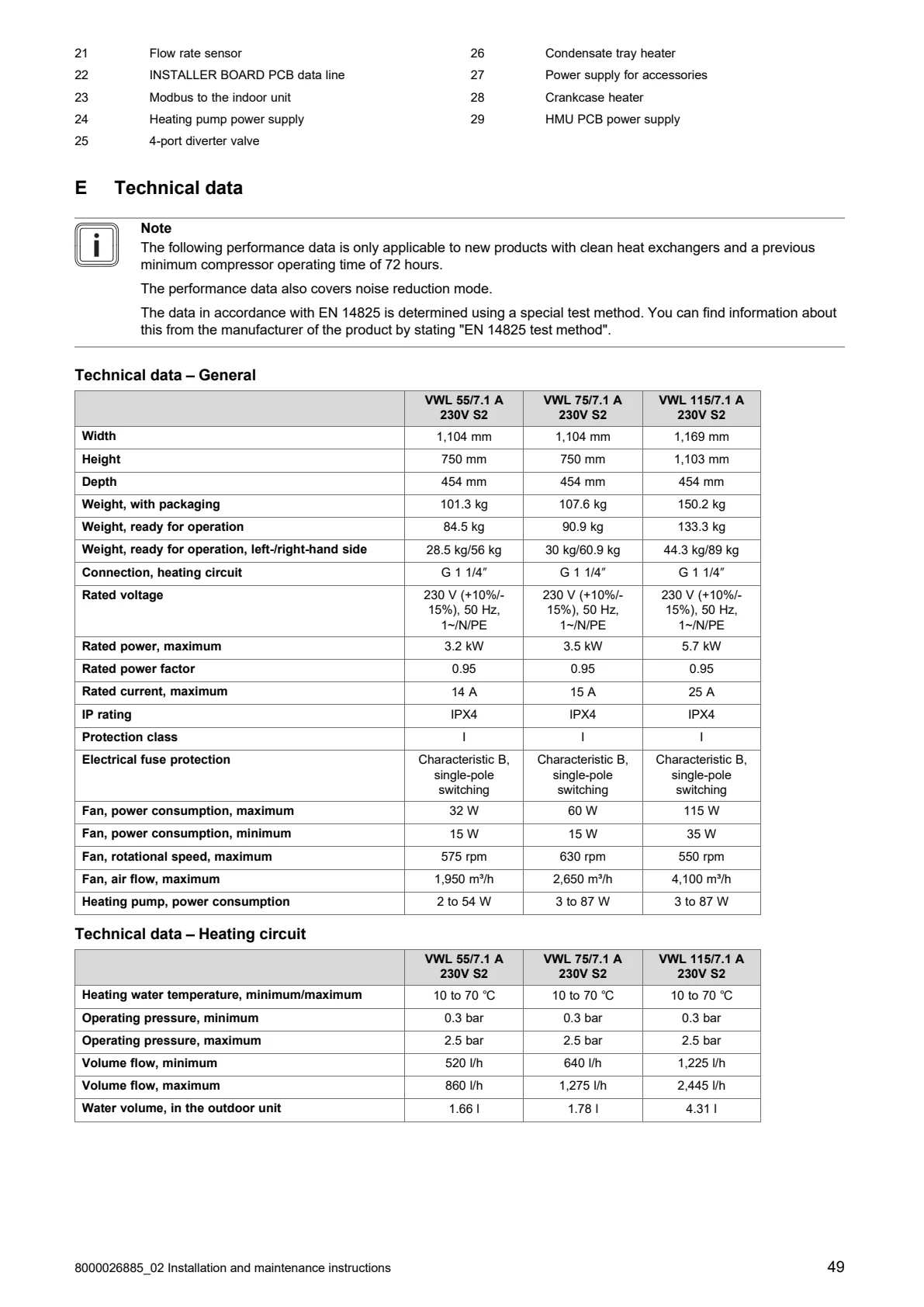
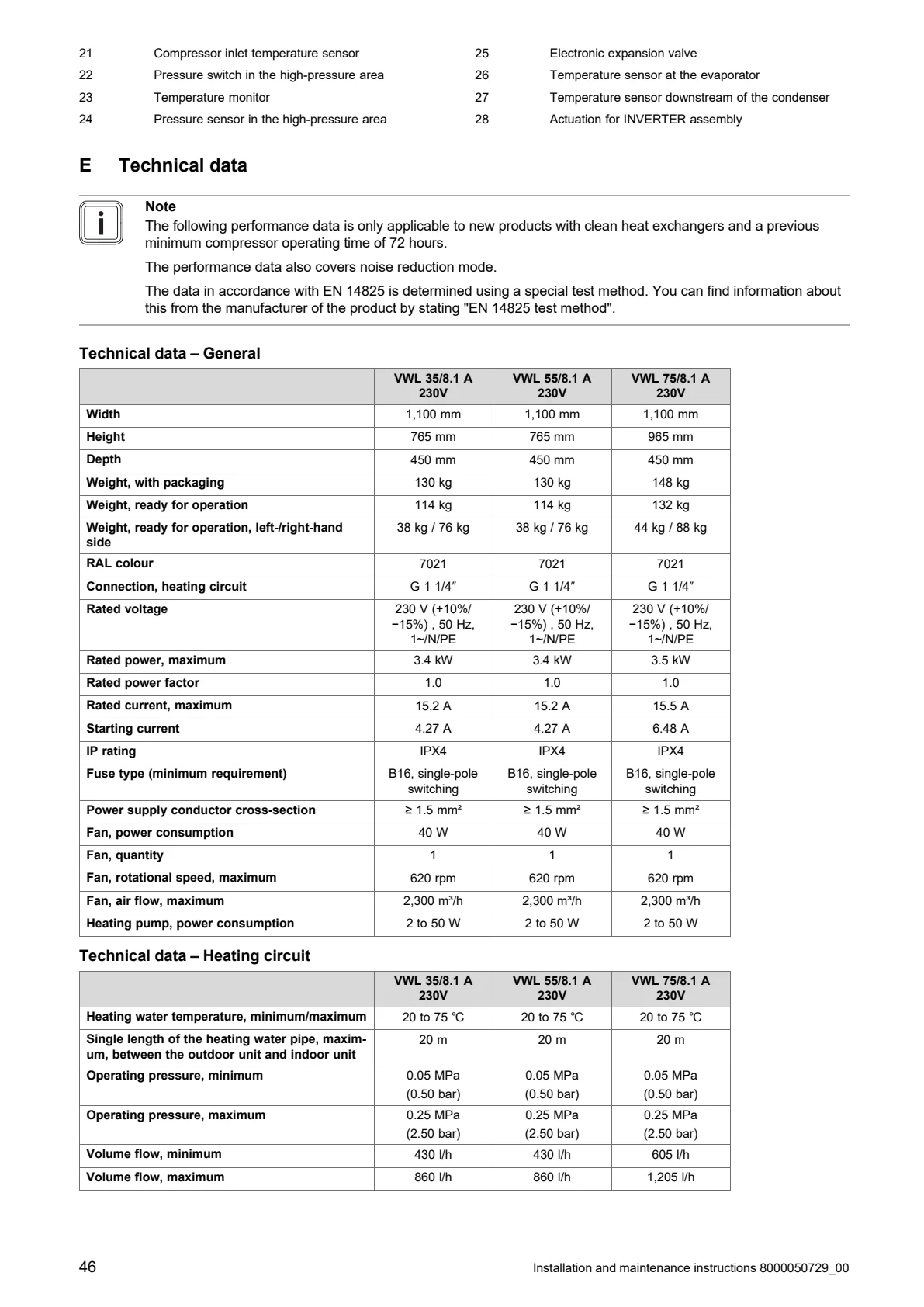
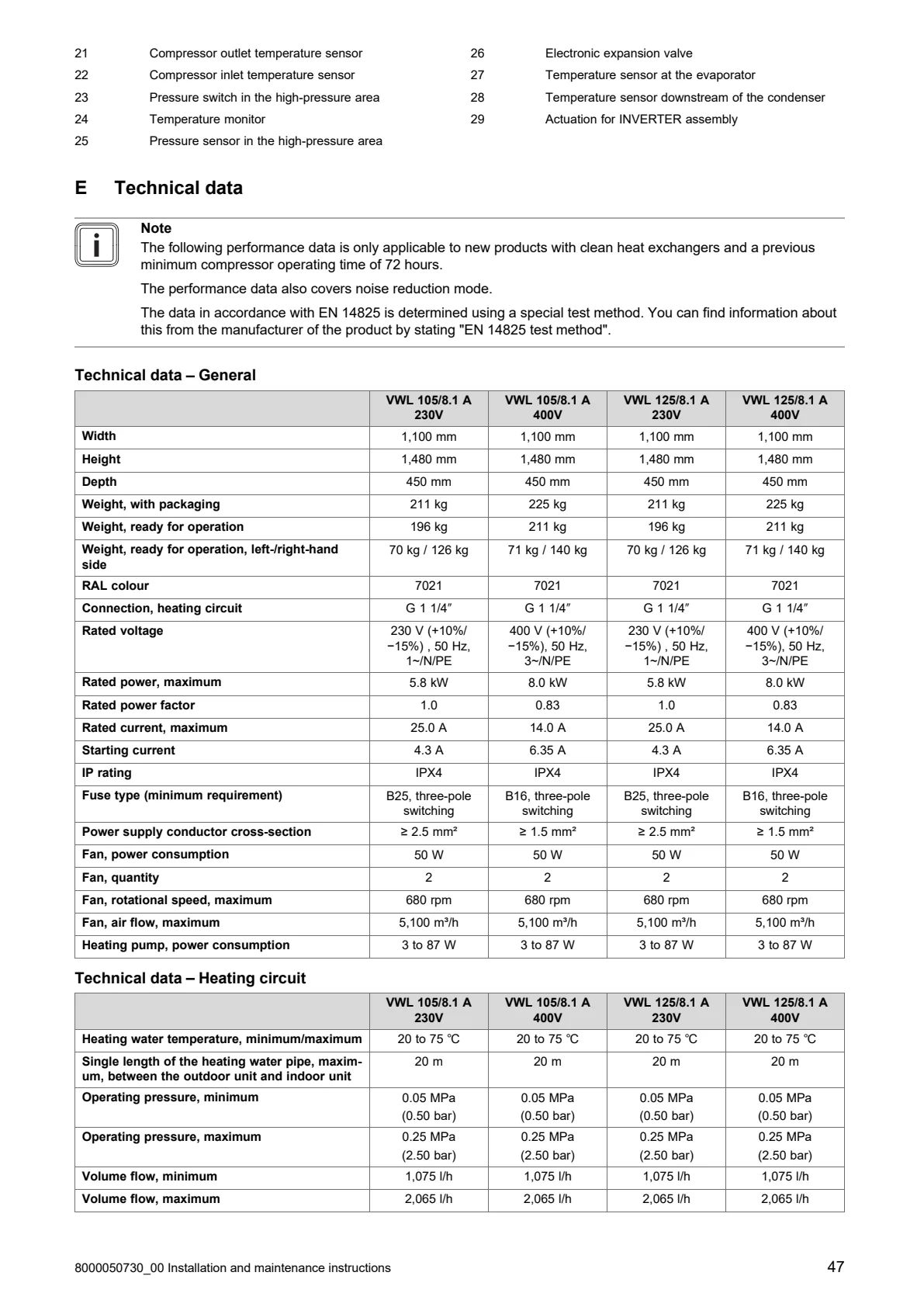
Noise and efficiency: compare the right figures
The new Plus has the lower published ErP sound-power figures in this comparison. These describe sound emitted by the unit, not sound pressure at a neighbour’s window. Maximum sound power is shown separately.
| Model / supply | ErP sound power dB(A) | Maximum sound power dB(A) |
|---|---|---|
| Pro 5 230 V | 49.0 | 57.7 |
| Plus 3.5 230 V | 44.1 | 52.7 |
| Plus 5 230 V | 44.3 | 55.6 |
| Pro 7 230 V | 49.0 | 60.9 |
| Plus 7 230 V | 46.8 | 57.4 |
| Pro 11 230 V | 54.8 | 65.6 |
| Plus 10 230 V | 50.0 | 58.2 |
| Plus 10 400 V | 49.9 | 58.2 |
| Plus 12 230 V | 50.0 | 58.2 |
| Plus 12 400 V | 49.9 | 58.2 |
What happens in 50% noise reduction mode?
Both manuals show reduced heat capacity in noise reduction mode. These are the stated A−7/W35 figures at the setting labelled 50%; the label does not mean half the perceived noise.
| Model / supply | Heat output (kW) | Sound power dB(A) |
|---|---|---|
| Pro 5 230 V | 2.29 | 50.8 |
| Plus 3.5 230 V | 2.26 | 46.1 |
| Plus 5 230 V | 2.78 | 48.1 |
| Pro 7 230 V | 3.12 | 52.1 |
| Plus 7 230 V | 3.81 | 47.6 |
| Pro 11 230 V | 5.72 | 57.3 |
| Plus 10 230 / 400 V | 5.62 | 51.0 |
| Plus 12 230 / 400 V | 6.27 | 51.0 |
Check capacity with the intended night setting active. The quietest setting is only useful if it still heats the house.
Seasonal efficiency
SCOP describes efficiency across a standard heating season. The UK Pro installation manual does not give SCOP values, so a seasonal comparison needs the exact UK models’ ErP data at the same water temperature and climate. The COP figures above describe individual operating points.
Original cold-weather, noise and quiet-mode tables
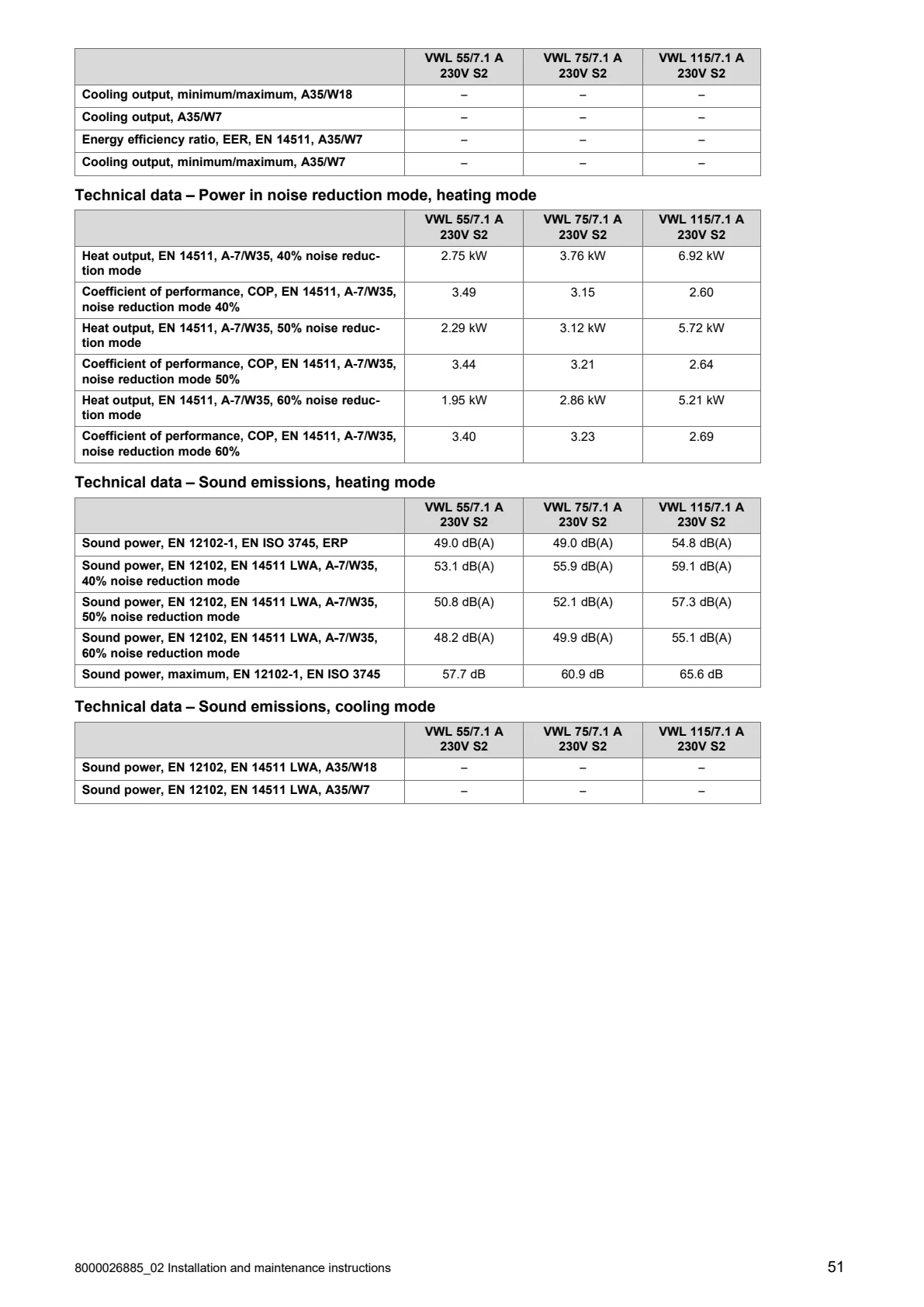
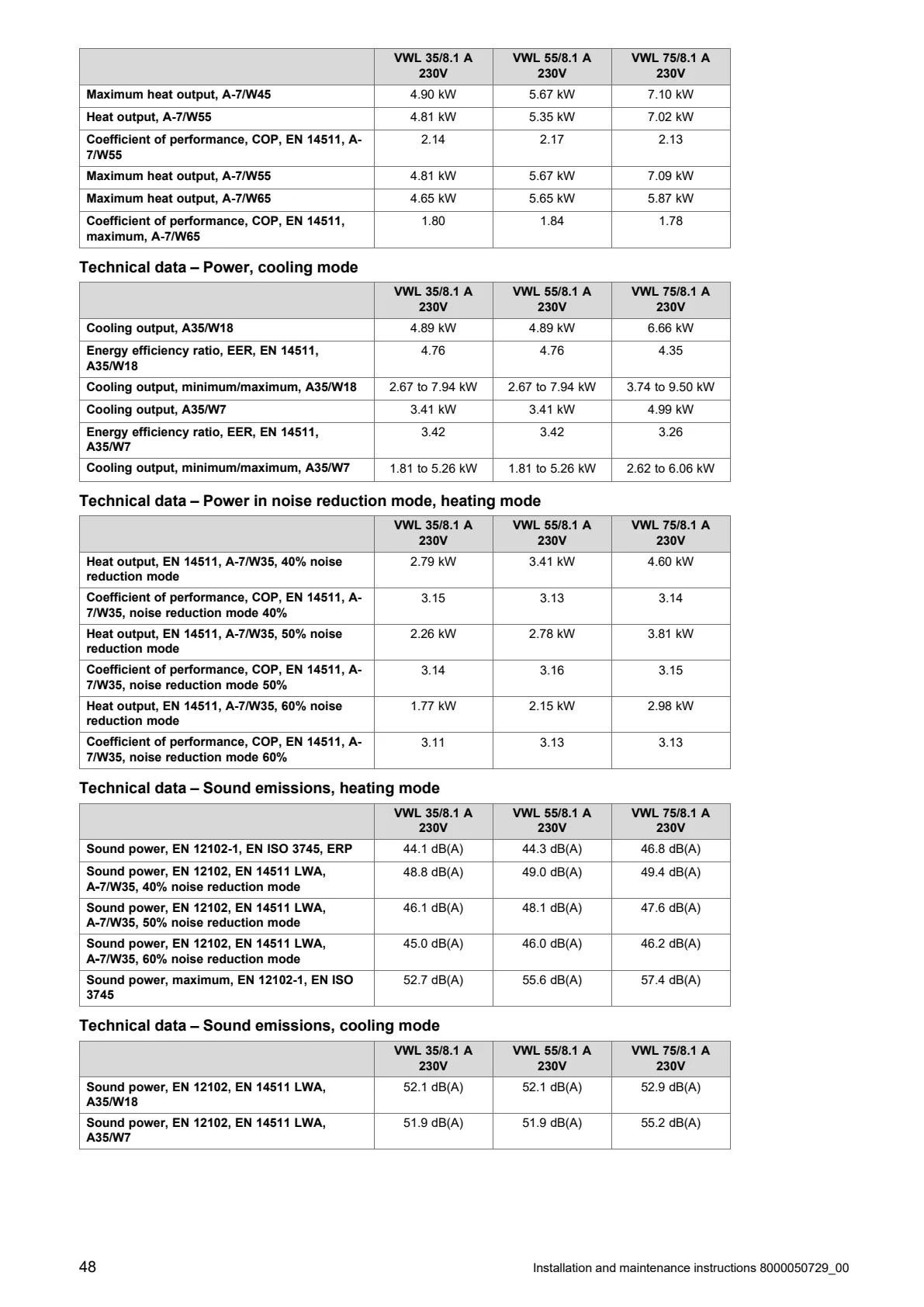
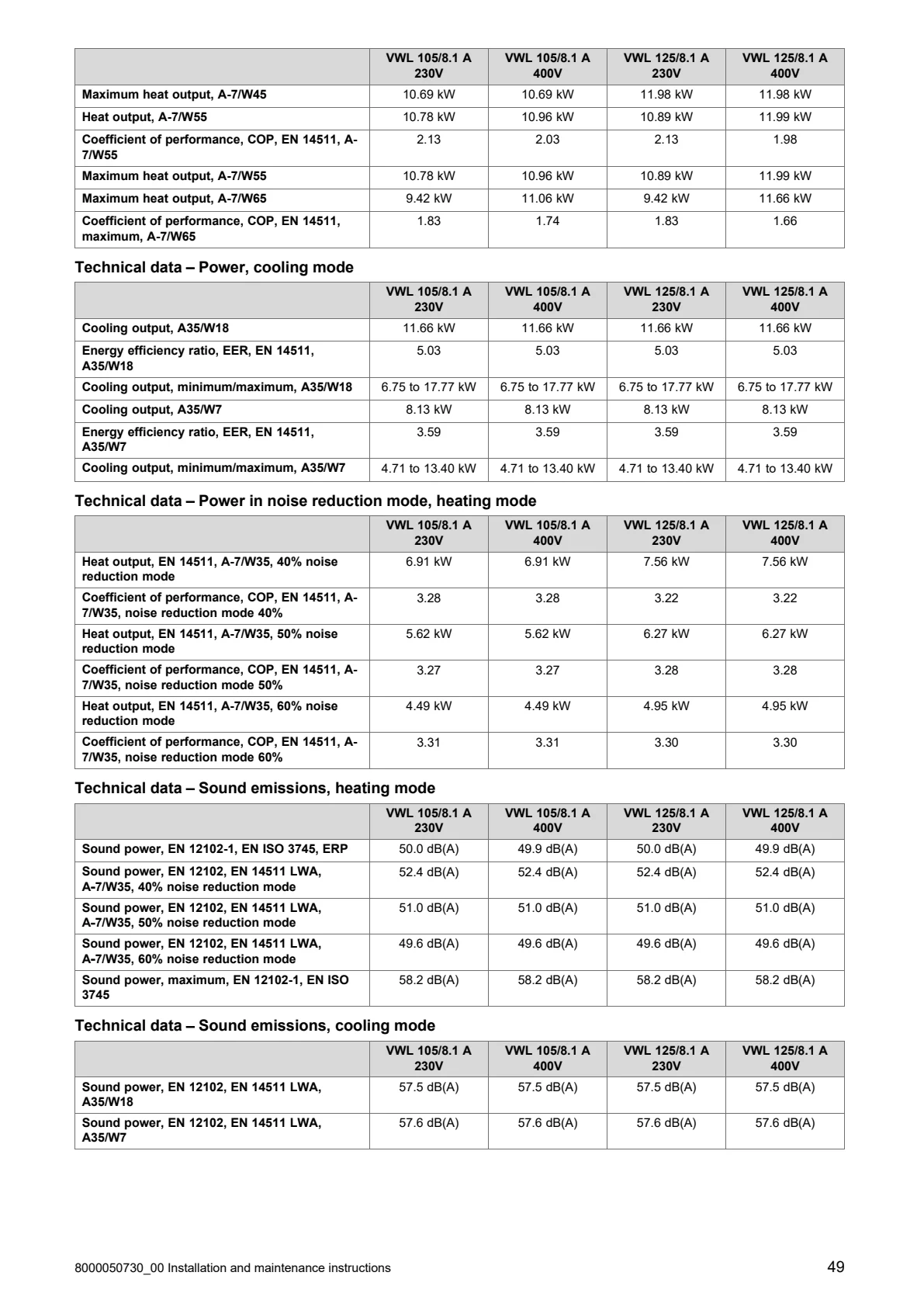
What would make me choose one?
Pro: limited mounting space, a lighter unit, or a better match between the model’s minimum output and the house’s demand. The UK 11 kW model combines a single-phase supply with a 2.15 kW minimum at A2/W35.
New Plus: a lower published noise figure, the 3.5 kW option, more cold-weather capacity in the 5/7 kW classes, or the higher available flow temperature.
I would check the room-by-room heat loss, design flow temperature, minimum output, noise assessment and complete installed price before choosing. That is the basis of our heat-pump design and installation work.
Frequently asked questions
Does the 11 kW aroTHERM Pro need a three-phase supply?
No. The UK model VWL 115/7.1 A 230V S2 uses a 230 V single-phase supply. UK manual 8000026885_02 gives a maximum rated current of 25 A and maximum rated electrical input of 5.7 kW.
Is aroTHERM Pro missing equipment compared with Plus?
Both have the core heat-pump components, including a modulating compressor, circulation pump, fan, expansion valve and protective controls. The differences include size, weight, compressor type on the larger models, noise, operating temperature and capacity. Neither UK outdoor unit includes the system interface, sensoCOMFORT or internet gateway.
Are the 5 kW and 7 kW Pro the same unit with a software limit?
They share cabinet dimensions, but have different refrigerant charges, compressor oil quantities, pump and fan ratings, and weights. Matching cabinets do not mean identical hardware.
What is the minimum electrical input?
Vaillant does not specify a minimum running electrical input for the complete unit in these manuals. Establishing it needs whole-unit performance data at stated operating conditions. Minimum heat output divided by nominal COP is not a valid substitute.
Does a 5 kW heat pump always produce 5 kW?
No. The badge describes its capacity class. Available heat output changes with outdoor temperature, water temperature and operating settings. The minimum and maximum figures must be read at the same stated condition.
Which one is quieter?
The new Plus /8.1 has lower published ErP sound power than the Pro models compared here. That does not replace a site-specific noise assessment: operating load, night settings, reflections and distance to the neighbour still matter.
Can I use these Plus figures for an older white unit?
No. These figures are for the new Plus /8.1 generation. Older Plus /6 models need their own manuals and performance data.
Comparing a Pro and Plus quotation?
For a Lincolnshire project, send Vector Heat the model details and what you need the system to do.