
I have spent enough time fixing boilers to have opinions about individual models. Some fairly strong ones.
The boiler's age matters. So does what it was like when it was new. A £300 repair can be money well spent on one boiler and money I would put towards replacement on another.
After 23 years in plumbing and heating, including breakdowns, fault finding and surveying, I would rather explain that difference than give everyone the same age limit.
Repair or replace: the quick decision
| What the engineer finds | My starting point |
|---|---|
| A sound boiler with an expected, accessible replacement part | Price the repair before discussing a new boiler. |
| A model with a poor repair history and another substantial bill | Compare replacement now, including what else is showing signs of trouble. |
| An older boiler needing a main heat exchanger and extensive dismantling | Look closely at the complete repair cost and replacement options. |
| A working boiler that cannot meet the household's hot-water needs | Compare a better system, even if the immediate repair is small. |
| A very old, non-condensing boiler with high fuel use | Calculate the potential running-cost saving from actual usage. |
| An appliance still under manufacturer cover | Contact the manufacturer to arrange the repair. |
Safety comes first. A boiler labelled unsafe must stay off until a suitably qualified engineer has made it safe. Getting a second opinion on the economics does not mean turning it back on. Gas and LPG work needs an appropriately qualified Gas Safe registered engineer; use an engineer competent in oil appliances for oil work.
When I would repair a boiler
If a good-quality boiler needs a part that I would expect to replace as it gets older, I would usually recommend repairing it, even after ten years. I want to know what failed, whether the repair addresses the cause, and what condition the rest of the appliance is in. Replacing one part does not mean everything else is about to fail.
The Worcester Bosch CDi I kept running
One repair that stands out was a Worcester Bosch CDi. I replaced the expansion vessel and pressure relief valve, or PRV, and changed the electrodes at the same time.
The vessel accommodates expansion as the heating water warms up. The PRV releases water if pressure gets too high. The electrodes are involved in ignition and flame detection.
These are all parts I expect to encounter on repair work once a boiler is more than ten years old. On this boiler, they did not make me concerned about its overall future. It was a good-quality appliance with replaceable parts, so I recommended the repair.
That does not make every pressure fault the same job. The engineer still needs to establish why the vessel or valve has failed, particularly if the problem has happened before.
A failed PCB does not automatically mean a new boiler
The PCB is the electronic control board. It sounds expensive, and it can be, but I would still investigate replacing it on a boiler I trust. That repairs the boiler without replacing the whole appliance.
I approach that decision differently on an older model I have repeatedly repaired, only to be called back for another fault. The part price alone does not tell you enough.
Worcester Bosch CDi and Heatslave, Viessmann 200 and Vaillant ecoTEC Plus are examples of ranges where I would take a serious look at repair if the actual boiler is sound. That is my experience of those ranges, not a promise that every example is worth saving.
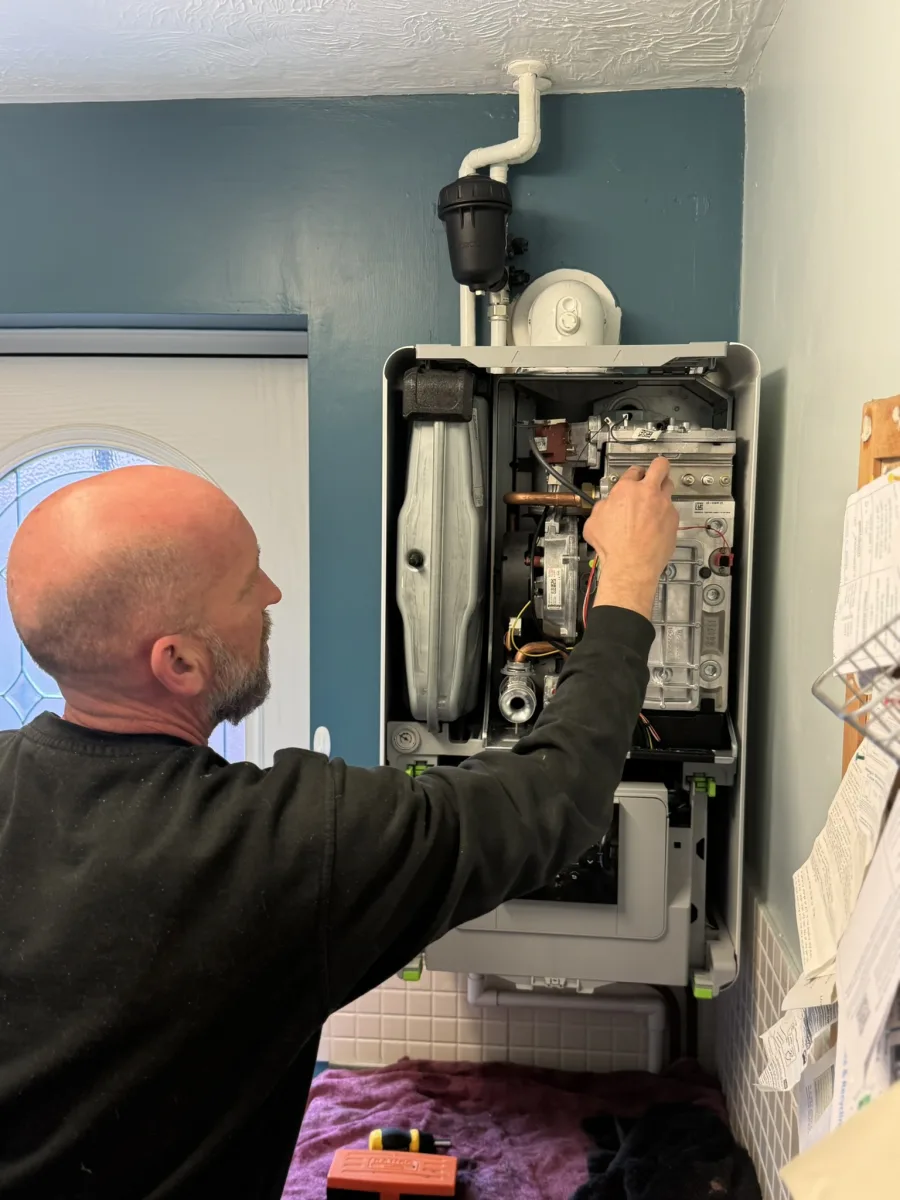
The boilers I am more cautious about repairing
I have had particularly poor repair experiences with older Ideal iCos and Isar boilers. On one of those, a repair above about £200 would lead me to recommend considering replacement. Expensive parts and repeat visits have shaped that view.
An Ideal Logic over ten years old is also a replacement candidate in my assessment, especially if it already has a history of faults. I take a similarly cautious approach to older budget boilers, including Ferroli and Ravenheat models I have had repeated problems with.
These are my repair judgements, not a national reliability ranking. They do not mean every boiler with that badge has the same condition, or that today's range is identical to an older one.
Equally, I would not write off a sound premium boiler purely because it has reached its fifteenth birthday. Our separate guide to how long boilers last explains the practical age ranges. Here, the decision is what you would be paying to keep this particular boiler running.
When an expensive repair tips the balance
A main heat exchanger replacement on an older boiler is a very different proposition from changing an accessible wear part. The part, labour, associated seals and condition of everything disturbed can make it poor value. Existing manufacturer cover changes that calculation, so check it before writing the appliance off.
The main heat exchanger transfers heat from combustion into the heating water. This is different from the smaller secondary plate heat exchanger found in many combis.
Main heat exchanger work can run well above £500 and take several hours. Depending on the model, getting to it involves dismantling other components. Old O-rings and seals need attention, and joints that were dry before the work can leak after reassembly.
On a good boiler over 15 years old, a major job involving several expensive parts can be the point where I stop recommending further spending. I want the quote to include the associated work, not just the headline component.
I do not use a universal rule that says a repair is sensible whenever it costs less than half a replacement. My £200 decision on an old iCos or Isar shows why. The same percentage cannot account for the difference between a sound appliance and one with recurring problems.
Check your warranty, guarantee and any boiler or home-emergency cover first. Citizens Advice explains the cover and quotation checks to make before paying. Ask what a repair guarantee covers too: the work and fitted part may be covered, while unrelated old components are not.
Does the boiler still suit the people living there?
Replacement can make sense even when a repair is technically reasonable. If the existing system already frustrates the household, repairing it preserves those limitations. I would compare the repair with the cost of a system that meets the home's heating and hot-water needs, including any conversion work.
For example, a low-use household with an old vented hot-water cylinder may suit a combi. Heating stored water that barely gets used can be an unnecessary expense. We still need to check the incoming mains supply, conversion cost and future plans.
A family struggling to use several hot-water outlets at once may need the opposite change. A properly sized unvented cylinder served by a system boiler, a suitable storage combi, or a heat-pump system could be worth exploring. A bigger boiler alone cannot fix inadequate incoming water flow.
If you are tired of negotiating shower times, that belongs in the survey conversation.
Our combi boiler suitability guide explains the demand and mains-water checks. If a heat pump is already on your shortlist, compare boiler and heat-pump options before committing to another boiler. Eligible installations in England and Wales can receive support through the Boiler Upgrade Scheme.
“The parts are obsolete”: get that checked
Ask which part is unavailable, what its part number is, and whether the manufacturer or a specialist supplier has been checked. Sometimes a boiler genuinely cannot be supported. Sometimes a second engineer can source the correct part. Those situations lead to very different decisions.
I remember a customer who had been told by a national provider that the boiler fan needed replacing but was obsolete. I bought the fan for about £120 and charged about £100 to do the repair. About £220, and the boiler was repaired.
Those are the approximate figures I remember from that job, not a current fan-replacement price. But it is a useful example of why I would want another opinion before agreeing to replace an otherwise repairable boiler.
“Beyond economical repair” should come with an explanation. Does it mean the part cannot be sourced, the appliance cannot be made safe, or the repair exceeds a cover provider's limit? A cover decision and your own spending decision are not necessarily the same thing.
Ask for an itemised repair quote, and consider an independent diagnosis. Confirm the inspection charge first. Paying for a second opinion can be worthwhile when the alternative is a much larger purchase.
Can replacing a working boiler save enough fuel to be worthwhile?
Yes, particularly with a very old non-condensing boiler and high fuel use. I would calculate the saving from the actual boiler, annual consumption and a realistic replacement efficiency. I would not promise the same saving for a modern condensing boiler that already works efficiently.
I still see very old boilers, including gas back boilers, where running costs are a strong reason to consider replacement. A condensing boiler recovers more heat from the combustion gases before they leave through the flue, as Energy Saving Trust explains.
Here is how a large saving can be possible, and why it is not universal.
A worked example, not a savings promise
Suppose an old boiler delivers heat at 60% seasonal efficiency, and its replacement achieves 90%. To deliver the same heat at the same fuel price, the new boiler uses one third less fuel.
| Annual fuel spend attributable to the old boiler | Illustrative annual saving | Illustrative new fuel spend |
|---|---|---|
| £1,200 | £400 | £800 |
| £3,000 | £1,000 | £2,000 |
| £4,500 | £1,500 | £3,000 |
These are assumed efficiencies, not measurements of your boiler. The spend excludes standing charges, cooking and other energy use. Weather, comfort settings, tariffs, controls and the installation affect the real outcome.
For an illustrative £5,000 installation, saving £1,500 a year gives a simple fuel-only payback of about 3.3 years. Saving £400 gives 12.5 years. That comparison excludes finance, maintenance and future repairs. This is why I want to see the bills before talking about payback.
An old hot-water cylinder deserves attention too. Poor insulation allows stored heat to escape, but a red jacket is not by itself a reason to replace the whole system. Improving the cylinder insulation can be a useful lower-cost step while you assess its condition, size and suitability.
If replacement makes sense but the budget is tight
I would run the numbers and look at the available options. A safe, worthwhile repair can buy time to plan a replacement. It can also be the right longer-term choice. The customer needs a workable plan, not pressure to find several thousand pounds immediately.
Compare the complete installation price and the total amount repayable under any finance offer. Our boiler replacement cost guide sets out what changes the fitted price.
I have offered finance in the past. In my experience, a 0% arrangement cost the installer around 8% of the financed amount. On £5,000, that would be £400. That does not prove every installer adds £400 to the bill; it explains why I would compare the cash price as well as the interest rate.
A 0% purchase credit card or a personal loan may be options, subject to eligibility, acceptance and affordability. With a promotional card, check the credit limit, minimum payments and the rate after the offer ends, and have a plan to clear it before then. MoneyHelper recommends comparing the total borrowing cost.
Do not assume borrowing against the house is cheapest overall. Fees and a longer term can outweigh a lower rate, and your home is at risk if you cannot repay. MoneyHelper explains secured and unsecured borrowing. Choose the installer and the funding with both quality and affordability in mind.
What I check before fitting the replacement
I look beyond the boiler on every survey, including when the old one is still working. The point is to identify problems that could damage the replacement or leave the household with the same poor performance.
- Condensate drainage: recurring blockages and an unsuitable existing route need addressing as part of the job.
- System water: sludge and corrosion debris can affect the new appliance. An open-vented system or old header-tank history makes me particularly alert to contamination. Inspection decides the cleaning method; every installation does not automatically need a full powerflush.
- Controls and motorised valves: these direct heating water around the system and can have their own faults. A new boiler does not renew them unless that work is included.
- Leaks, circulation and pressure behaviour: repeated component failures need an explanation, rather than the same replacement part again.
Sometimes replacing an ageing motorised valve while the system is already being worked on adds relatively little. I have seen situations where it adds around £80, while a separate visit later would cost a few hundred pounds. That is a job-dependent example, not a standard price or a reason to replace every working valve.
I would explain the condition, additional cost and reason for recommending it before doing the work.
What to ask before approving either quote
| Ask the engineer | What you need to understand |
|---|---|
| What has failed, and why? | The diagnosis and whether anything elsewhere caused it. |
| What condition is the rest of the boiler in? | Any actual evidence of further problems, not a prediction based only on age. |
| What does the complete repair include? | Parts, labour, tax, associated seals, tests and any further charges. |
| What cover applies? | Existing manufacturer protection, repair guarantee and exclusions. |
| Would replacement improve anything beyond reliability? | Fuel use, hot-water performance, controls or suitability. |
| What is included in the replacement price? | Flue, drainage, cleaning, controls, commissioning and any cylinder work. |
Have the boiler model, approximate age, service and repair paperwork, current symptoms and recent bills ready. Photograph an accessible label or display if useful, but do not remove the boiler case.
Frequently asked questions
Is it worth repairing a ten-year-old boiler?
Often, yes. A sound good-quality boiler with one replaceable part can be worth repairing. My recommendation changes with the model, fault, previous repair history and whether it still meets the household's needs.
Should I repair a boiler that is over 15 years old?
Get the actual fault and overall condition assessed. I would consider a straightforward repair on a sound boiler, but extensive dismantling, multiple expensive parts or a failing main heat exchanger can make replacement better value.
Is a £300 boiler repair worth it?
It can be. I would spend that differently on a reliable boiler that suits the house than on one with repeated failures or inadequate hot-water performance. Compare the complete repair with a realistic replacement quote, not the price of a boiler in a box.
Does a failed PCB mean I need a new boiler?
No. Replacing the control board can be a sensible repair on a sound, supported boiler. The engineer needs to confirm the diagnosis and assess the rest of the appliance before recommending it.
Does a leaking heat exchanger mean the boiler must be replaced?
Not automatically. Identify which heat exchanger is affected, check manufacturer cover and obtain the full repair price. A main heat exchanger on an old boiler can make replacement sensible, but that is different from every heat-exchanger fault being a write-off.
What if I am told the parts are no longer available?
Ask for the exact part details and consider a second opinion from an engineer familiar with that model. Genuine obsolescence can force replacement, but one supplier's availability does not settle the question. Do not source an unapproved substitute yourself.
Should I replace a boiler that still works?
It is worth considering if it is very inefficient or the system does not meet your needs. Calculate the likely benefit first. A reliable condensing boiler that suits the home does not automatically need replacing because a newer model exists.
Will a new boiler fix sludge or poor hot-water flow?
Only if the underlying problem is addressed in the installation design and scope. Dirty water needs suitable cleaning, and hot-water performance depends on the mains supply, pipework and chosen arrangement as well as the boiler.
Talk through the actual boiler and the actual problem
There is no single piece of advice I would give every household. One needs a sensible repair. Another needs to stop spending on an unreliable boiler. Another needs a different hot-water arrangement altogether.
If you need boiler repair in Lincoln, tell us the model and the symptoms so we can discuss a diagnosis. If you are comparing replacement boiler options, tell us what the current system does badly as well as what has broken.
Call 01522 535335 or contact Vector Heat to talk it through.