Heat pumps
Samsung Heat Pump: When I Recommend the 16kW
Why I choose the Gen 7 R290 for some higher-heat-loss homes, and the design work that goes with it.
Published
I spend quite a lot of time comparing heat-pump performance tables. It doesn't make for a particularly exciting evening, but it does help me choose the right equipment.
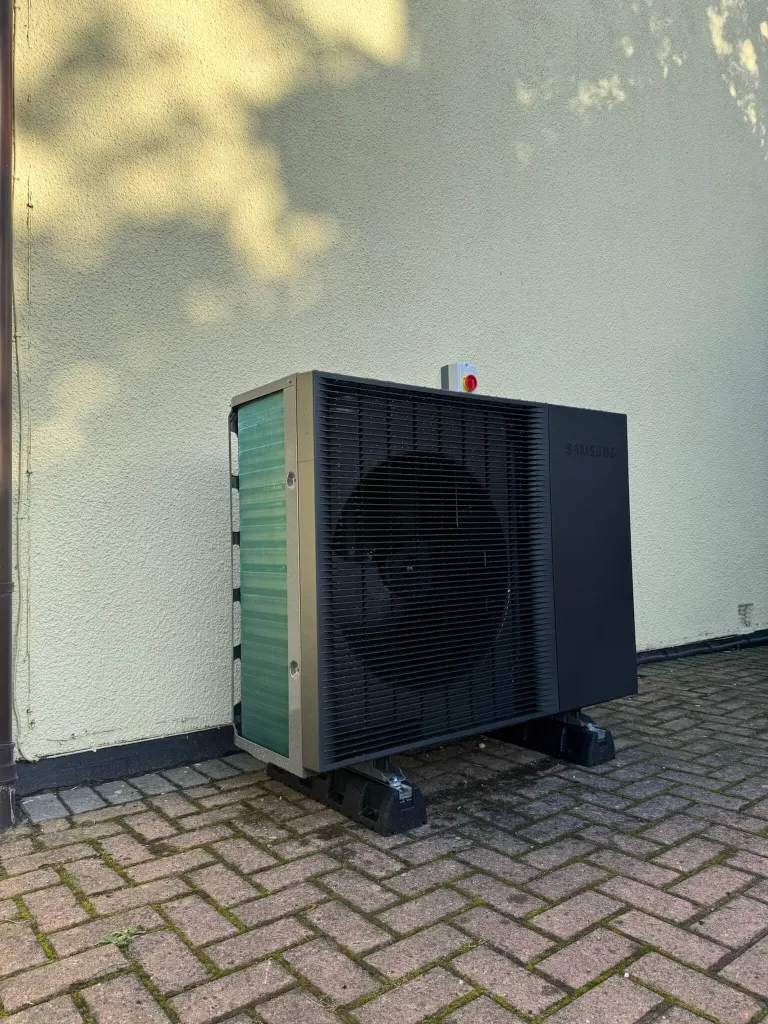
The Samsung Gen 7 R290 16kW is one I recommend when a home needs more output than the other single-phase heat pumps I would normally fit. It offers substantial heating capacity, a relatively compact single-fan unit and competitive pricing.
That gives it a useful place in our installations. It still needs to suit the house, the radiators and the electrical supply. I don't choose it simply because it says 16kW.
Useful output on a single-phase supply
Sometimes the calculated heat loss is more than the biggest suitable Vaillant can meet at the temperatures we need. That is when I start looking closely at the Samsung 16kW.
The model discussed here is the Samsung EHS Mono R290 16kW, AE160CXYDEK/EU, a single-phase outdoor unit. Samsung also offers other capacities and configurations, so the exact model on the quote matters.
Single phase does not mean we can ignore the electricity supply. We still assess the existing supply and other electrical loads, design the circuit and complete the appropriate network checks. It means this particular heat pump is available without requiring a three-phase model.
Why I don't size it from the 16kW label
Heat-pump output changes with outdoor temperature and the temperature of the water it is producing. The conditions on a mild day are different from the conditions when the house needs the most heat.
Samsung's 16kW product datasheet gives its nominal heating rating at 7°C outdoor air and 35°C water. That is a rating point, not a promise of exactly 16kW in every situation.
Once I've calculated the heat loss, I use the manufacturer's performance data in Spruce to compare output at the actual design conditions. My heat-pump sizing guide explains that process in more detail.
| Design check | Why it matters |
|---|---|
| Property heat loss | How much heat the building needs at the design outdoor temperature. |
| Required flow temperature | How hot the water needs to be for the radiators or underfloor heating to heat the rooms. |
| Output at those conditions | Whether this particular heat pump can meet that demand. |
| Operation in milder weather | Whether the selected unit also suits the smaller demand during much of the heating season. |
A bigger number on the casing isn't a reason to oversize the installation. I want the output the property needs, with a system that works well around it.
Solid walls, big rooms and a 43°C design flow temperature
On one recent Samsung installation, the property had solid walls, big rooms and a substantial heating demand. We needed the heat pump's output, but we also needed enough radiator surface area to get that heat into the rooms.
| Two of the radiator upgrades | A 2m triple-panel radiator and a 2.7m double-panel radiator. |
|---|---|
| Design outdoor temperature | −3°C. |
| Design flow temperature | 43°C. |
| Pipework used on this job | 35mm, selected for this installation. |
Those were sizeable radiators, and they had a purpose. Enough surface area meant we could meet the room heating requirements without designing for excessively hot water.
The 43°C figure is a design result, not a measured efficiency or annual running-cost result. It gives the installation a good basis for efficient operation. The actual performance still depends on installation, commissioning and use.
That doesn't mean every Samsung installation needs radiators that size. We assess the rooms and retain suitable radiators. See how I decide which radiators need changing.
An older building isn't automatically ruled out either. Practical insulation improvements are worth considering alongside the heating design, as I explain on our heat pumps for old houses in Lincolnshire page.
The outdoor position, pipework and pump need planning
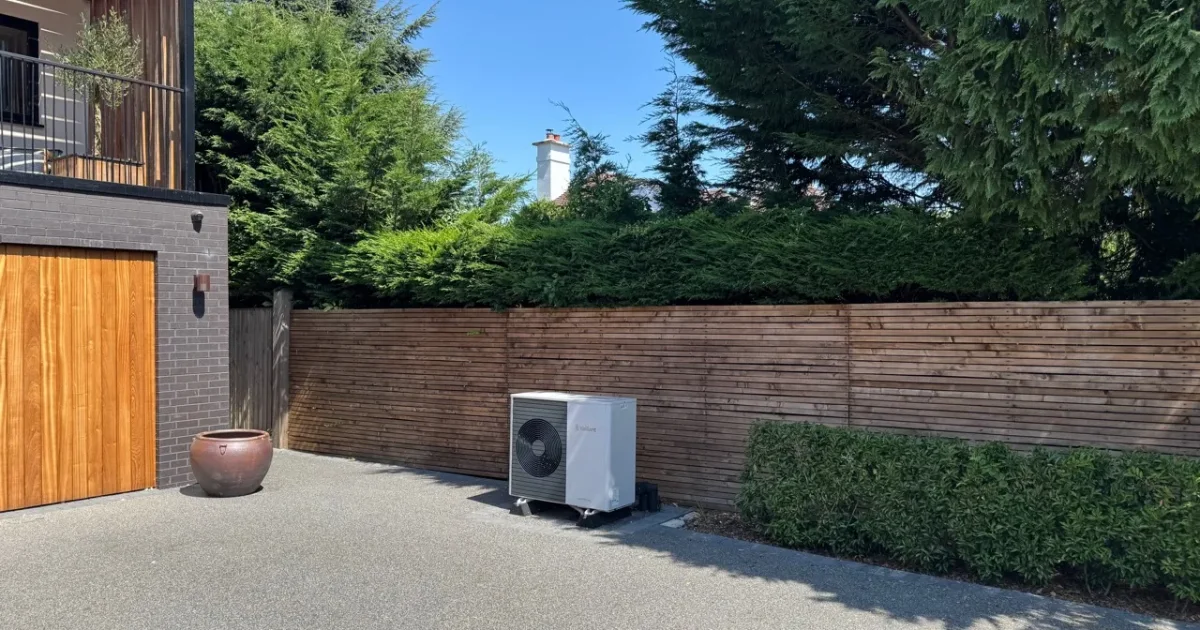
The Samsung's single-fan layout is relatively compact for its output. That can help when finding a position around an existing house, particularly where a taller unit would be awkward.
We still check airflow, servicing access, drainage, noise and the manufacturer's R290 protection zone around openings. A unit fitting into a space is only the first part of the check.
The pipe route matters too. The example above used 35mm pipe, so the distance from the outdoor unit to the heating connections needed thought. Long or awkward routes can add work and resistance to water flow. Pipe size has to suit the required flow and the route; 35mm is not a rule for every installation.
I choose the external circulation pump version
The circulation pump moves water through the heating circuit. I choose the Samsung version with an external pump because it suits the way I design and commission these systems.
Samsung also makes pump-integrated versions. This is my equipment preference, not a claim that every Samsung needs the same separate components. The quote should make clear which arrangement is being supplied.
Does it need a special hot-water cylinder?
A correctly matched standard heat-pump cylinder is a suitable option. I don't insist on the most expensive cylinder simply because we're installing a larger heat pump.
The 16kW Samsung can also make use of the Heat Geek Super Cylinder's larger coil. The coil transfers heat from the heating water into the stored domestic hot water. More heat-transfer area can help us transfer the output at a lower heating-water temperature, subject to the cylinder and system design.
Newark's Super Cylinder range has different coil sizes depending on the model. We match the cylinder to the heat pump, household demand and available space, rather than assuming every model is interchangeable.
I explain the extra cost and potential benefit, then the customer chooses. My Super Cylinder guide covers the sizes and specifications.
What is Samsung SmartThings like to use?
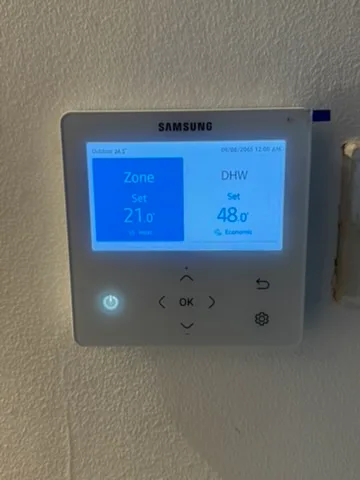
In my experience, SmartThings is a reliable app for everyday control, including turning the heating and hot water on and off. It does the basics well.
It doesn't give me the same control flexibility as Vaillant. On the Samsung controls I fit, weather-curve adjustment is made through the controller's installer settings rather than the everyday app. That is worth knowing if you want to get involved in fine-tuning the system.
We set the system up and go through its operation at handover. You shouldn't need to work out the controls from scratch after we've left.
Who do you call if something goes wrong?
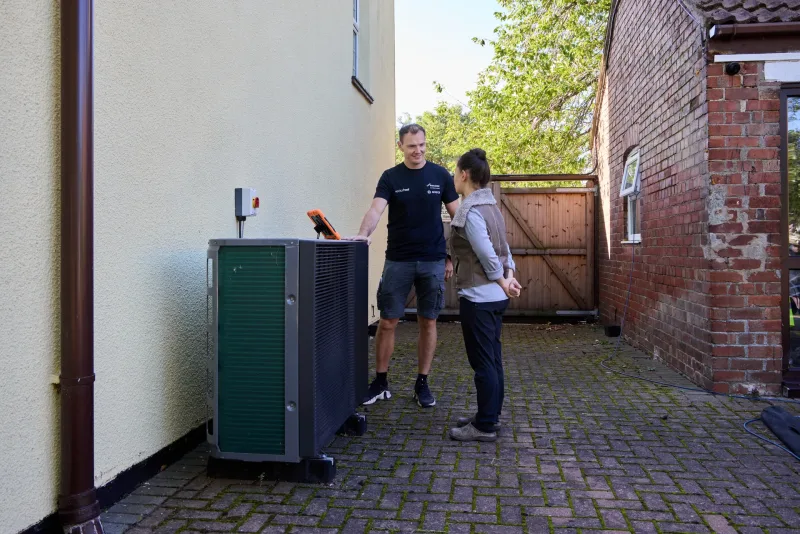
Our customer contacts Vector Heat first. We look after the Samsung systems we install, so the person installing the equipment also needs to be comfortable maintaining and supporting it.
Would I choose Samsung for every home?
No. For a smaller heat loss, I would normally recommend Vaillant, Viessmann or Stiebel Eltron. If budget is the main concern, I consider the Bosch CS2000 good value.
Those are my choices, not a universal league table. The Samsung 16kW earns its place when we need its output on single phase and it suits the rest of the installation.
What I would ask about a Samsung quote
- Which exact model and pump arrangement are included?
- What is the calculated heat loss, and what output does the unit provide at the proposed design temperatures?
- Which radiators need changing, and why?
- Where will the unit go, and how will the pipes reach the heating system?
- Which cylinder and controls are included?
- Who commissions it, explains it and looks after it afterwards?
Those answers tell you much more than the brand name alone.
Samsung heat pump questions
Are Samsung heat pumps any good?
The Gen 7 R290 16kW has a useful place in my installations when a home needs substantial output on single phase. I judge its suitability from the heat loss, output at design conditions and the complete heating system, rather than treating the brand as the answer.
Can a Samsung 16kW heat pump run on single phase?
Yes. The AE160CXYDEK/EU model discussed here is single phase. The property's electrical supply and other loads still need assessing, along with the circuit and the appropriate network checks.
Will a 16kW Samsung always produce 16kW?
No. Output depends on the outdoor and water temperatures. I compare the manufacturer's performance data with the property's heat loss at the actual design conditions, rather than relying on the nominal rating.
Does a Samsung heat pump need bigger radiators?
Only where the existing radiators cannot provide enough heat at the proposed flow temperature. On one high-heat-loss installation, larger radiators helped achieve a design flow temperature of 43°C at -3°C outside. That is a design example, not a requirement for every home.
Do I need a Heat Geek Super Cylinder with a Samsung?
No. A correctly matched standard heat-pump cylinder can be suitable. The Super Cylinder's larger coil can offer a benefit with the 16kW unit, but I explain the additional cost and design considerations before the customer decides.
Who supports a Samsung heat pump installed by Vector Heat?
Contact Vector Heat first. We commission the installation, explain its operation and look after the Samsung systems we install. Your proposal should set out the equipment warranty and workmanship cover separately.
Choosing a heat pump for your home?
We design and install heat pumps across Lincolnshire. We'll calculate what your home needs, check the radiators and explain why a particular unit suits the job.
Discuss your installationHeat pump installationMore practical advice in our heat-pump guides.