
Heat Pumps
Are Heat Pumps Noisy?
What they sound like, why installation matters, and why I suggest hearing one for yourself.
Published
Are heat pumps noisy? In my experience, a modern heat pump, properly installed, generally isn’t noisy. But it does make a noise. I have spent quite a lot of time standing in gardens listening to them. It is not much of a hobby.
Think about your fridge. You can hear it running sometimes, but you probably wouldn’t describe your kitchen as noisy because of it. That is the distinction I make when homeowners ask about air source heat pump noise: audible does not automatically mean intrusive.
I am not saying every heat pump sounds exactly like a fridge, or that nobody will ever hear yours. The model, what it is doing and where we install it all matter. My best advice is to go and listen to a working installation before deciding.
What does an air source heat pump sound like?
A running air source heat pump usually produces airflow sound from its fan and a hum from its compressor. How noticeable those sounds are depends on the model, its workload, the surroundings and where you are listening. The sound can change as it starts, adjusts output or enters a defrost cycle.
The fan draws air through the outdoor coil. The compressor does the work of raising the refrigerant’s pressure and temperature. If you want to understand those parts, my guide to how a heat pump works takes you through the cycle.
The Vaillant aroTHERM plus is very quiet in my experience. The Bosch Compress 5800i can be almost silent to stand beside in normal operation. With that Bosch, I find the fan barely noticeable; the compressor is the sound I am more aware of.
Those are my impressions from working with the equipment, not a laboratory comparison or a promise about maximum output. Bosch’s Compress 5800i information describes its quiet design, but the right question is still how the proposed model will behave in your particular location.
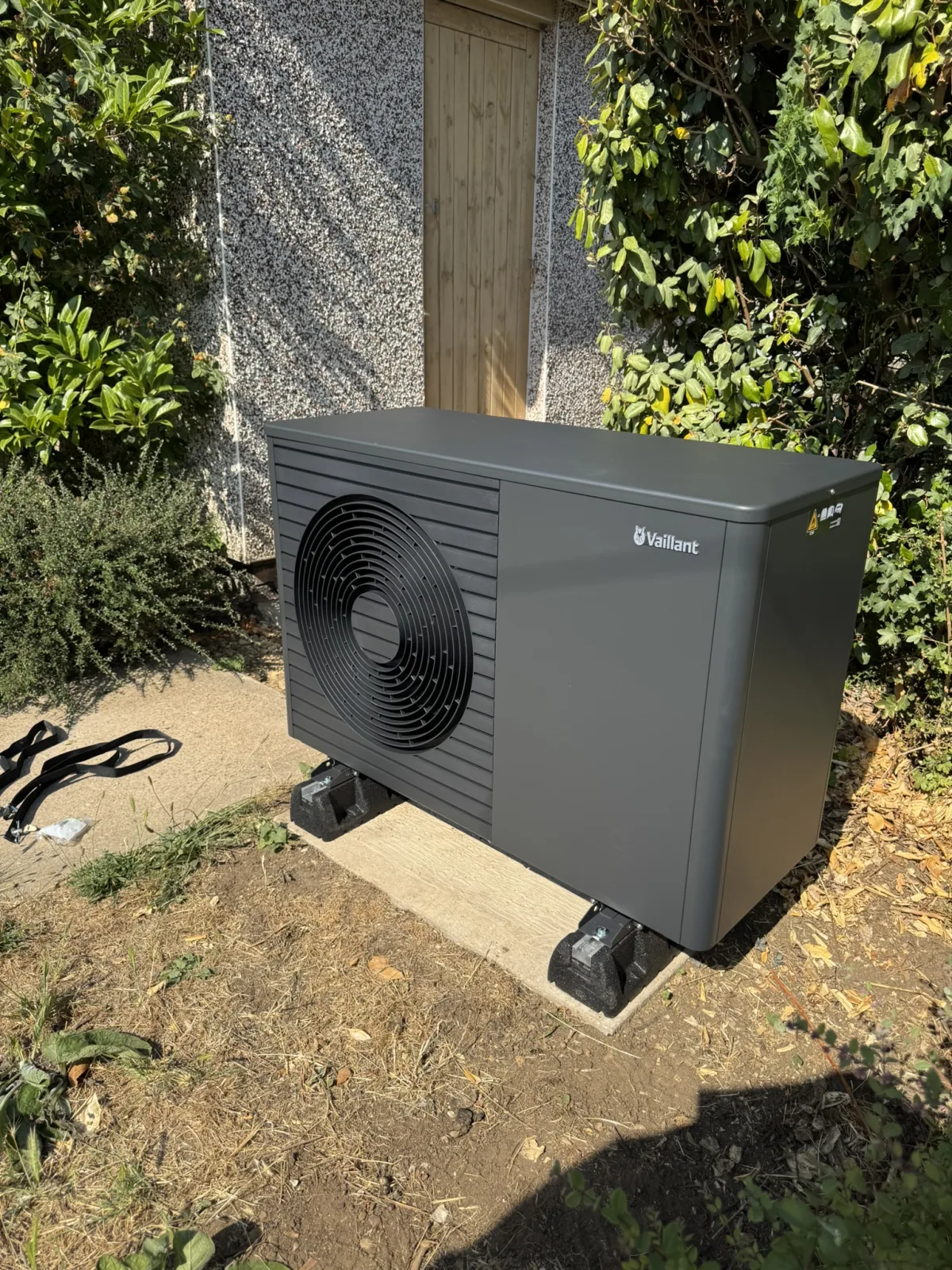
Go and listen to a working heat pump
I regularly have customers tell me they are happy for someone considering a heat pump to visit, hear it running and ask what it is like to live with. We can arrange that with a willing homeowner. You do not have to take my word for it.
A real conversation in a real garden can tell you more than another evening arguing with strangers on the internet. Make the visit useful by checking a few things:
- Is it actually running? A silent unit between heating periods does not tell you much.
- What is it doing? Gently heating the house on a mild day is different from working hard in cold weather or reheating the hot-water cylinder.
- Where can you hear it? Listen beside it, then from a normal sitting or standing position further away.
- What is it like at night? Ask the homeowner, particularly if it is close to a bedroom.
- How similar is the setting? An open garden and a narrow passage between walls will not sound the same.
One visit cannot reproduce every winter condition, but it gives you a much better starting point than a brochure photograph. A phone recording can show the character of the sound; playback volume and microphone processing mean it is not a calibrated loudness comparison.
Heat pump noise levels: compare the same measurement
Two numbers both labelled dB(A) are not necessarily measuring the same thing. Before comparing heat pumps, check whether the figure describes sound power or sound pressure, and the conditions it applies to. A quiet-mode figure is not automatically the maximum sound level.
| Measurement | What it tells you | What to check |
|---|---|---|
| Sound power level | The sound emitted by the equipment, expressed as a source rating. | Exact model, test conditions, operating point and whether it is a rated or maximum figure. |
| Sound pressure level | The sound at a particular listening or measurement position. | Distance, direction, surroundings, operating conditions and whether measured or calculated. |
A sound-pressure figure several metres away is not a fair comparison with another unit’s sound-power rating. STIEBEL ELTRON explains the distinction between sound power and sound pressure in more detail.
That is why I have not given you one universal “heat pumps are this many decibels” number. We need the actual model and the actual position. An appropriate sound assessment belongs in the planning of the installation, not after a neighbour has complained.
Positioning makes a difference to heat pump noise
I look at bedroom windows, neighbouring properties and where people sit outside. A unit can fit neatly into a space and still be poorly placed for sound. Hard walls and tight corners can reflect it, so the smallest gap beside the house is not automatically the best location.
Vaillant’s sound guidance also highlights nearby properties and reflective surfaces. The assessment needs to consider your home as well as the neighbours’: meeting a requirement is not a reason to ignore a bedroom immediately beside the unit.
A government-commissioned review of heat pump noise, published in 2023 and updated in 2024, found a low incidence of complaints in the research, with installation quality, location and proximity important factors. That is encouraging, but it does not remove the need to assess each installation.
Feet, bases and wall brackets
A solid, level base and suitable anti-vibration supports help stop vibration becoming an annoyance. Wall brackets need particular thought because vibration can travel through the structure into the house. Supports and fixings must suit the model, its weight and the manufacturer’s installation requirements.
Pipe connections and clips
The feet are not the whole job. Pipework touching the building where it should not, or connections which bypass vibration isolation, can transmit a hum indoors. A quiet outdoor unit can still be part of a noisy installation if those details are missed.
Keep the airflow clear
A heat pump needs the specified space around its air inlet and outlet, plus access for maintenance. Do not box it in, pile things against it or add an improvised cover to hide the sound. Any acoustic screen needs designing around those requirements; it is not simply a fence squeezed against the fan.
Are heat pumps noisier at night?
A heat pump can be more noticeable at night because there is less background sound. Its own sound also changes with workload, so a hot-water reheat or cold-weather heating period may sound different from gentle daytime operation. Position, bedroom windows and the household schedule all need considering together.
Some models offer a quiet or night mode which limits operation to reduce sound. That can also limit available heating capacity. Daikin explains this trade-off in its sound-level guide. It needs allowing for in the design, especially when the weather is cold.
I would not solve a siting problem by promising to turn the heat pump off whenever someone might hear it. We need to keep the house warm and provide hot water too. Schedules and quiet modes can help, but they do not replace a sensible installation position.
When the sound has changed, get it checked
If an existing heat pump has developed a new rattle, scraping sound or persistent vibration, do not assume that is simply what heat pumps sound like. Note when it happens and whether the system is heating rooms, making hot water or defrosting.
A short video with sound is useful for your installer. Keep clear of the fan and leave covers in place. Describe whether you hear it outdoors, indoors or both. A check can distinguish normal operation from loose components, transmitted vibration or another fault.
My air source heat pump servicing guide explains the wider maintenance checks. A new noise or performance problem should be reported when booking so there is time to investigate it.
Heat pump noise: common questions
Are air source heat pumps noisy for neighbours?
They can be audible, particularly in a quiet setting or if poorly positioned. The model, workload, distance and reflective surfaces matter. We assess the proposed location and nearby homes before installation rather than assuming a quiet product will be quiet everywhere.
Can you hear a heat pump inside the house?
Sometimes, through an open window or because vibration is travelling through supports or pipework. A properly planned installation aims to minimise both. A persistent indoor hum deserves investigation; do not dismiss it just because the outdoor unit seems quiet.
Are heat pumps louder in winter?
They can be more audible when working harder to heat the house. Defrosting can also briefly change the sound. Compare operating conditions when listening to different installations rather than judging winter performance from a unit gently running on a mild day.
What is the quietest heat pump?
There is no useful single winner without specifying the model size, operating conditions and sound measurement. I have found the Vaillant aroTHERM plus very quiet and the Bosch Compress 5800i particularly quiet in normal operation. Those are personal impressions, not a controlled ranking.
Will anti-vibration feet stop all heat pump noise?
No. Suitable supports help reduce vibration transmission, but they do not remove fan or compressor sound travelling through the air. The base, pipe connections, clips, siting and surrounding surfaces also matter. Use the supports specified for the installation.
Can I put a cover around a heat pump to quieten it?
Not an improvised close-fitting cover. Blocking airflow can affect operation and prevent access. Discuss a properly designed acoustic solution with your installer, maintaining the manufacturer's clearances and any relevant safety requirements.
Can I hear a heat pump before buying one?
Yes. We can arrange a visit with a willing customer so you can hear a working installation and ask about living with it. Availability depends on the homeowner. Ask what the unit is doing during the visit because the sound changes with workload.
Worried about noise? Come and hear one.
We plan heat pump installations across Lincolnshire, including the position, supports and heating system around the unit. Tell us what concerns you and we can discuss your home and a visit to a willing customer’s installation.
Ask about hearing a heat pumpWritten from Liam’s installation experience, with manufacturer sound guidance and the government noise review linked above. Product impressions are not measured noise guarantees.