
Boilers
What Type of Boiler Do I Have?
Boilers are very good at having six names while doing one job. Ask whether yours is regular, conventional, heat-only or open vent and you can collect four answers before the kettle has boiled.
Insight by Vector Heat
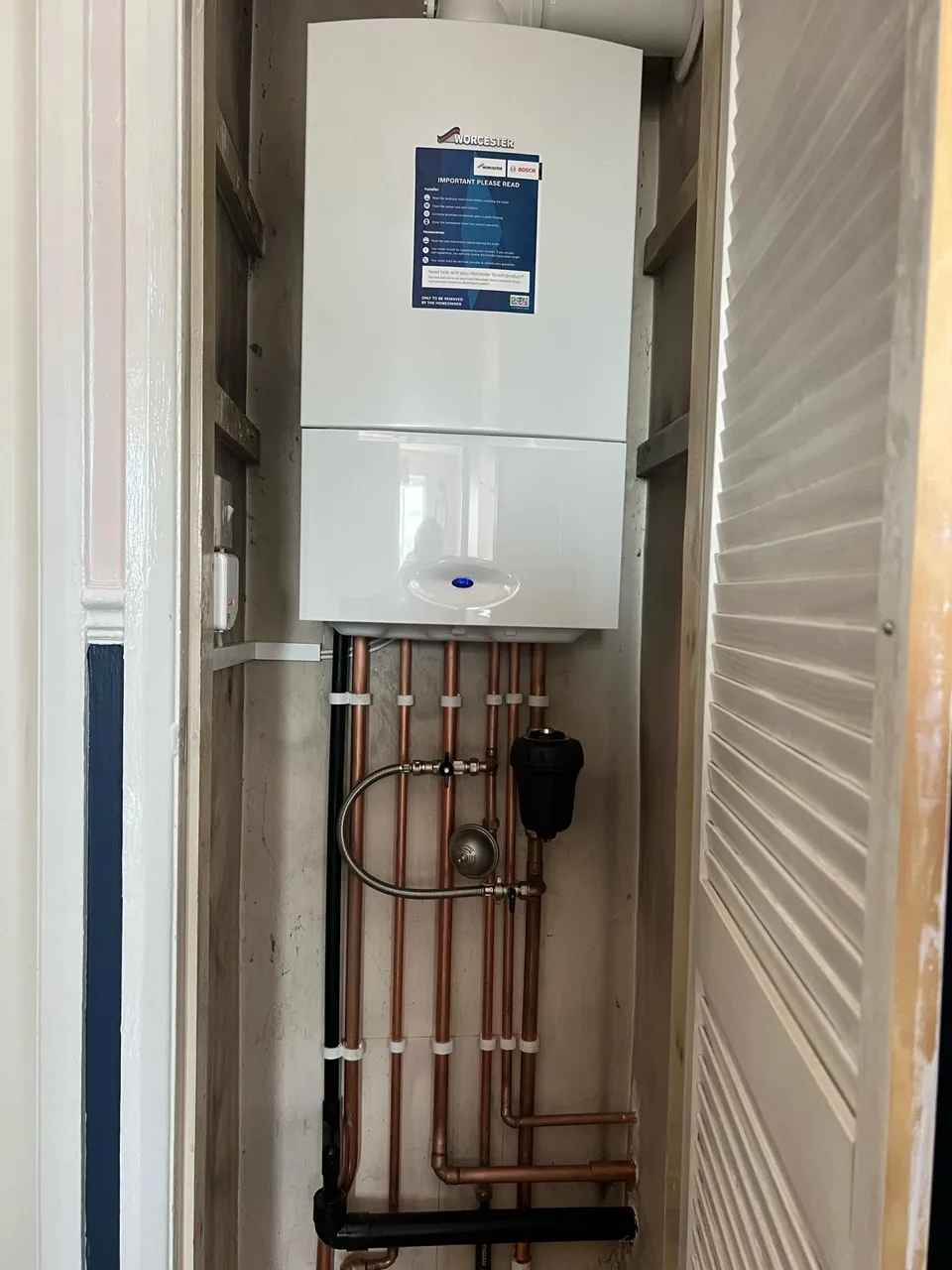
The quickest way to identify what type of boiler you have is to look for a hot-water cylinder first. If there is no working cylinder, you probably have a combi boiler. If there is a cylinder, you probably have either a system boiler or a regular boiler.
Loft tanks, a pressure gauge, a visible expansion vessel and the exact model name then settle most of the remaining argument.
Jump to: regular vs system boilers oil boiler types
The Quick Answer
No cylinder: probably a combi boiler.
Cylinder and working loft tanks: probably a regular or heat-only boiler on an open-vented system.
Cylinder, no working loft tanks and a pressure gauge: look for a separate expansion vessel. If one is visible outside the boiler, it is probably a regular/heat-only boiler on a sealed system. If there is no separate vessel, it is probably a system boiler. Confirm the model badge.
| What you find | Most likely answer | Important exception |
|---|---|---|
| No hot-water cylinder and no working loft tanks | Combi boiler | Old tanks or a cylinder may have been abandoned and left behind. |
| Hot-water cylinder and working tanks in the loft | Regular/heat-only boiler on an open-vented system | Confirm the model because systems can be altered. |
| Hot-water cylinder, no working loft tanks, a pressure gauge and no separate expansion vessel visible | Probably a system boiler | Its expansion vessel is normally inside the boiler. Confirm the model. |
| Hot-water cylinder, no working loft tanks, a pressure gauge and a separate expansion vessel visible | Probably a regular/heat-only boiler on a sealed system | An extra vessel can occasionally be added to a system boiler, so the model remains the final check. |
| Oil tank outside | Oil-fired boiler | It could still be combi, system or regular. |
My rule: use the house layout for a quick answer, then read the model name for the final answer. Pipework gets altered, and redundant tanks have a habit of remaining in lofts long after retirement.
No Cylinder
A standard boiler providing heating and hot water without a separate cylinder is probably a combi.
Cylinder + Loft Tanks
This normally points to a regular/heat-only boiler on an open-vented system.
Cylinder + Pressure Gauge
This is a sealed system. A separate visible expansion vessel points to regular/heat-only; no separate vessel makes a system boiler more likely.
Combi Boiler: The Easy One
A combination or combi boiler provides central heating and heats tap water inside the boiler when you use it. A normal combi does not need a separate hot-water cylinder.
That makes it the easiest type to identify. No cylinder in the airing cupboard, no working water tanks in the loft and hot water produced when a tap opens usually means combi.
Most combis have five main service pipes beneath them, but do not make pipe counting your only test. Boilers come in different layouts and heating systems have been altered in every creative way available to copper tube.
Regular, Conventional and Heat-Only Boilers
These three names usually mean the same category of boiler:
- regular boiler
- conventional boiler
- heat-only boiler
Traditional boiler is another informal name. Open vent normally describes the system arrangement around it: working feed and expansion tanks in the loft, an external pump and usually a separate hot-water cylinder.
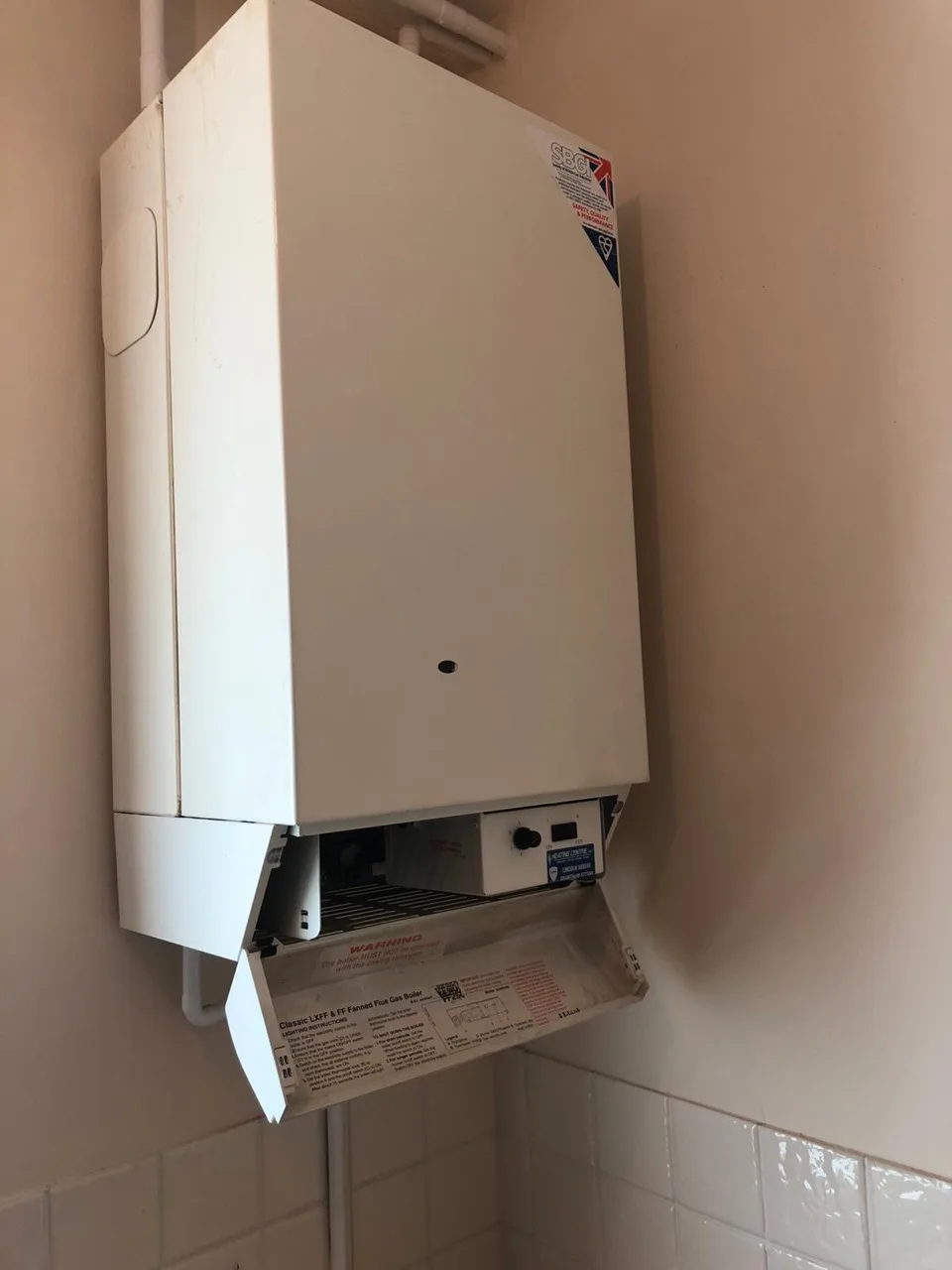
In normal domestic work, a regular boiler serves a cylinder. The boiler heats water for the heating circuit and cylinder coil; the cylinder stores the hot water used at the taps.
This is where online forms become entertaining. One asks for a conventional boiler, another calls it heat-only and a third says regular. They may all be asking about the same white box.
Regular vs System Boiler: What Is Inside and How Are They Different?
A system boiler also normally serves a hot-water cylinder. The heating system is sealed and pressurised, so it does not need a feed and expansion tank in the loft.
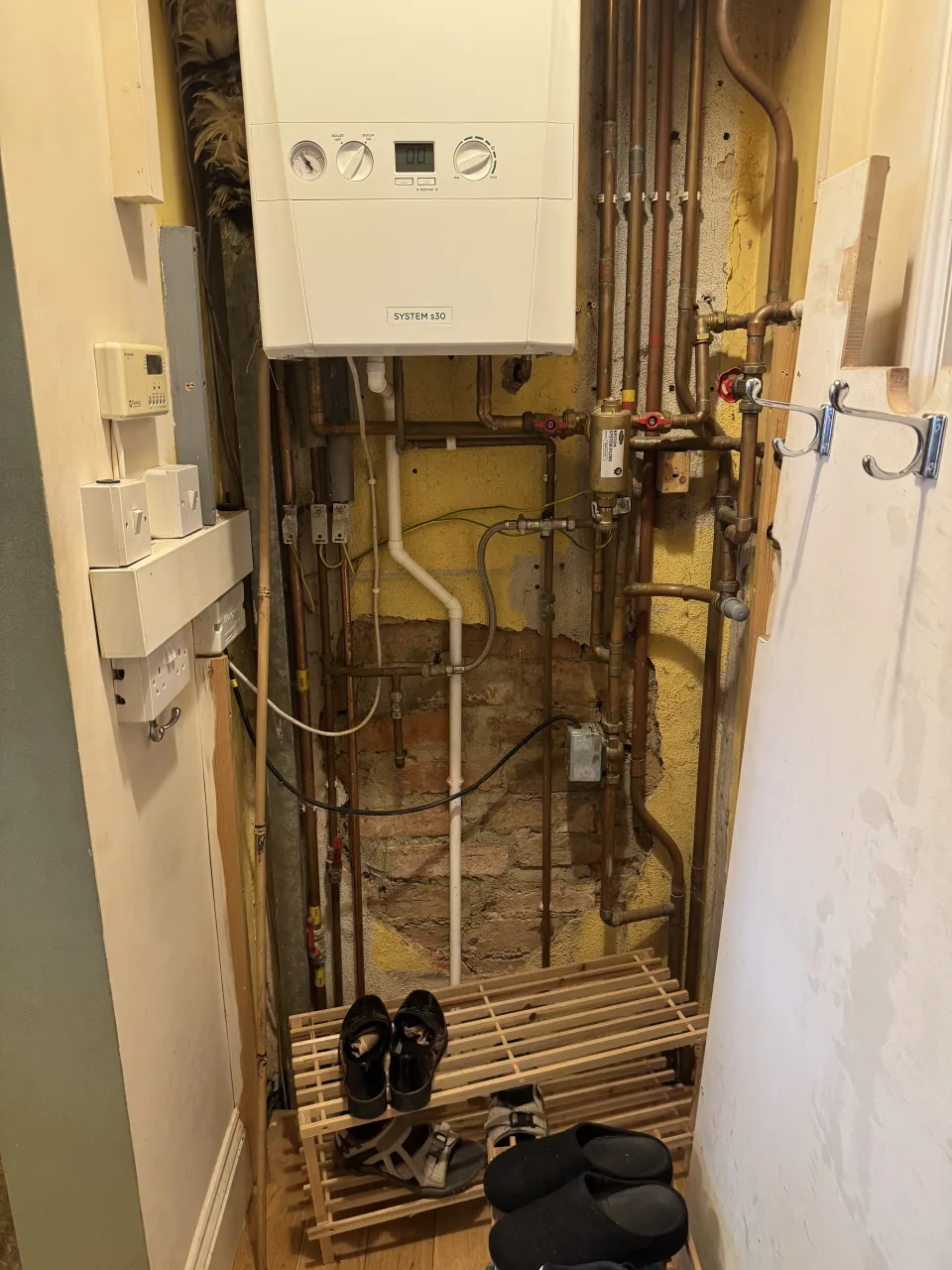
What Is Inside a System Boiler?
A useful way to picture a system boiler is as a combi boiler without the instantaneous hot-water side. The circulation pump, expansion vessel and pressure gauge are normally inside the case, but tap water is stored in a separate cylinder. A regular boiler leaves more of those heating components elsewhere in the system.
| Part or function | Combi boiler | System boiler | Regular/heat-only boiler |
|---|---|---|---|
| Hot water at the taps | Heated inside the boiler when required | Stored in a separate cylinder | Stored in a separate cylinder |
| Circulation pump | Normally built in | Normally built in | Normally external |
| Expansion vessel | Normally built in | Normally built in | External on a sealed system, or replaced by a working feed and expansion tank on an open-vented system |
| Pressure gauge | Normally built in | Normally built in | May be elsewhere on a sealed system; an open-vented system does not use pressure in the same way |
This is why a system boiler can take up less room than a regular boiler installation. It still needs a cylinder, so it does not save as much total space as a combi.
Depending on the boiler and pipework, a system boiler can also use less energy. The boiler can control its own pump speed to match its firing rate, and a correctly designed four-pipe or priority-hot-water system can heat the cylinder at a higher temperature while running the radiators at a lower, more efficient temperature.
The word system on the front cannot organise the pipework behind it, so a basic swap may not use those advantages.
System boilers have become common over roughly the last 20 to 25 years. Their internal components save space, but the words system boiler do not tell you the cylinder's flow rate or pressure. The cylinder and incoming water supply determine the hot-water performance.
A Cylinder Does Not Prove It Is a System Boiler
This is the exception most guides miss. A regular or heat-only boiler can be connected to a sealed system using an external pump and expansion vessel.
If you have a cylinder, no working loft tanks and a pressure gauge, look for a separate expansion vessel. If one is visible outside the boiler, a regular or heat-only boiler on a sealed system is the more likely answer. If there is no separate vessel, a system boiler is more likely because its expansion vessel is normally inside the case.
Check the model badge before calling it settled. Extra expansion vessels are sometimes added to system boilers, particularly on larger systems or when the internal vessel is not enough. If the badge says System, that is helpful. If it says Heat, Regular, R, Ri or another manufacturer-specific model name, check the manual rather than guessing from the airing cupboard.
What If I Have an Oil Boiler?
Oil is the fuel, not the boiler arrangement. Oil boilers are available as combi, system and regular models.
An oil combi does not need a separate cylinder, although many are larger and some store or preheat water inside their casing. Oil system and regular boilers normally serve a cylinder. They may be floor-standing, fitted indoors or installed in an outdoor casing.
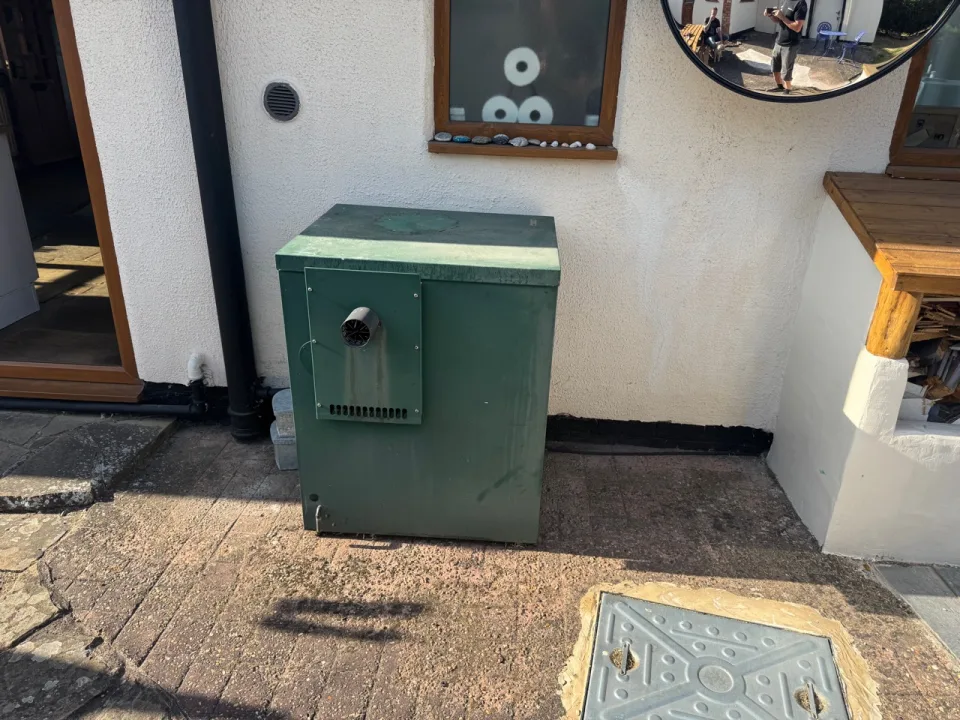
An oil tank outside proves that you use oil. It does not prove which of the three boiler types you have. That would be far too convenient.
The Safest Final Check
Look for the exact make and model on the front, underside or visible data badge. Search the model on the manufacturer's website or read its user manual. Do not remove the boiler casing just to find a label.
If you still cannot identify it, send us:
- a photo of the whole boiler from the front
- the model name or visible data badge
- the pipework directly below it
- any hot-water cylinder
- any working tanks in the loft
After surveying 5,000+ properties, I would rather see three clear photos than receive a confident pipe count from a cupboard where half the system is hidden.
Once you know which type is fitted, my boiler sizing guide explains how hot-water demand, property heat loss and minimum output affect the replacement choice.
FAQ
What are the three main types of boiler?
The three main domestic boiler types are combi, system and regular. Regular boilers are also commonly called conventional or heat-only boilers.
How do I know if I have a combi boiler?
If the boiler provides heating and hot water without a separate working hot-water cylinder, it is probably a combi. Confirm it from the model name because abandoned cylinders and loft tanks are sometimes left in place.
Does a combi boiler need a water tank?
No. A normal combi heats mains water when a hot tap opens, so it does not need a separate hot-water cylinder or working cold-water storage tank.
Does a hot-water cylinder mean I have a system boiler?
No. Both system and regular boilers normally serve cylinders. A regular boiler can also be connected to a sealed system, so use the exact boiler model for confirmation.
Do system boilers need a cylinder?
Yes. In normal domestic installations a system boiler uses a separate hot-water cylinder. The system boiler normally contains the pump and expansion vessel, but it does not store the household hot water itself.
What is inside a system boiler?
A system boiler normally contains the circulation pump, expansion vessel and pressure gauge. It is roughly like a combi without the instantaneous hot-water side, so it still uses a separate cylinder to store hot water for the taps.
Can an oil boiler be a combi?
Yes. Oil boilers are made as combi, system and regular models. The oil tank identifies the fuel, while the model and hot-water arrangement identify the boiler type.
Is a condensing boiler another boiler type?
No. Condensing describes how the boiler recovers more heat from its flue gases. A condensing boiler can still be combi, system or regular.
Know what is fitted? Get a boiler quote
Use Vector Heat's boiler quote tool once you know what is fitted. If you are still unsure, send us clear photos and we can identify it before anyone starts guessing.
Start a boiler quote