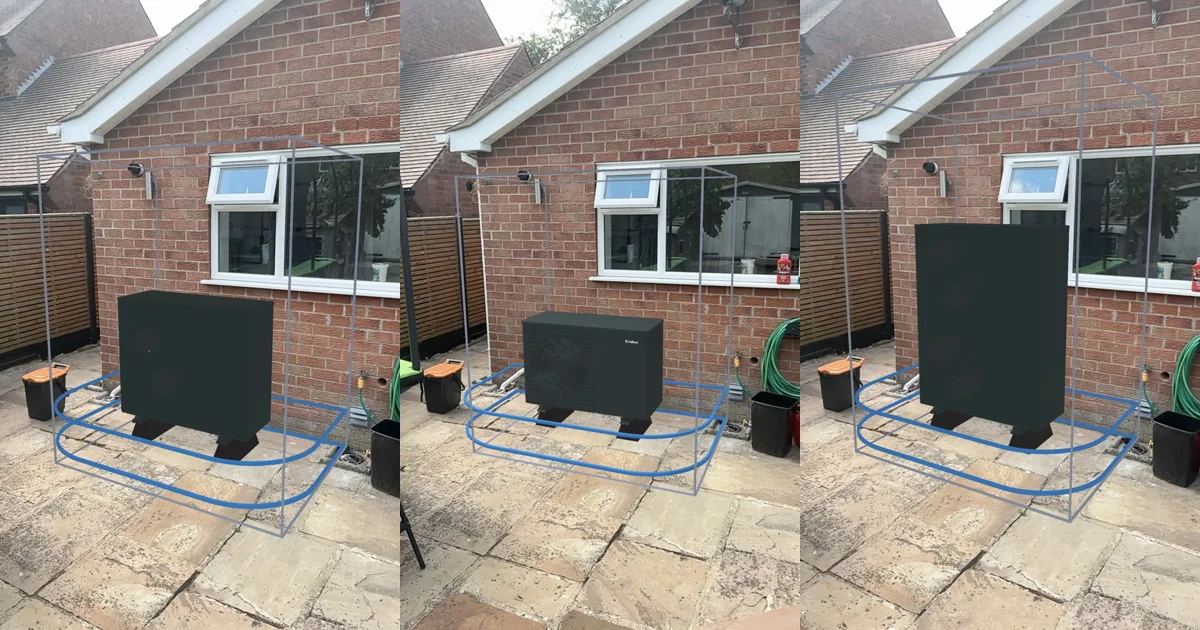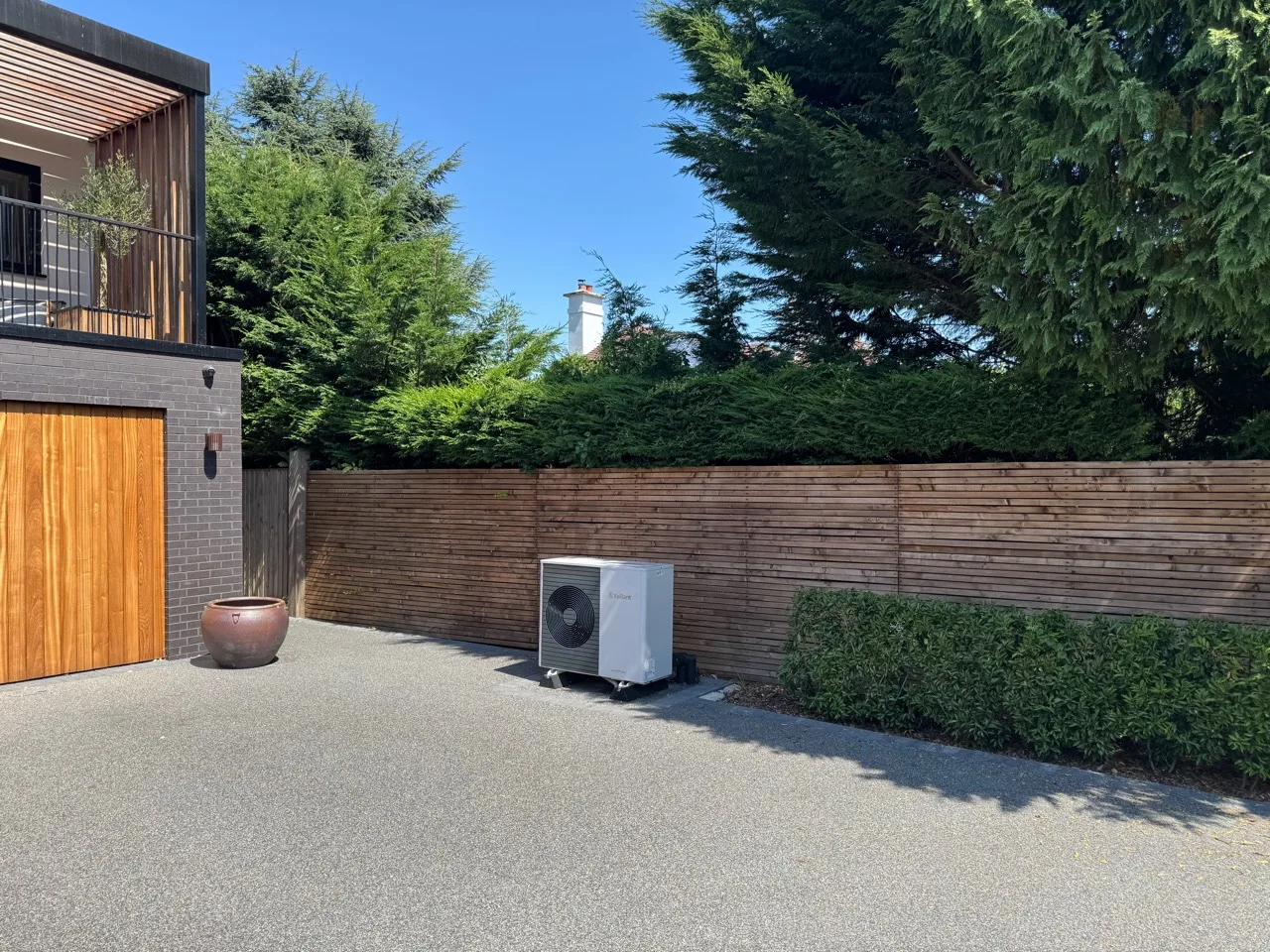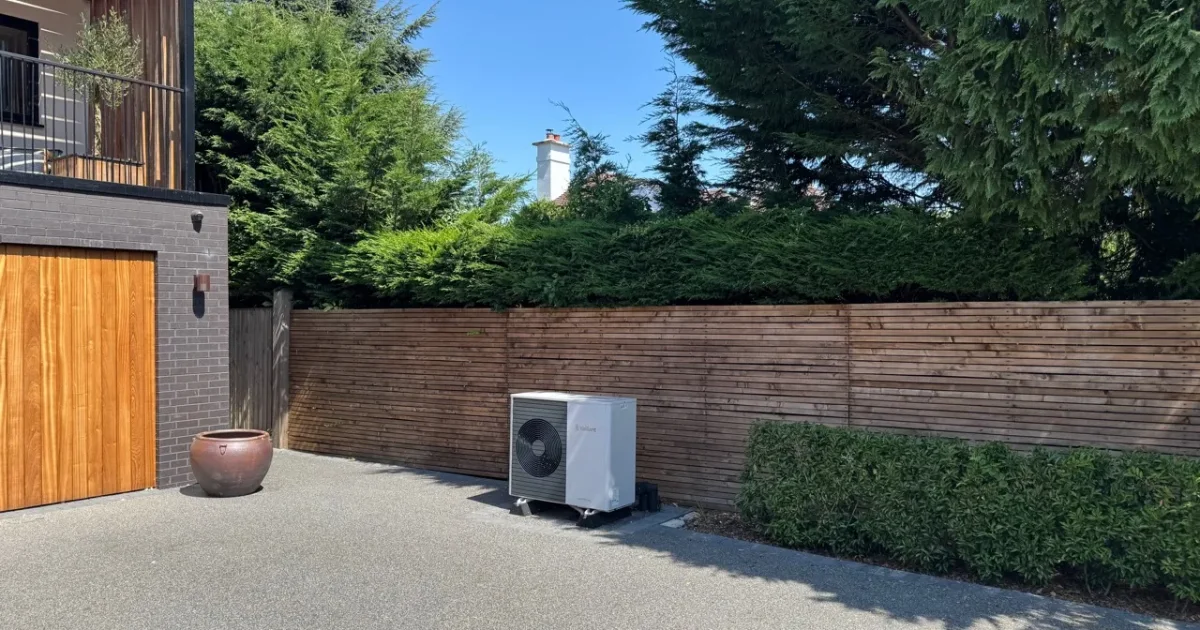
There's a lot I like about the Viessmann Vitocal 200-A ie 2026: simple wiring, a built-in backup heater, the option to hard pipe it and a huge choice of indoor units. The clearances and hard-wired outdoor sensor are the bits I find annoying.
Viessmann make quality, high-end products, and this is one. These are the details I look at as an installer, with short quotes from the manual and my own thoughts alongside them.
Vitocal 200-A ie manual and brochure
These documents cover the 200-A ie. Check the full model code on the unit before using them; the earlier Vitocal 200-A is a different product.
- UK outdoor unit · 6260605 GB 06/2026 · PDF, 104 pages
- Product overview · GB 06/2026 · PDF, 16 pages
- 6257243 GB 05/2026 · PDF, 8 pages
 Download the installation manual (PDF)
The performance tables in these downloads are marked provisional and differ between documents. The min/max modulation table below uses Viessmann's separate July 2026 planning guide, with the operating temperatures stated.
What distinguishes the Vitocal 200-A ie?
- Built into the outdoor unit: the circulation pump and backup heater.
- Indoor equipment: controller only, or a choice of indoor units with built-in components.
- Modulation: the 06/08 go down to 1.52kW at A7/W35. The 10/12 go down to 3.61kW.
- Hard piping: copper connections are permitted. I like being able to make the pipework neat.
- Backup heater: already fitted; using it is optional. V004 is 3.2kW, V005 is 6.4kW.
- Electrics: Type B RCD required. The V004 backup heater shares the outdoor unit's supply.
- Condensate: a piped drain needs the accessory tray.
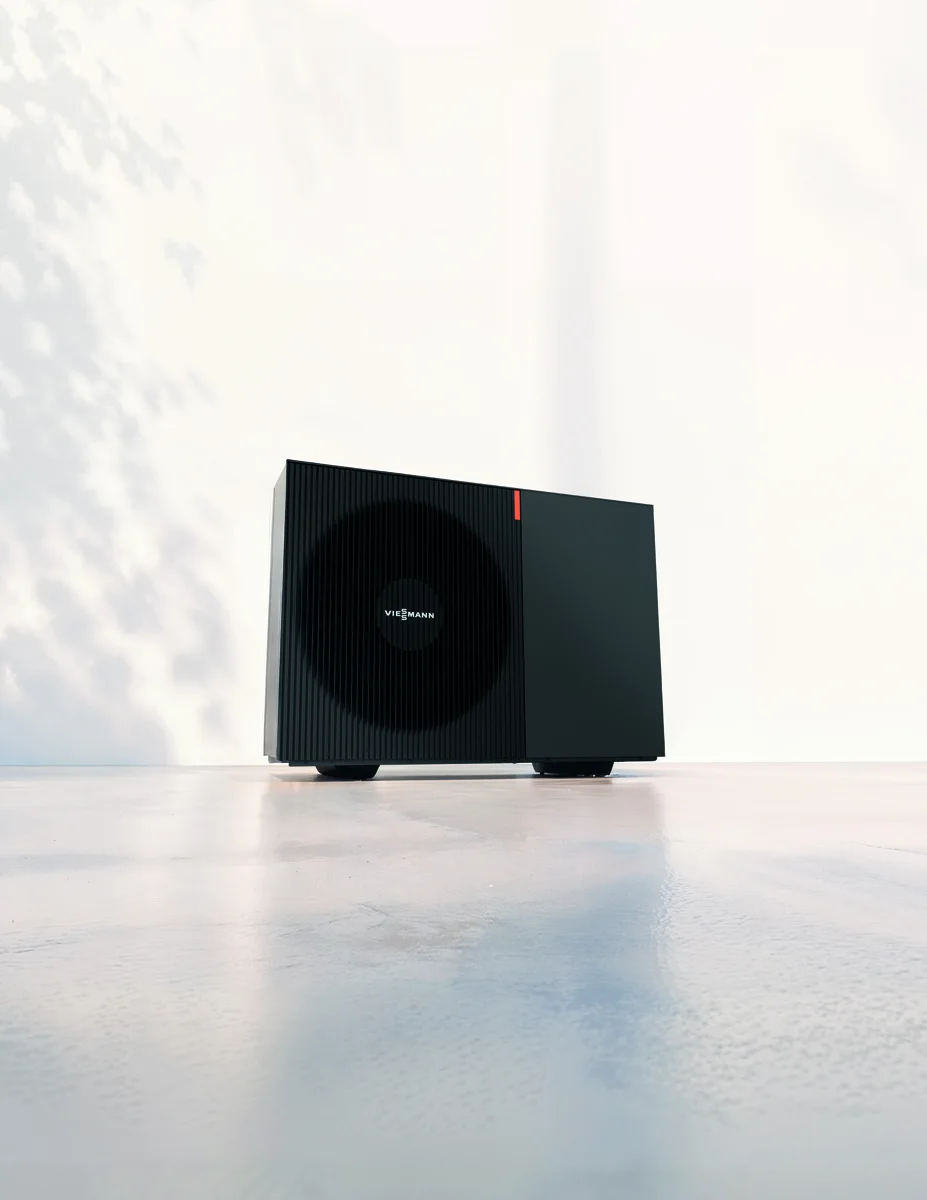
Outdoor hydraulics and the choice of indoor equipment
The outdoor unit contains an inverter-driven twin-rotary compressor, two electronic expansion valves and the R290 circuit, alongside the central circulation pump and electric backup heater. The pump incorporates flow measurement; system pressure is monitored by a separate heating-water pressure sensor. The safety valve is also inside the outdoor unit.
Controller with on-site hydraulics
You can use the Universal Controller ie or IDU Controller ie without an indoor hydraulic module. The manual specifies a "3/2-way valve" for heating and hot water. Our choice is an ESBE diverter valve.
The heat pump can connect directly to the radiators or underfloor heating.
The minimum water volumes and flow rates are listed below.
Indoor unit with integral hydraulics
The indoor-unit choices are IDU Modular, Comfort, Hybrid and Hydro, plus Compact with a built-in hot-water cylinder. The range is huge and really opens up a lot of options over other manufacturers.
The manual calls the built-in valve a "4/3-way valve". It handles heating, hot water and defrost, and provides a bypass to maintain minimum flow. Viessmann's HydroAutoControl and OptiPerform features are associated with these indoor-unit packages, not the controller-only option.
Core outdoor-unit specification
- R290 charge: 1kg for Types 06/08; 1.4kg for Types 10/12.
- Integrated PWM circulation pump: maximum electrical input 63W across the four sizes.
- Secondary-side maximum operating pressure: 3bar.
- Heating-water connections: G1 male flow and return.
Sources: UK manual, pages 12–14 and 94; Viessmann's explanation of the optional indoor hydraulics.
Model codes and outdoor dimensions
The range has four size codes: 06, 08, 10 and 12. Their outputs at different outdoor temperatures are in the modulation table below.
For example, AWMOF-201.A1.10-230-V004 identifies a Type 10, 230V unit with the V004 heater arrangement. The final V004 or V005 matters for the heater and electrical supply.
| Size code | Width | Height | Depth | Weight |
|---|---|---|---|---|
| 06 / 08 | 1140mm | 808mm | 530mm | 93kg |
| 10 / 12 | 1140mm | 1008mm | 530mm | 118kg |
These are the unit dimensions, not the total space needed for installation. Allow for the pipework, airflow, access and the R290 protection area.
Source: manual, page 94. The brochure differs by 1mm on height; the figures above follow the installation manual.
Minimum and maximum modulation by model
These are Viessmann's published minimum–maximum heat outputs at 35°C flow temperature. They are not electrical power consumption and do not include extra heat from the backup heater.
| Model | +7°C outside A7/W35 | +2°C outside A2/W35 | -7°C outside A-7/W35 |
|---|---|---|---|
| 06 | 1.52–7.32 | 1.21–5.80 | 0.76–5.46 |
| 08 | 1.52–8.26 | 1.21–6.76 | 0.76–6.78 |
| 10 | 3.61–12.39 | 3.11–9.84 | 2.42–8.70 |
| 12 | 3.61–12.79 | 3.11–10.54 | 2.42–9.72 |
The 06 and 08 share the same minimum output, as do the 10 and 12. These figures are all at 35°C flow.
Choose the size at design conditions
I size the heat pump by its maximum output at the design outdoor temperature and flow temperature. It has to cover the property's heat loss. At -7°C outdoors and 35°C flow, the 08 delivers up to 6.78kW and the 10 up to 8.70kW.
High-temperature operation and performance data
The maximum flow temperature is 75°C, with 70°C available at -10°C outdoors. The planning guide has output, electrical input and COP figures at 35, 45, 55, 65 and 70°C flow temperature.
Source: Viessmann planning guide 6255589, July 2026 (German PDF), pages 20, 23, 26 and 30. It covers the AWMOF-201.A1.06–12, 230V V004/V005 outdoor units. Full performance curves are in the linked guide.
Can you hard pipe it?
Yes. The manual specifies "copper pipe or corrugated stainless steel pipe", depending on the connection set.
I love the option to hard pipe it. Us engineers care about neat pipework, and this helps.
The outdoor connections are G1 male. Follow the connection-set instructions and fit the specified return filter.
Source: manual, page 46.
What clearance does it need?
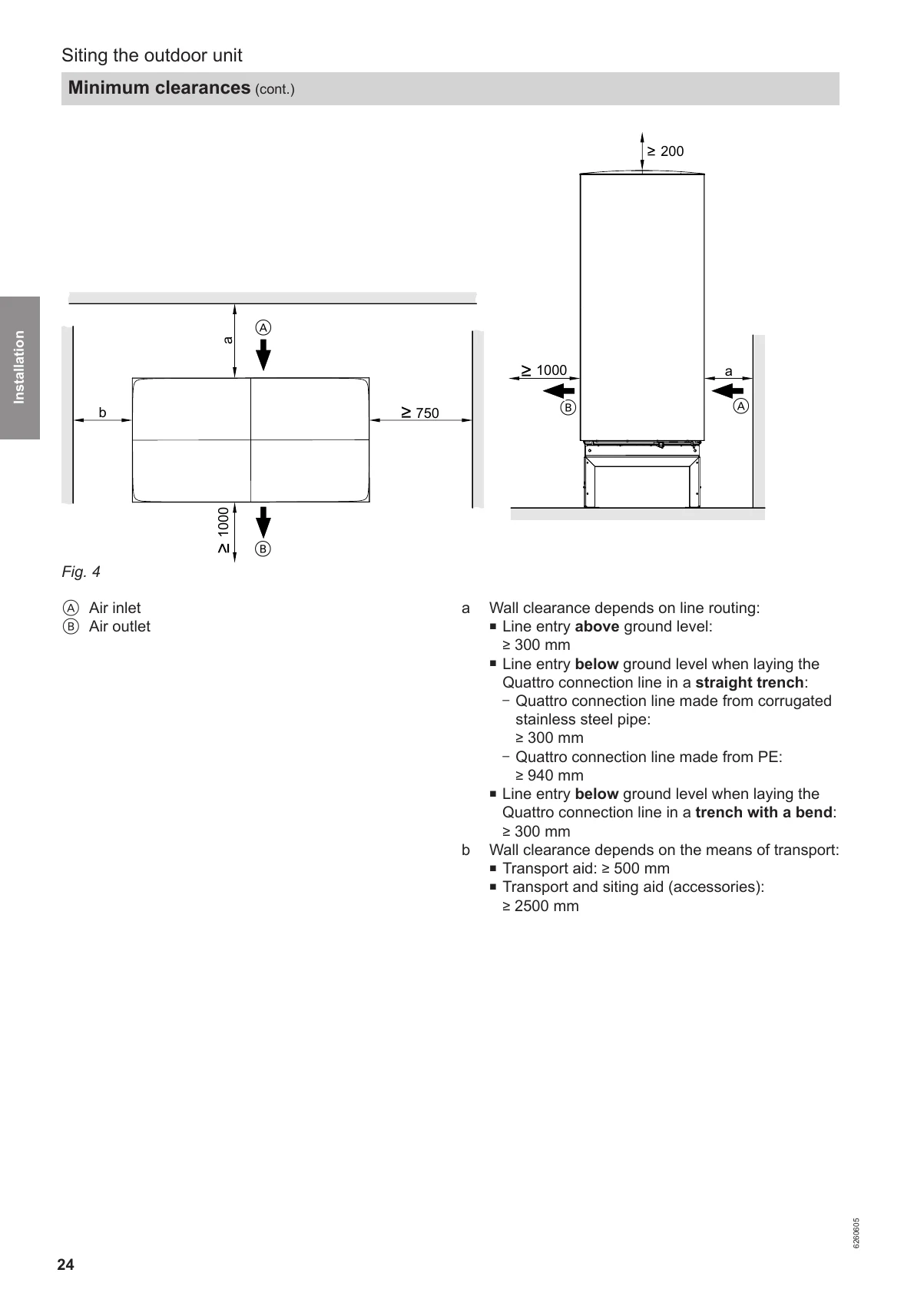
Leave at least 200mm above the outdoor unit. The other distances depend partly on the pipe route and the equipment used to move it into place.
| Position | Minimum distance |
|---|---|
| Above | 200mm |
| In front | 1000mm |
| Right, viewed from the front | 750mm |
| Behind | 300mm for above-ground connections and the specified stainless-steel or bent-trench routes. Straight below-ground PE Quattro pipe needs 940mm. |
| Left: transport access | 500mm with the transport aid; 2500mm with the specified transport and siting aid. |
Working clearances are not the R290 protection area. The refrigerant is flammable. The installer must also check the manual's protection-zone drawings for the chosen position, including nearby openings, drains and ignition sources.
I think these clearances are too big. With the 300mm rear clearance, 530mm depth of the unit and 1000mm in front, you're using 1830mm from the wall to the end of the front clearance. That's very restrictive and another hurdle when finding somewhere to fit it.
To me, it feels as though they haven't tested it in real-world spaces and have just assumed everyone has loads of room. I think it's a bit unnecessary. Those are still the clearances we have to work to.
View Viessmann's original clearance drawing
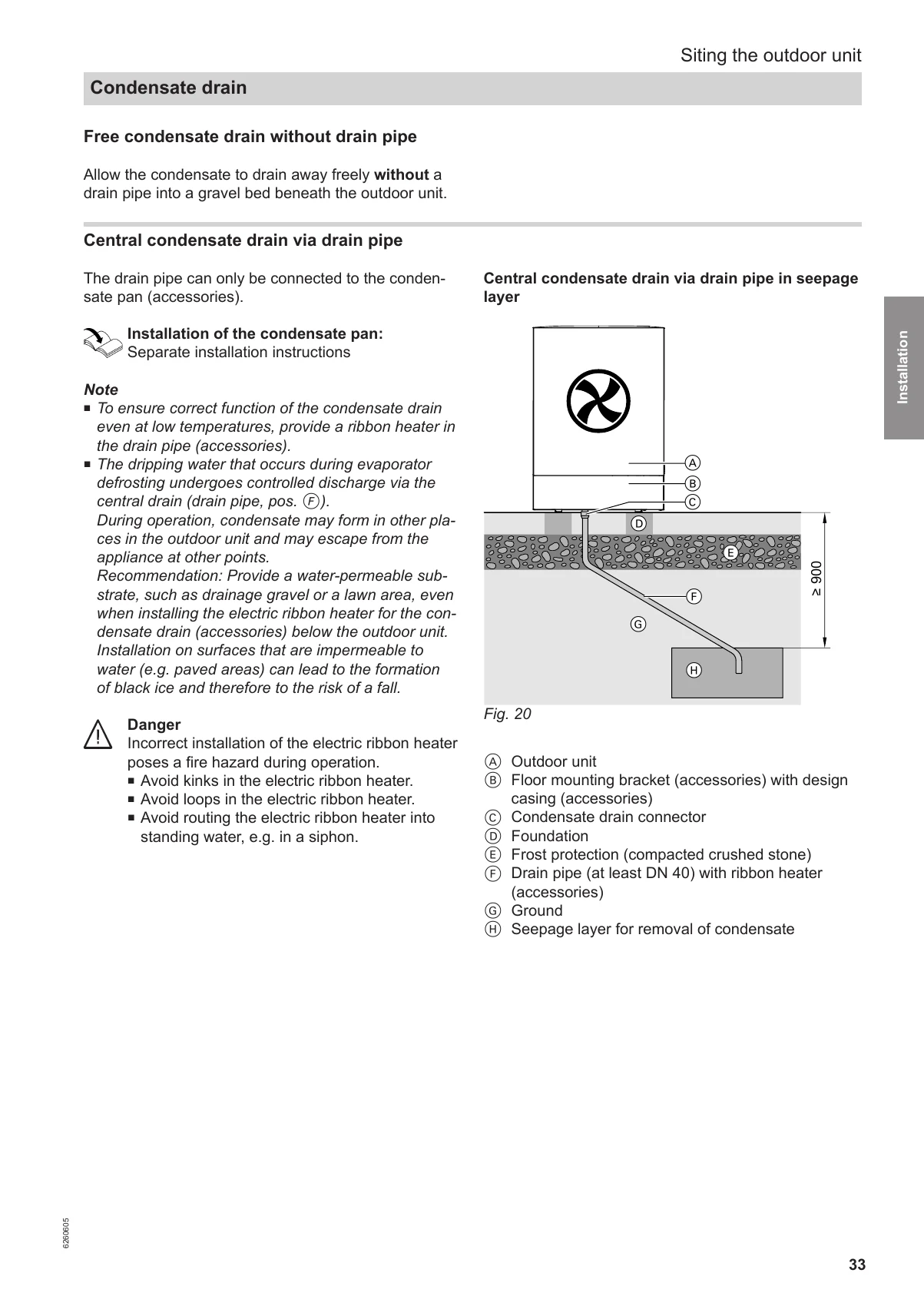
A piped drain needs the condensate tray
If the condensate is being piped to a drain, fit the accessory condensate tray. The manual says the drain pipe can only be connected to that tray.
- Free drainage: water can drain into a suitable gravel seepage bed beneath the unit.
- Piped drainage: use the tray and a drain pipe of at least DN40, with the specified ribbon heater for frost protection.
- Connection to wastewater: the manual requires a trap in a frost-free area so escaping refrigerant cannot enter the wastewater system.
The tray does not catch every drop from the unit. The ground underneath still needs to deal with water safely, without creating an icy walkway.
View Viessmann's original condensate arrangements
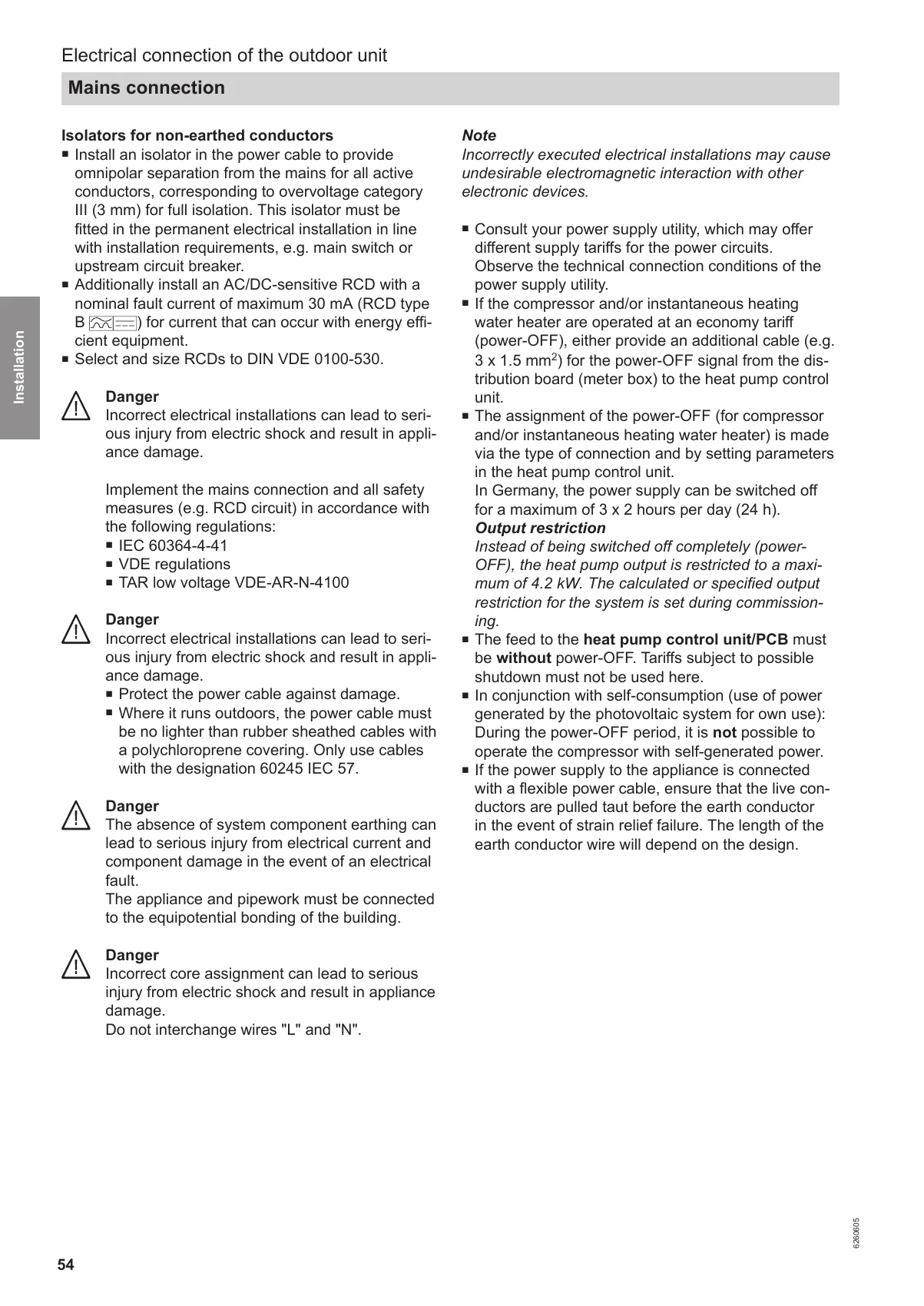
RCD requirements and electrical supply
A Type B RCD is required, with a maximum residual operating current of 30mA. That's the RCD type, not a B-curve MCB.
The simple wiring is great and separates this unit from previous Viessmann heat pumps. Previous models needed loads of extra wiring. This is a good change for the UK market, especially with the backup heater already built in.
| Type | Supply | Maximum operating current | Maximum fuse rating |
|---|---|---|---|
| 06 | 230V single-phase | 14A | 16A |
| 08 | 230V single-phase | 14A | 16A |
| 10 | 230V single-phase | 16A | 20A |
| 12 | 230V single-phase | 20A | 20A |
The V004 backup heater shares the outdoor unit's supply. The V005 needs a separate heater supply. The electrician still needs to size the cables and protection for the installation.
Read the original RCD requirement
The backup heater is built in; using it is optional
The electric backup heater is already built into the outdoor unit. Using it is optional; it is not an extra heater you need to buy. Its use is configured during commissioning. There are two arrangements:
- V004: 3.2kW. Powered through the outdoor unit's mains connection. It operates when heat pump operation is not possible, rather than alongside the compressor.
- V005: 6.4kW, in two 3.2kW stages. It has a separate heater supply and can operate alongside the heat pump.
The manual calls it an "instantaneous heating water heater". This is the built-in electric backup heater.
I think this is a fantastic, underrated feature that many people will overlook. Having it built in, with the option to use it, is a real advantage.
The V004 heater and compressor do not run together. Don't add its 3.2kW to the compressor output when sizing the heat pump. Retain the protective functions when commissioning.
Sources: manual, pages 12–14 and 56–57.
Minimum water volume and flow
The heat pump needs water available in the heating circuit, including during defrost. The required volume depends on the model and the maximum design flow temperature.
| Maximum design flow temperature | Types 06 / 08 | Types 10 / 12 |
|---|---|---|
| 35°C to below 45°C | 40 litres | 52 litres |
| 45°C to below 55°C | 30 litres | 40 litres |
| 55°C and above | 30 litres | 30 litres |
For example, a Type 10 system designed for 42°C needs 52 litres. Water behind closed zone valves cannot be counted as available to the heat pump.
Heating and defrost flow rates
| Requirement | Types 06 / 08 | Types 10 / 12 |
|---|---|---|
| Minimum heating flow | 350 litres/hour | 350 litres/hour |
| Maximum heating flow | 2100 litres/hour | 2100 litres/hour |
| Minimum defrost flow | 950 litres/hour | 1300 litres/hour |
| Required defrost energy | 2000kJ | 3000kJ |
Size the pipework for the defrost flow, not just the 350 litres/hour heating minimum.
With the controller-only option, the minimum return temperature is regulated to approximately 15°C when it's below 10°C outside.
Sources: manual, page 95 for flow, energy and volume; page 13 for the return-temperature control. The volume table starts at 35°C; do not extrapolate it to a lower design temperature.
Sound power: compare the same operating condition
These are sound-power figures from the manual, with the rating conditions shown.
| Rating | 06 | 08 | 10 | 12 |
|---|---|---|---|---|
| ErP, A7/W55 | 48 | 53 | 54 | 55 |
| Maximum | 56 | 59 | 61 | 61 |
| Low-noise mode, stage 2 | 54 | 56 | 56 | 56 |
The low-noise and ErP figures are measured under different conditions. Use the appropriate sound-power rating for the siting calculation, and check the heating output available in low-noise mode.
Source: UK manual, page 94. ErP point C at A7/W55; measurement references DIN EN 12102-1:2023 and DIN EN ISO 3744:2011.
Controls and weather compensation
For me, Viessmann's controls are superior to all other boilers and heat pumps. Their weather compensation is better than most, with separate curve and shift adjustments.
On the screen these are called "Slope" and "Level". Slope adjusts the curve; Level shifts it up or down. I like having both.
The outdoor sensor is hard-wired
I find the hard-wired outdoor sensor annoying, especially compared with Vaillant, where you get a choice of wired or wireless. It's another cable to run.
Comparison: Vaillant sensoCOMFORT wiring guidance confirms the wired or wireless outdoor-sensor options.
Apps and larger systems
The 200-A ie uses One Base Intelligence, with ViCare for the customer and ViGuide for the installer. Check compatibility when planning to connect solar, batteries or tariff controls.
Up to four outdoor units of the same size can run as a cascade. This arrangement needs an external buffer and Viessmann commissioning.
Sources: UK manual, page 13; Viessmann UK controls and cascade information. Our heat pump controls guide covers wider controller-selection considerations.
Fitting tips
- Bring your own lifting straps. They are not supplied with the unit. Follow the manual's lifting instructions.
- Have the ViGuide app ready on your phone. This is the installer app, not the customer's ViCare app.
- Allow time for a firmware update. Be prepared to carry one out when you first turn it on.
Vitocal 200-A ie questions
Can the Vitocal 200-A ie be connected in copper pipe?
Yes. The manual permits copper or corrugated stainless steel pipe, depending on the connection set. I like being able to hard pipe it and keep the pipework neat.
Does it need a condensate tray?
A piped condensate drain needs the accessory tray. Free drainage into a suitable gravel seepage bed is another arrangement shown in the manual. The tray does not collect every drop, so drainage beneath the unit still matters.
What RCD does the Vitocal 200-A ie require?
The UK outdoor-unit manual specifies an AC/DC-sensitive Type B RCD with a rated residual operating current no greater than 30mA. This is not the same as a B-curve circuit breaker. The electrician must select protection for the actual installation.
How much space is needed above it?
The minimum overhead clearance is 200mm. Front, side and rear clearances, transport access and the separate R290 protection area must also be checked.
Does it need an indoor hydraulic unit?
No. You can use the Universal Controller ie or IDU Controller ie and fit a separate diverter valve for heating and hot water. Our choice is an ESBE diverter valve.
What changes in modulation between the 08 and 10?
At A7/W35 the minimum output increases from 1.52kW for the 08 to 3.61kW for the 10. Choose the size by its maximum output at the design outdoor and flow temperatures first: it must cover the heat loss. Then compare minimum outputs between models that meet that requirement, including other manufacturers.
Can the V004 backup heater supplement compressor output?
No. The V004 heater and compressor do not run together. The V005 has a separately supplied 6.4kW heater that can run alongside the compressor. The heater is already built in; using it is optional.
How much water does a Type 10 need at a 42-degree design flow temperature?
The manual specifies 52 litres for Types 10 and 12 where the maximum design flow temperature is at least 35 degrees C but below 45 degrees C. That volume must remain available to the heat pump, and the flow requirements must also be met.
Planning a heat pump in Lincolnshire?
We look at the heat each room needs, the radiators or underfloor heating, the cylinder and the outdoor position together. That tells us which model fits the job and what needs to change.
Technical reference checked 27 October 2026 against the documents linked above. This is an overview, not a replacement for the applicable installation instructions. The manufacturer's UK Vitocal 200-A ie product page provides further product information.