Heat pumps
Heat Pumps and Solar Panels: How I Would Use Them Together
Solar is particularly useful for hot water. Winter heating, batteries and export payments need a closer look.
Published
Heat pumps and solar panels work well together, especially for hot water in the warmer months. But your biggest heating demand arrives when solar generation is much lower. The sun is not taking requests from your thermostat.
I would plan the heating around the house first, then look at how solar, a battery and the electricity tariff can reduce the cost of running it. Solar is useful. It does not make a poorly designed heating system a good one.
- Summer: use daytime generation to heat the hot-water cylinder.
- Winter: expect to buy electricity; solar cannot be relied on to cover the heating.
- Battery: useful for moving electricity between times of day, not between seasons.
- Export: check what you would earn before assuming using solar yourself is cheapest.
Can solar panels run a heat pump?
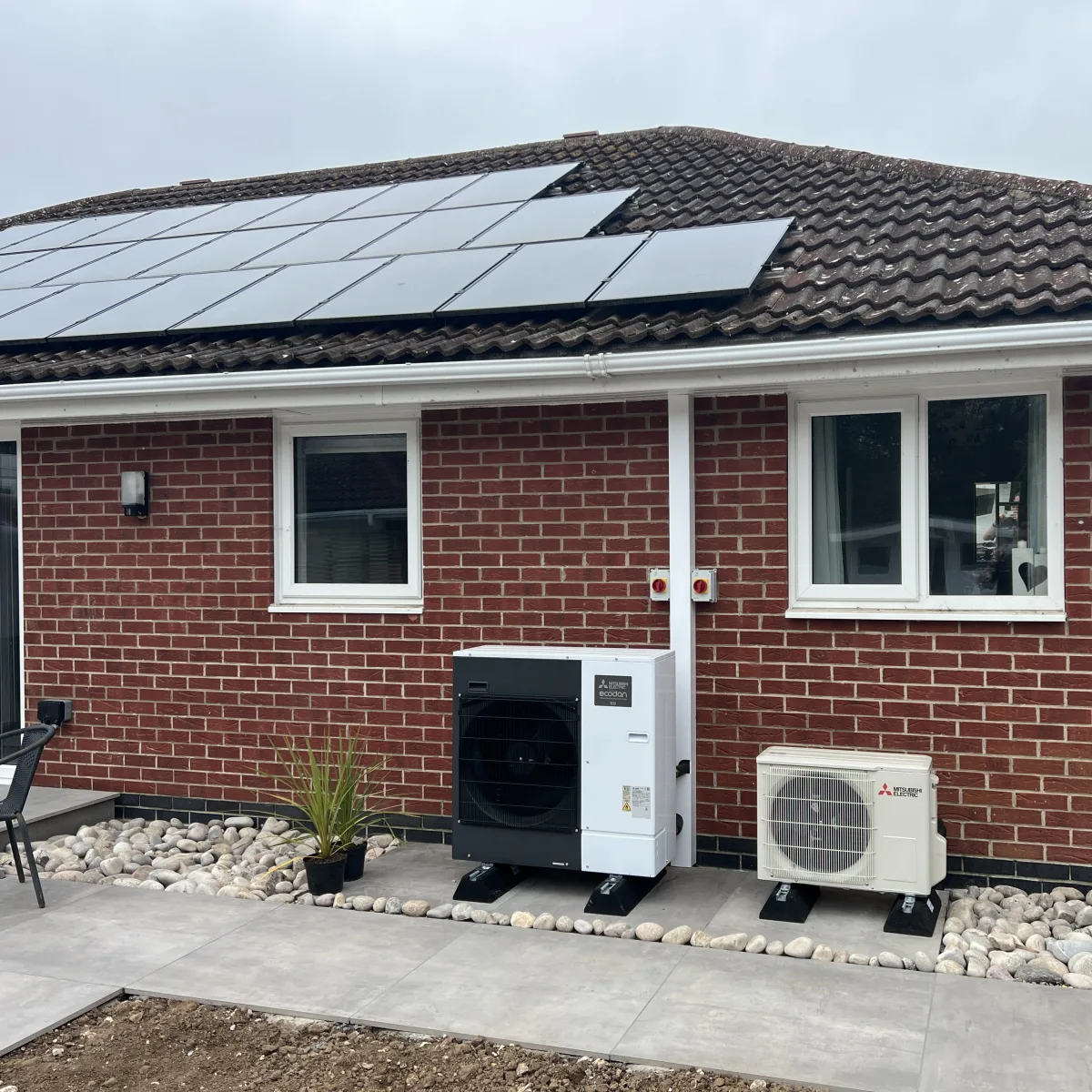
Yes. Solar PV generates electricity which the heat pump can use, alongside the other appliances in your home. If generation is lower than the household's demand, the shortfall comes from the grid or an available battery. You do not need a special solar-only heat pump.
This guide is about solar photovoltaic panels, which make electricity. Solar thermal panels, which heat water directly, and dedicated solar-assisted heat-pump systems are different technologies.
The important distinction is between electricity generated over a year and electricity available when you need heating. A sunny July can produce plenty of electricity, but you cannot keep it in a normal home battery until January.
Solar can contribute on winter days. I would still design the system to keep the house warm when generation is low. Energy Saving Trust's solar PV guidance explains how generation and the amount you use at home affect the benefit.
Solar does not change the heat pump size
The building still loses the same amount of heat on a cold day. Radiators, underfloor heating and heat-pump capacity need to meet that demand, whether there are panels on the roof or not.
Likewise, a 7kW heat pump does not continuously use 7kW of electricity. Its quoted heating output is not its electrical input. I would not choose a number of solar panels simply by matching those two ratings.
Measured examples of Vaillant aroTHERM Plus heat pumps on HeatpumpMonitor.org show the smaller models using around 400–600 W when running gently, and larger models around 900–1100 W. The newer models are likely to be broadly similar, although there isn't enough monitored data yet to confirm that.
Those figures are from low-load heating tests in mild weather, not fixed consumption figures or hot-water-cycle measurements. Electrical demand rises when the heat pump works harder. Solar does not have to cover the full demand to help: it can supply part of it, with the rest coming from the grid or battery.
Hot water is where I would start
You need hot water throughout the year, including the months when there is little or no space heating. That gives you a useful daytime demand for solar electricity, and a cylinder lets you store the heat for showers and baths later.
If there is room, I would consider a 250–300 litre cylinder so we have more hot water storage to work with. That is a design option, not a recommendation for every household. Occupancy, baths, showers, recovery time and standing losses all matter.
Often we can only fit a slimline cylinder, so space makes the decision for us. There is no benefit in specifying a cylinder which leaves you unable to shut the airing-cupboard door.
My starting point would be a hot-water period around the time the panels normally produce most, often midday or early afternoon. The roof's orientation, shading, season and the time you need hot water can move that window.
Keep the commissioned temperature, safety controls and water-hygiene programme in place. Scheduling a reheat is different from turning the cylinder temperature up to absorb every spare unit of electricity. Our heat-pump hot-water guide explains the cylinder side in more detail.
Heat pump or solar immersion diverter?
I would generally favour the heat pump because it delivers more heat from each unit of electricity. An immersion diverter has a different advantage: it can vary the immersion's power to follow spare solar generation. That makes it good at using a small or changing surplus.
| To supply 6kWh of heat | Electricity used | What to consider |
|---|---|---|
| Heat pump at COP 3 | 2kWh | Efficient, but a cloud may mean some electricity comes from the grid or battery. |
| Immersion heater | About 6kWh | A suitable diverter can closely follow the available surplus. |
Illustration only, excluding cylinder and distribution losses. COP 3 means three units of heat per unit of electricity. Actual hot-water COP varies with the equipment, outdoor temperature and cylinder temperature.
The compressor cannot simply follow every passing cloud in the same way as a modulating immersion diverter. Some systems have compatible surplus controls or an SG Ready connection, but the controls still need to respect the heat pump's operating requirements. myenergi's installer guidance describes both immersion diversion and supported heat-pump integration.
If you already have a diverter, I would look at how it is set up before changing anything. We do not want the immersion heating the cylinder immediately before a planned heat-pump reheat without a good reason.
How I would schedule hot water
Solar panels without a battery
Try the main reheat during the roof's productive hours, provided the stored water covers your earlier showers. On a dull day, the heat pump will use grid electricity to finish. Hot water availability comes first; the family should not need to check the forecast before having a shower.
Solar panels with a battery
I would still aim to heat water directly from daytime generation when that makes financial sense. A battery can cover short cloudy spells, then retain electricity for heating and other household use later. Check the battery settings so it does not empty itself into a poorly timed reheat.
Solar, a battery and a cheap overnight tariff
In winter, it can make sense to heat water directly using cheap-rate grid electricity overnight, while also charging the battery for later. There is no need to charge the battery first and then discharge it into the hot-water cycle during the same cheap period.
A midday reheat can also be useful when it is sunny and the household needs more hot water. It need not run every day just because it is on the timer: the cylinder's temperature and the controls determine whether heating is needed.
For space heating, keep the house comfortable. Do not force a whole winter day's heating into a short sunny period if the building cannot recover or retain enough heat. Compare the actual electricity use and cost as well as the schedule.
Do you need a battery with a heat pump and solar panels?
No. The heat pump can use solar as it is generated without battery storage. A battery gives you more flexibility by holding electricity for later, and some systems can charge from a cheap grid tariff. Whether that flexibility justifies its purchase price depends on your own consumption.
- Capacity, in kWh: how much usable electricity it can store.
- Output, in kW: how much power it can supply at once.
- Other loads: cooking, car charging and appliances may be using it too.
- Losses and reserve: not every unit bought to charge it will be available later.
A battery with enough stored energy may still have too little output to supply the heat pump and the rest of the house simultaneously. A large heat demand may empty it well before the next cheap period. Ask for a calculation using your home, not just the battery's headline capacity.
Energy Saving Trust's battery-storage guide covers solar storage and charging from time-of-use tariffs. A battery can be useful without solar too, so you do not necessarily need to buy everything together.
Is it cheaper to use solar or export it?
Using your own generation avoids buying electricity, but it also gives up any export payment you could receive. Compare the cost of producing the same amount of useful heat at different times. A cheap overnight import rate can beat using daytime solar, even after allowing for lower overnight efficiency.
For example, suppose you need 6kWh of heat for hot water:
| Illustrative option | Calculation | Your cost |
|---|---|---|
| Daytime solar, COP 3 | 2kWh used instead of exported at 15p/kWh | 30p |
| Overnight grid, COP 2.5 | 2.4kWh bought at 8p/kWh | 19.2p |
Made-up tariff and COP figures to explain the comparison, not a current tariff quote or predicted saving. Excludes storage losses, standing charges and equipment costs. Only count export income if that electricity could actually have been exported.
In that example, exporting the solar and buying electricity overnight is better value. Different rates or efficiency figures can reverse the result. Ofgem explains that suppliers set their own export rates and terms; check the import and export combination you can actually obtain.
For the wider calculation, see my heat-pump running-costs guide. Solar savings, battery savings and heat-pump savings must not all claim the same unit of electricity.
What would I install first?
If the boiler needs replacing, I would look at the heat pump first, then a battery and suitable tariff. Solar can follow. There is little point putting off an urgent heating decision while trying to arrange every other part of the project.
If the boiler is fairly new and your heating bills are already low, solar and batteries may make more financial sense first. Compare complete installation costs and your expected use. Check grant terms when you are ready rather than assuming today's support will remain unchanged.
What we have seen in real homes
One of our customers, Neil, talks about his heat pump, solar, batteries and electric car working together in a very old house. He reports very low bills after a significant investment. That is his experience of the whole setup, not a bill prediction for every house or a saving attributable to the heat pump alone.
We have also documented an oil-to-Vaillant installation with existing solar and battery storage. The heating design still started with the home and its emitters.
Before deciding, I would want to see your electricity use, import and export rates, solar generation through the year, hot-water habits and any battery specifications. Then we can decide which changes are worth paying for.
Heat pumps and solar panels: common questions
Can I run a heat pump entirely on solar panels?
There may be sunny periods when solar covers its electricity use. Do not plan on domestic solar covering all winter heating. The heating system needs a dependable supply when generation is low.
How many solar panels do I need for a heat pump?
There is no fixed number based on the heat pump's rated heating output. Check its expected electricity use, the roof's generation profile, other household demand and the value of exports. Annual generation alone does not show how much heating will run directly on solar.
Will solar panels make my heating free?
They can reduce electricity purchases, but installation costs, winter imports, maintenance and any export income forgone still matter. A low bill is not the same as a system with no cost.
Should I use the immersion heater or the heat pump for solar hot water?
I generally favour the heat pump for efficiency. At a COP of 3 it needs roughly a third of the electricity for the same heat. An immersion diverter can follow a changing solar surplus more closely, so compare the controls and tariffs too.
Can I add solar panels after installing a heat pump?
Yes. You do not need to install them together. Tell both installers about your plans so electrical capacity, controls, monitoring and any future battery are considered.
Is a bigger hot-water cylinder always better with solar?
No. More storage can help move hot-water heating into productive solar hours, but the cylinder still needs to suit your space and water use. I would consider 250–300 litres where appropriate, not specify it automatically.
Planning a heat pump alongside solar?
I can help you plan the heating and hot water around your home, existing equipment and how you use it.
Heat-pump installation in LincolnshireTalk to Vector Heat