Hot water use
One outlet at a time suits a combi. Several at once points towards storage.
Boilers
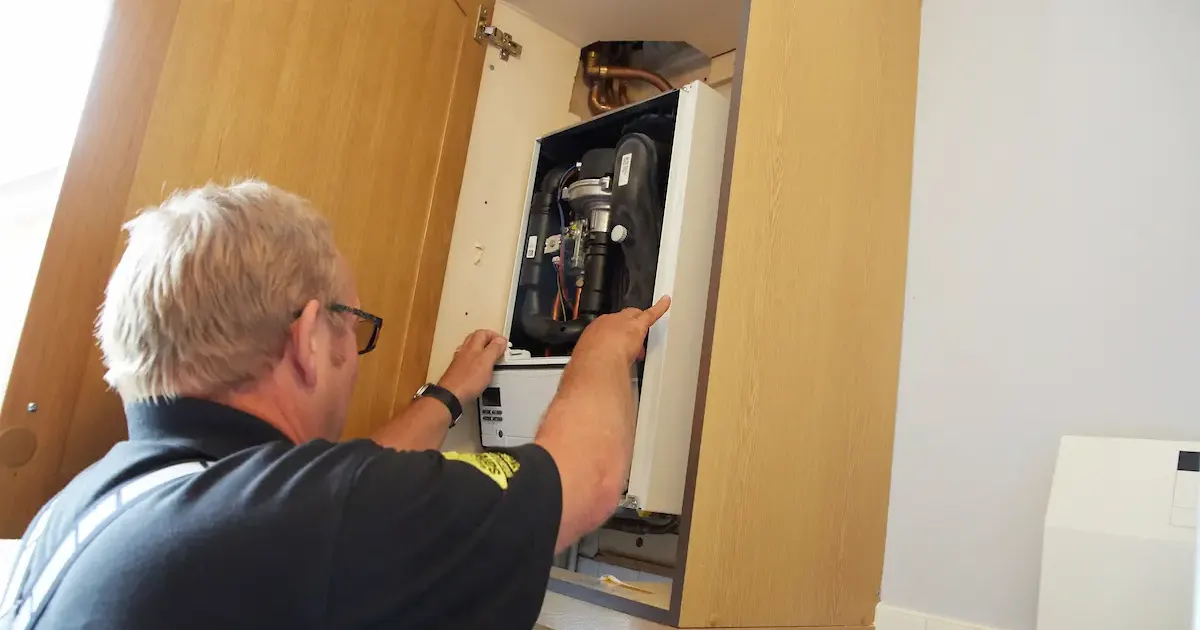
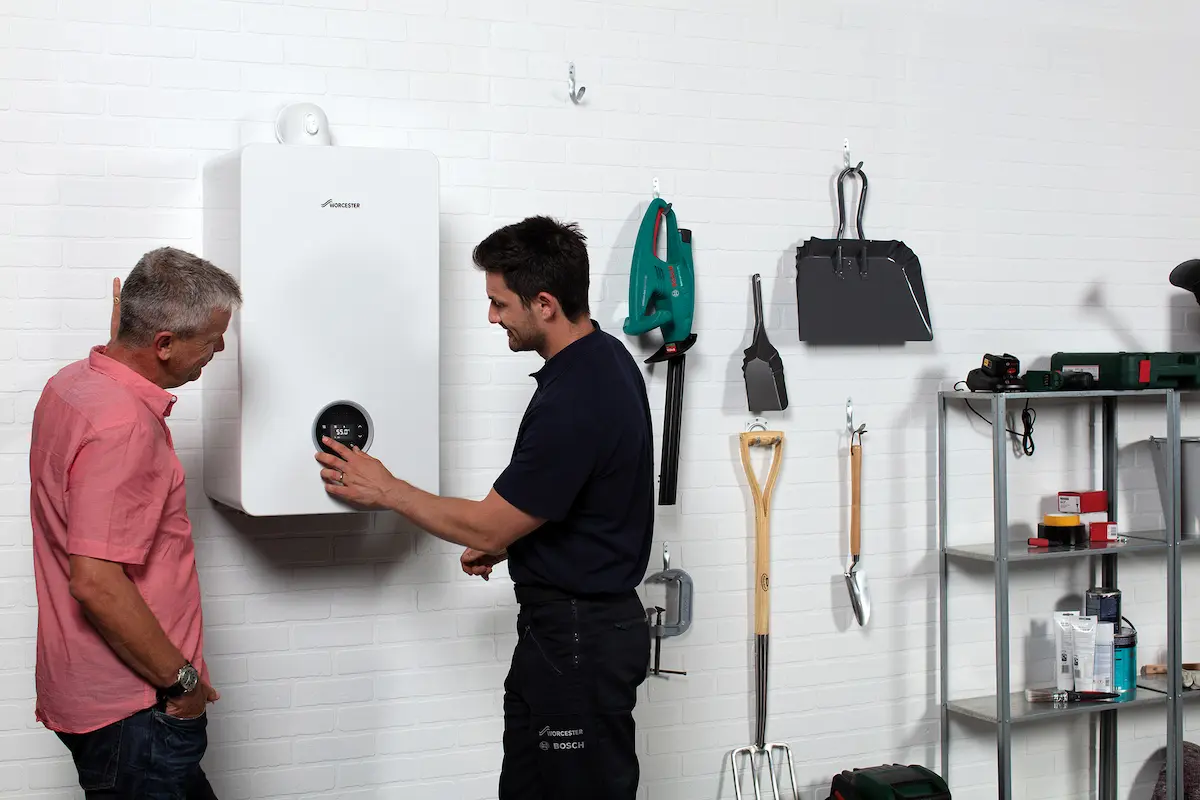
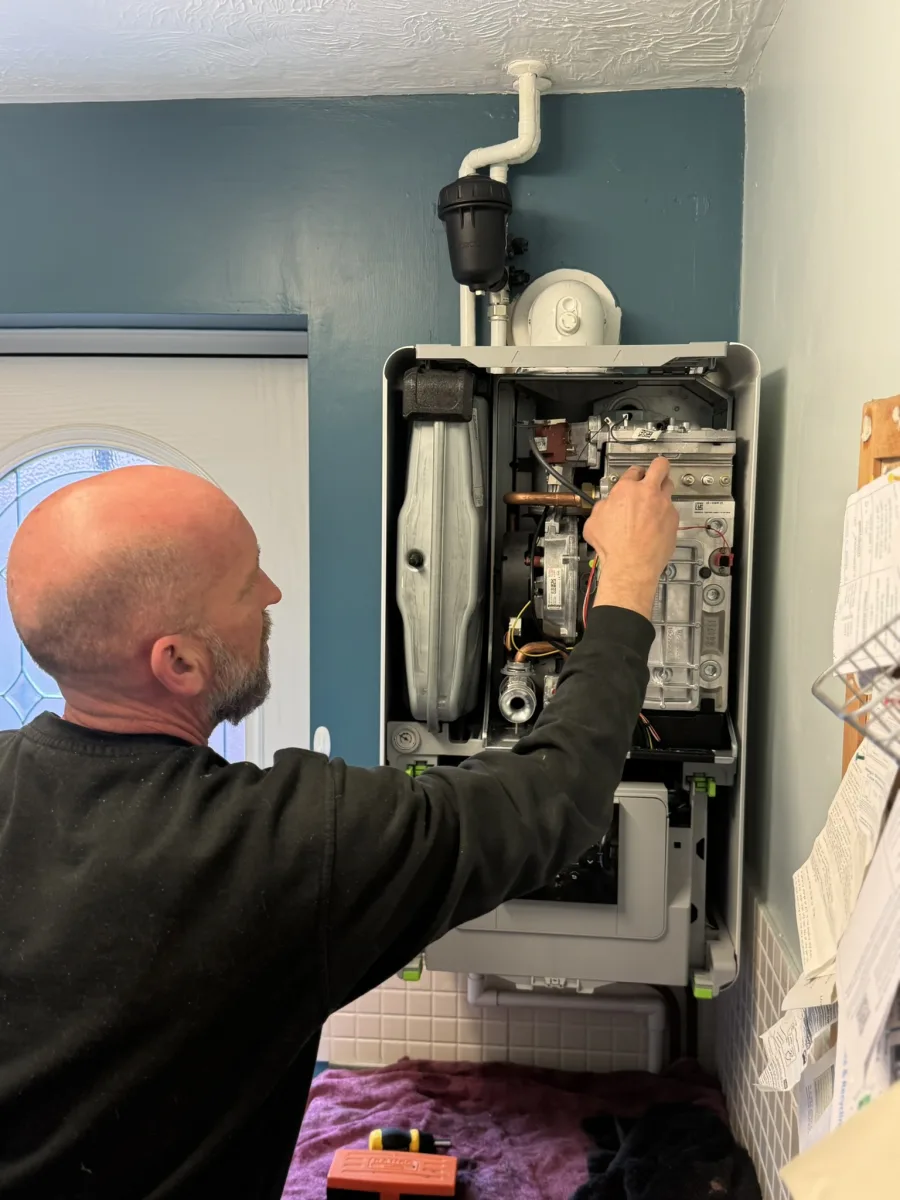
A combi boiler provides central heating and hot water from one compact appliance. It often suits homes using one main hot-water outlet at a time, but busy households may be better with stored hot water.
Published by Vector Heat
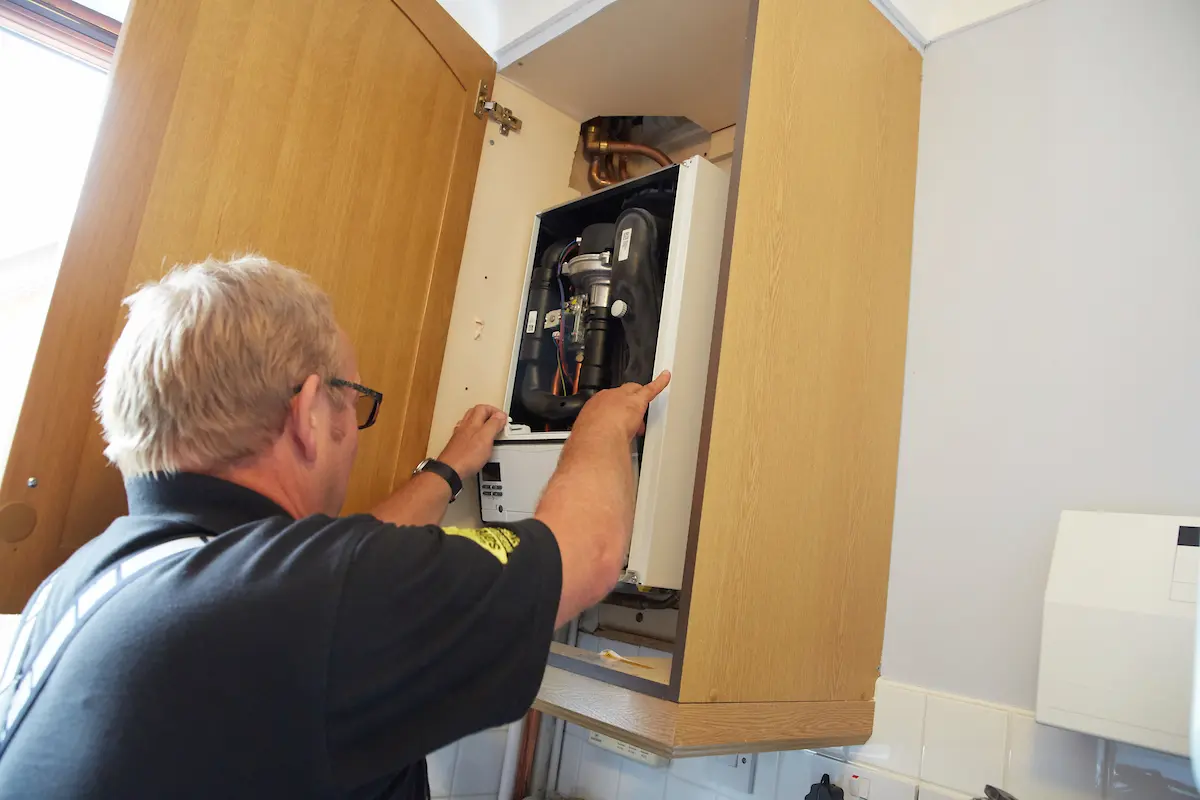
Choosing a combi boiler should be simple. Then someone mentions flow rates, cylinders, shower pressure, stored hot water, incoming mains, and suddenly it feels like the heating industry has hidden the answer in a cupboard with the stop tap.
A combi boiler is often the best-value boiler for a home with low to moderate hot water use. It is compact, it heats hot water only when you use it, and it does not need a separate hot water cylinder. But it is not automatically the right answer for every property.
If the property has no gas supply or practical flue route, our electric combi boiler guide explains why that option still needs careful comparison.
The big question is not really "can a combi boiler heat my house?" Any sensible boiler type can provide central heating if the system is designed properly.
The better question is:
How do you use hot water?
After surveying 5,000+ properties for boilers and heat pumps over 14 years, that is the pattern that keeps coming up. Heating matters, of course. But hot water usage is usually what decides whether a combi boiler, system boiler, regular boiler, vented cylinder, or unvented cylinder makes the most sense.
One outlet at a time suits a combi. Several at once points towards storage.
A combi can only work with the water flow and pressure coming into the property.
Combis save cylinder space, which can matter in flats and smaller homes.
A cylinder can give immersion backup. A combi breakdown usually affects heating and hot water.
Bedrooms matter less than how people actually shower, bathe and use hot taps.
A combi boiler usually makes sense when:
A combi boiler may not be the best choice when:
That is the honest version. A combi is brilliant in the right house. It is also one of the easiest boiler types to oversell if nobody asks enough questions about real hot water use.
A combi boiler, short for combination boiler, provides central heating and hot water from one wall-hung appliance.
Unlike a system boiler or regular boiler setup, a combi boiler does not usually need a separate hot water cylinder. It heats water directly from the mains when you turn on a hot tap or shower. When there is no hot water demand, it can serve the central heating system instead.
Most standard combis have no cylinder. A less common storage combi contains a small internal hot-water store to improve short bursts of demand, so it is worth checking the exact model.
Combi describes how the boiler supplies heating and hot water. Condensing describes how it recovers heat from its flue gases. Modern gas combis are condensing boilers, but system and regular boilers can be condensing too.
That is why combi boilers are so popular in UK homes. They save space, reduce the amount of equipment in the property, and remove the need to keep a cylinder of hot water warm all day.
For many households, that is a very sensible setup. Less equipment. Less cupboard politics. Fewer tanks in the loft making noises that nobody fully trusts.
A combi boiler has two main jobs:
When your heating comes on, the boiler heats water and pumps it around the heating system. That water stays inside the heating circuit. It is not the same water that comes out of your taps.
When you open a hot tap, the boiler detects the flow of mains water and diverts its heat into hot water production. The cold mains water passes through a heat exchanger, picks up heat from the boiler, and comes out of the tap hot.
Hot water normally takes priority while a tap or shower is running, so the boiler briefly pauses heat going to the radiators. In ordinary use this is rarely noticeable, although a very long hot-water draw can delay the heating.
Some boilers have a preheat or comfort mode that keeps the heat exchanger, or a small amount of water, warm for a quicker response at the tap. It can improve convenience, but it also uses some energy between hot-water draws.
This is why combi boilers are described as on-demand hot water systems. They do not heat a full cylinder and wait for you to use it. They heat the water as you use it.
That is also why the boiler's hot water output and the incoming mains supply matter so much. A combi boiler can only give you as much hot water as the boiler and mains can realistically deliver.
People often start by asking which boiler is best for heating.
That is understandable, but it is usually not the best starting point. Heating can normally be designed well with a combi boiler, system boiler, or regular boiler. The goal is the same: make the home comfortable, use sensible controls, keep the system clean, and run the heating at the lowest practical flow temperature so the boiler can condense efficiently.
The harder decision is hot water.
A combi boiler heats hot water only when you use it. That means there is no stored hot water sitting in a cylinder losing heat. For low to moderate hot water use, that can be very efficient and very cost-effective.
A cylinder system stores hot water. That can be excellent for comfort because it can serve baths, showers, and multiple outlets more comfortably, especially with an unvented cylinder. But if the household barely uses that stored hot water, some of the energy used to heat it may be wasted.
So the best boiler choice depends less on the number of bedrooms and more on the way the people in the house actually live.
Two people in a large house may be perfect for a combi boiler if they use one shower at a time and do not need much stored hot water. A busy family in a smaller home may be better with a cylinder if showers, baths, and taps are often running together.
Property size matters. Actual hot water use matters more.
A combi boiler is compact.
It does not need a separate hot water cylinder in an airing cupboard or tanks in the loft. That can free up useful space and simplify the system.
A combi boiler heats hot water on demand.
You only heat the hot water you actually use. For many homes, especially those with modest hot water use, that is one of the biggest advantages.
A combi boiler is often cheaper to install.
There are usually fewer main components than a boiler and cylinder setup. If you are replacing an existing combi in the same location, the job is often simpler than converting from another system type.
A combi boiler can be cheaper to run for hot water.
Because there is no stored cylinder of water losing heat, a combi can be very efficient for households that do not use large amounts of hot water at once.
A combi boiler can still run heating efficiently.
The heating side still needs proper design, correct controls, clean system water, and sensible flow temperatures. A badly set up system will still waste energy, but that is not the combi's fault. That is a design and commissioning issue.
A combi boiler is usually best for one hot water outlet at a time.
If someone turns on a hot tap while another person is in the shower, the shower can be affected. In some homes it is only a small annoyance. In others it becomes a daily negotiation.
A combi boiler depends on incoming mains pressure and flow.
If the mains supply is poor, fitting a powerful combi boiler will not magically create perfect hot water performance. The boiler can only work with the water coming into the property.
A combi boiler has no stored hot water backup.
With a cylinder, an immersion heater can often provide backup hot water if the boiler fails. With a combi, if the boiler breaks down, you usually lose both heating and hot water until it is repaired. Some homeowners keep an electric shower as a useful backup.
If your existing combi has stopped heating the tap water, its response when a tap opens helps distinguish a demand-sensor problem from a diverter fault.
Converting to a combi can add cost.
If the property currently has a hot water cylinder, loft tanks, old pipework, or a vented system, changing to a combi may involve removing equipment, altering pipework, pressurising the heating system, and changing showers. That can make the upfront cost higher than a simple like-for-like swap.
A system boiler serves a hot water cylinder, but the boiler does not decide the hot water performance by itself. The cylinder, incoming mains supply, pipework and controls do that work.
The main difference is how hot water is delivered.
A combi boiler heats hot water as you use it. A cylinder setup stores hot water for later use. System and regular boilers serve that cylinder.
If you are not sure what is already fitted, our guide to identifying your boiler type uses the cylinder, loft tanks, pressure gauge and visible expansion vessel to narrow it down.
| Factor | Combi boiler | Cylinder setup |
|---|---|---|
| Hot-water delivery | Heated on demand | Stored in a cylinder |
| Simultaneous outlets | Usually best at one main outlet | Can serve several if the cylinder, mains and pipework are sized correctly |
| Space | Boiler only | Boiler and cylinder; a regular system may also have loft tanks |
| Hot-water backup | Usually no immersion heater | A cylinder normally has an immersion heater |
| Mains dependence | Performance is limited by incoming flow and pressure | An unvented cylinder also depends on the mains; a vented cylinder works differently |
| Often the better fit | Low or moderate peak demand and limited space | Regular simultaneous demand, frequent baths, backup needs or future heat-pump plans |
A combi boiler is often better when space matters, hot water use is moderate, and the household does not often need more than one hot water outlet at the same time.
It is often a strong choice for flats, smaller homes, couples, small families, and properties where the current cylinder takes up space but does not provide much real benefit.
It can also suit some larger homes where only one or two people live there. A four-bedroom house with two careful hot water users is not the same as a four-bedroom house with five people trying to shower before work and school.
The boiler does not know how many bedrooms are on Rightmove. It only knows what demand the household puts on it.
A cylinder setup may be better when the household uses a lot of hot water, has multiple bathrooms, fills baths often, or wants strong hot water performance at more than one outlet. A system boiler is the modern pressurised boiler layout for serving that cylinder.
With a well-designed unvented cylinder setup, hot water flow and pressure can be excellent, provided the incoming mains supply is suitable. It can be a much better experience for homes where simultaneous hot water use is normal.
A system boiler can also be designed intelligently. With the right pipework and controls, some setups can prioritise the cylinder at a higher temperature and run the heating circuit at a lower, more efficient temperature. That is better than treating every system boiler as a basic swap and hoping the controls sort themselves out.
But a cylinder is still stored hot water. If you heat a cylinder and barely use it, some of that energy is wasted. Modern cylinders are much better insulated than old copper cylinders, but storage losses still exist.
A regular boiler is also called a conventional boiler or open-vent boiler. It is commonly found in older systems with a hot water cylinder and tanks in the loft.
In a new design, a regular boiler is rarely the first choice. It is a historic design. That does not mean every existing regular boiler system is terrible, but it does mean we would be careful about recommending one for a fresh system design.
Where a regular boiler already exists, replacing it like-for-like can sometimes be the cheapest practical option. The pipework and system layout may already be there, so the job can be more straightforward than converting everything to a combi or system boiler.
Vented cylinders can supply multiple outlets, and they can be good for filling baths. They also usually have an immersion heater, which gives a backup for hot water.
The downside is that pressure can be poor, especially compared with a good unvented cylinder. Older cylinders can also lose heat more quickly, so homes with low hot water usage may waste energy keeping water hot.
Shower pumps sometimes get added to improve performance, but we see them as a last resort. They are noisy, they can be awkward, and they often become another thing that needs replacing.
The cost of a combi boiler depends on the boiler model, output, warranty, controls, system condition, flue route, location, pipework changes, and whether the job is a straight swap or a conversion from a cylinder system.
A like-for-like combi boiler replacement is usually cheaper than converting from a regular or system boiler to a combi. Moving the boiler to a new location, upgrading controls, replacing radiator valves, power flushing or chemically cleaning the system, or altering hot water pipework can all affect the price.
This is why fixed online prices can be useful as a rough guide, but they are not a substitute for a proper survey.
Our fitted combi replacement prices show the difference between a straight swap and converting a boiler-and-cylinder system, including VAT.
The important question is not only "how much is the combi boiler?" It is:
What needs changing so the new boiler works properly in this specific home?
A cheap combi boiler installation can become expensive if the hot water performance is wrong, the heating system is dirty, the controls are poor, or the customer later realises a cylinder would have suited the house better.
Combi boiler sizing is slightly awkward because the heating demand and hot water demand are different.
For heating, many homes need less boiler output than people expect, especially once the heat loss is calculated properly. Oversizing for heating can cause cycling, poor control, and less efficient operation.
For hot water, the boiler output often needs to be higher because the boiler is heating water instantly as it passes through. That is why combi boiler sizes are often driven by hot water flow rate rather than radiator count alone.
As a rough idea:
But the real answer depends on:
Sizing a combi boiler by guessing from the number of bedrooms is a bit like buying shoes based on hat size. There may be a pattern somewhere, but I would not trust it with my comfort.
My dedicated boiler sizing guide gives rough heat-loss estimates by property type and explains the figures an installer should check.
Before choosing a combi boiler, it is worth checking a few things properly.
Think about what actually happens in the house.
Does one person shower at a time? Or do two showers run while someone fills a bath and someone else attacks the washing up?
Do you have electric showers already? If so, the property may use less boiler-fed hot water than it looks like on paper. But if you are converting to a combi and changing an electric shower to a thermostatic mixer, that adds cost and changes the hot water demand.
A combi boiler relies on mains water. If the incoming supply is weak, hot water performance will be limited.
This should be tested before the system type is chosen. A brochure can make a boiler look powerful. The stop tap may have other ideas.
A cylinder is not automatically bad. In the right home, especially with an unvented cylinder, it can give excellent hot water comfort.
But storing hot water for a household that barely uses it is wasteful. This is especially true in homes where most showers are electric or where hot water demand is low.
Even though hot water often decides the boiler type, heating design still matters.
The aim is to run the heating system at sensible, lower flow temperatures where practical, so the boiler can condense more effectively. That may mean looking at radiator sizes, controls, balancing, system cleanliness, and how the boiler is commissioned.
A combi boiler can be efficient. A system boiler can be efficient. The difference is often in the design and setup, not just the badge on the front.
For neutral background reading, the Energy Saving Trust boiler guide explains the main boiler layouts and what can make each one suitable. If gas work is being carried out, the HSE domestic gas guidance is a useful official starting point for safety and Gas Safe Register information. Manufacturer pages, such as the Worcester Bosch combi boiler guide, can be useful for understanding product ranges, but the final choice should still come back to the property survey.
A combi is the stronger candidate when space matters, hot-water demand is moderate and people rarely use several outlets together.
A cylinder deserves serious consideration when two showers may run at once, baths are used regularly, stored backup matters or future heating plans include a heat pump. If that last point matters, our boiler or heat pump comparison explains how the wider decision changes.
Bedroom count does not settle it. Peak hot-water use does. During a boiler survey, we check the incoming mains flow, existing cylinder and tanks, shower types, available space and what happens on the busiest morning of the week.
That gives the boiler type a job to do rather than asking it to win a popularity contest.
A combi boiler is often cheaper to run for hot water because it only heats water when you use it. There is no stored cylinder losing heat throughout the day. The heating side still needs good controls, clean system water, and sensible flow temperatures to run efficiently.
A combi boiler can suit a larger house if hot water use is low or moderate. Property size alone does not decide it. The key question is whether people need hot water from several outlets at the same time.
Some high-output combi boilers may cope better than smaller models, but combis are usually best when one main hot water outlet is used at a time. If two showers are used together regularly, an unvented cylinder setup may give a better result.
Most standard combi boilers do not need a separate hot water cylinder or cold water storage tank. A less common storage combi contains a small internal hot-water store, so check the exact model rather than relying on the word combi alone.
The main downside is limited simultaneous hot water performance. A combi boiler depends on incoming mains water and boiler output, so it may struggle when several showers, baths, or hot taps are used at the same time.
A combi boiler is better for many homes with moderate hot water use, limited space, and one outlet used at a time. A cylinder setup is often better where the home needs stored hot water, multiple outlets, stronger showers, or an immersion heater backup.
A traditional power shower pumps water from a stored supply, so it is not normally suitable with a standard mains-fed combi boiler. A compatible mixer shower or a separate electric shower can work, but the shower type and incoming mains performance should be checked before the system is changed.
Only if the combi boiler suits your hot water use. Removing a cylinder can save space and reduce stored hot water losses, but it may reduce hot water performance if the household regularly uses several outlets at once.
We can survey the property, check the hot water demand and explain whether a combi boiler or cylinder setup makes more sense.
Speak to Vector Heat