Heat Pumps
Future Homes Standard: What It Means for New Homes
What the changing building standards mean for new-build homes, heating choices and future-ready design.
Published by Vector Heat
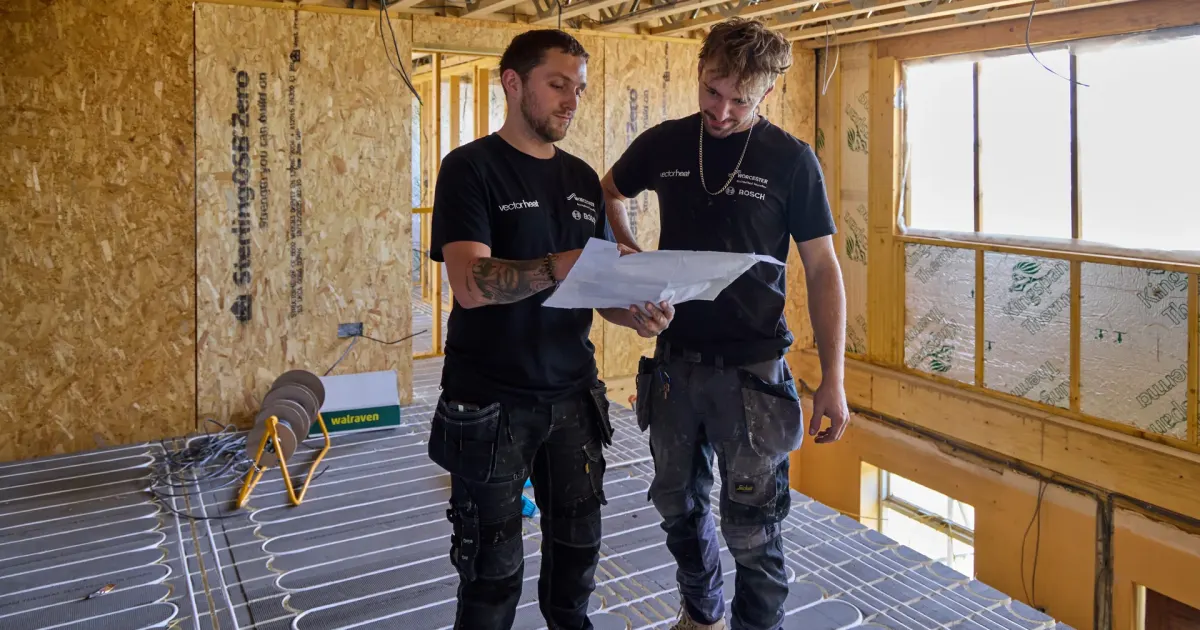
The Future Homes Standard sounds like something that should arrive with a glossy brochure and a smug thermostat. In reality, it is about something much more practical: new homes should be built so they use less energy and are ready for lower-carbon heating.
The important point for homeowners is this: new-build heating is moving away from fossil fuel systems and towards better fabric, better ventilation and low-carbon heating. That helps explain why air source heat pumps are taking the lead.
Quick answer: what is the Future Homes Standard?
The Future Homes Standard is the government's plan to improve energy and ventilation standards for new homes in England. The latest government consultation response was added on GOV.UK on 24 March 2026, with changes being implemented through Building Regulations and approved documents.
You can read the official consultation response on GOV.UK.
Why does this matter to homebuyers?
Because the heating system you inherit affects comfort, bills and future upgrade costs.
A new home can be legally compliant and still not be as good as it could be. Building Regulations are minimum standards, not a guarantee that every design decision is the best one for the person who will live there.
That is why buyers should care about the heating design, not just the kitchen worktop.
Will new homes still have gas boilers?
The direction of travel is away from gas boilers in new homes.
For many new-build properties, the practical answer is likely to be a heat pump, often combined with good insulation, airtightness, ventilation and sometimes solar PV.
That does not mean every new home will look the same. But the heating system needs to fit the lower-carbon, lower-energy direction of the regulations.
Why heat pumps suit new homes
Heat pumps can be an excellent match for new homes because new properties should have lower heat loss than older, leakier buildings.
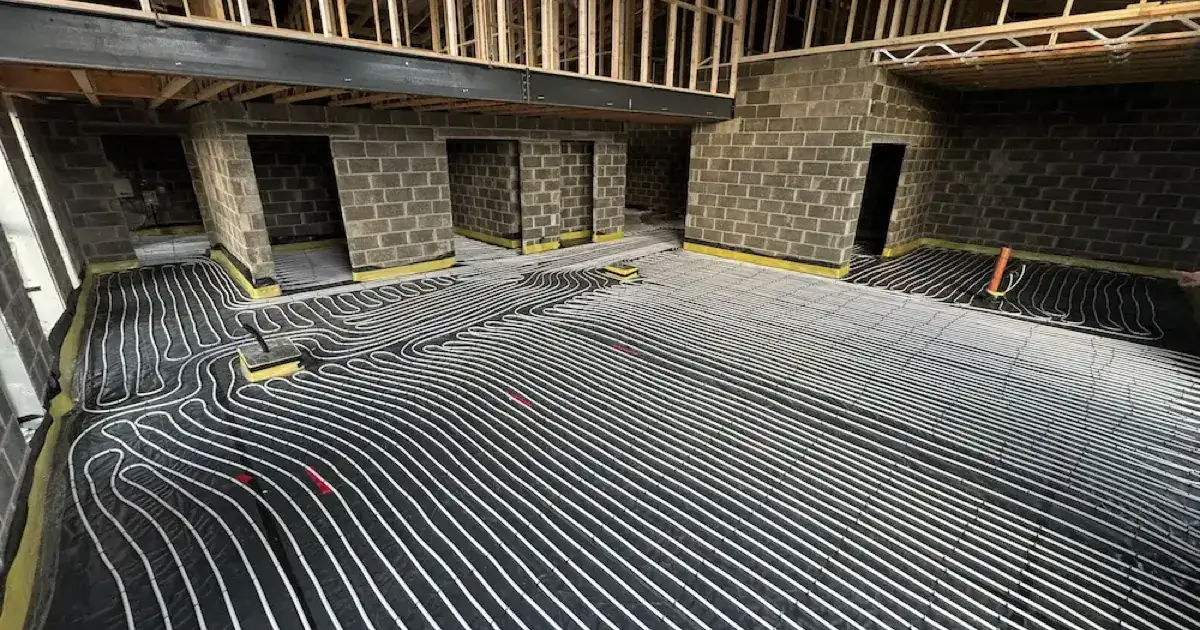
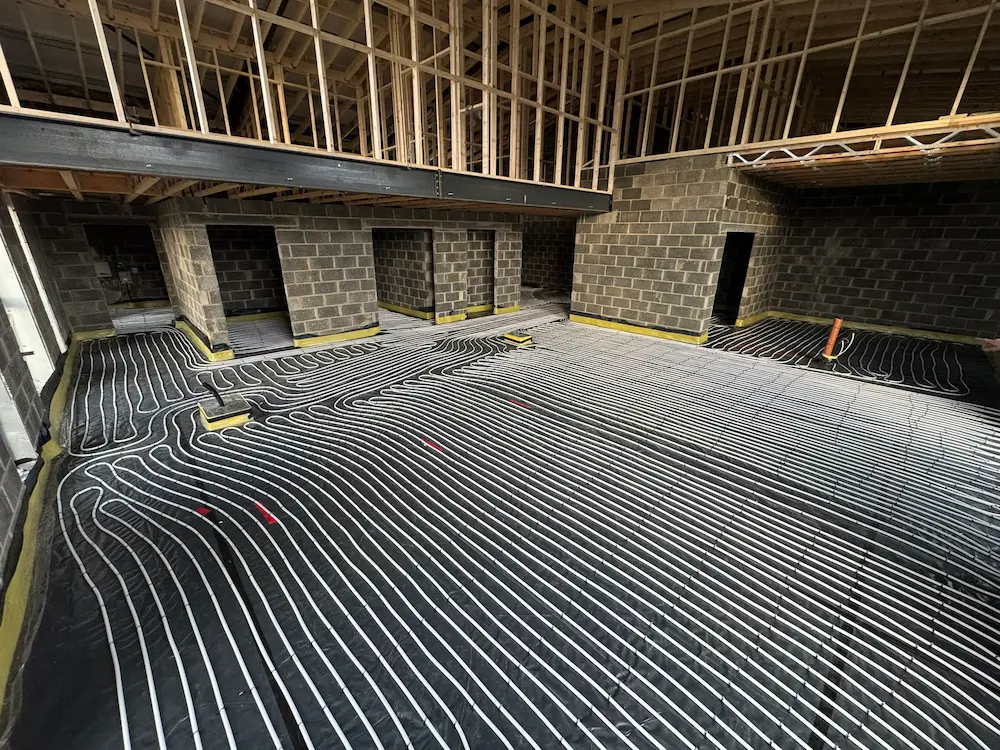
That matters because heat pumps work best when they can run at lower flow temperatures. A well-insulated new home with correctly designed underfloor heating or radiators can be a very good candidate.
The design still matters. A heat pump in a new home is not automatically good just because the house is new.
What should buyers ask the developer?
Ask:
- what heating system is fitted?
- has a room-by-room heat loss calculation been done?
- what flow temperature is the system designed for?
- is the heating underfloor, radiators or both?
- how is hot water provided?
- what controls are fitted?
- is there solar PV?
- how is ventilation handled?
- who commissions and explains the system?
If nobody can answer those questions, that tells you something.
If you are appointing the contractor yourself, use our checks for choosing a new-build heating engineer before comparing quotations.
What about existing homes and extensions?
The Future Homes Standard is mainly about new buildings, but the direction affects the wider market too.
As regulations, products and installer skills move towards low-carbon heating, existing homes will increasingly be judged by heat loss, emitters, ventilation and suitability for efficient electric heating.
Extensions also matter because adding space changes heat loss and heating demand.
Design the building and heating together
We support higher standards because good heating design starts with the building.
The best heating systems are designed, not guessed. That is true in old cottages, new estates and everything in between.
For new homes, the opportunity is obvious: design the building and heating system together from the start. It is much easier than trying to rescue a poor design after the carpets are down and everyone has found the tea bags.
FAQs about the Future Homes Standard
Does the Future Homes Standard apply to existing homes?
It is mainly aimed at new homes and new buildings, although some consultation areas also touch on existing buildings. Existing homes are not suddenly forced to change heating system because of the standard.
Are heat pumps suitable for new homes?
Yes, heat pumps can be very suitable for new homes when the building fabric, emitters, hot water and controls are designed properly.
Do new homes need underfloor heating for heat pumps?
No. Underfloor heating upstairs can be excellent, but radiators can also work if sized correctly for lower flow temperatures. It is often a comfort and interior-design choice rather than something the heat pump requires.
Should I ask for heating design details before buying a new home?
Yes. Ask what system is fitted, how it was designed, how hot water works, what controls are included and who will explain the system after handover.
Does solar PV matter?
Solar PV can help reduce electricity imported from the grid, but it does not replace good heating design. Fabric, heat loss, emitters and controls still matter.
Planning the heating for a new home?
We can review the heat loss, emitters, hot-water demand and controls before the plant room and pipe routes become expensive things to change.
Speak to Vector Heat